A violin is never just a violin once it has lived a life. The great instruments of the world, the ones that appear in auction catalogs and concert programs, almost always carry a name.
That name is not decoration. It is a record. It tells you who owned the instrument, who played it, and sometimes who nearly lost it to history.
For professional violinists and for investors, understanding how these names work is essential to understanding value itself.
What Does Ex Mean in Violin Names
The word “ex” appears constantly in the world of fine violins, and it simply means “formerly of.” When a violin is described as Ex Scotland or Ex Kreisler, it means the instrument once belonged to a person, family, or institution bearing that name.
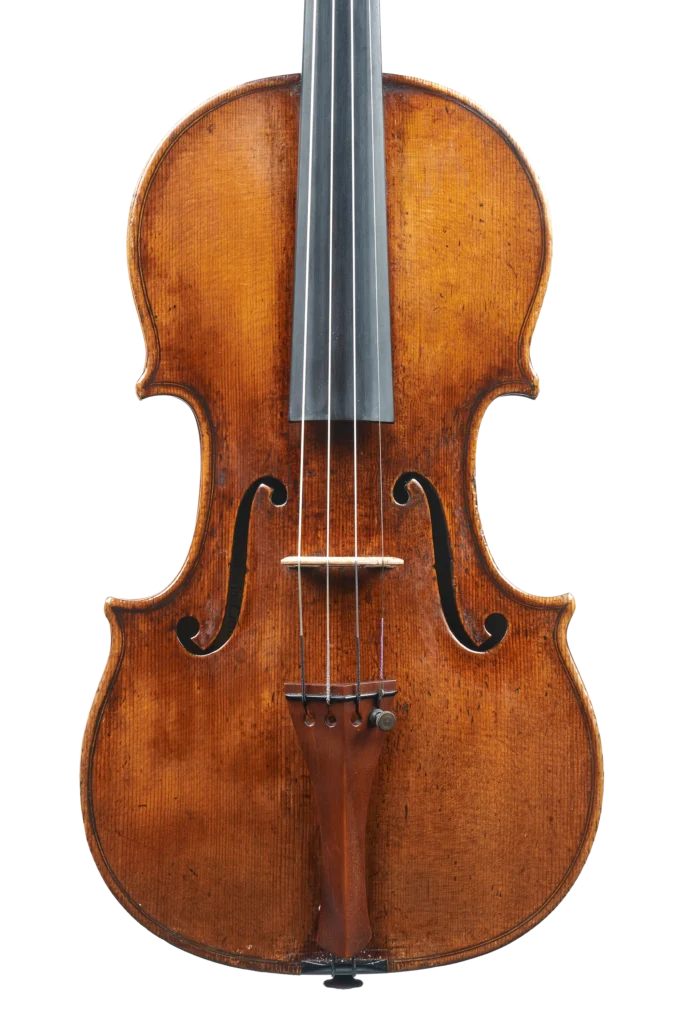
The Antonio Stradivari violin known as the Lam, Ex Scotland University carries both a personal name, Lam, referring to a past owner, and an ex designation pointing to its time at the University of Edinburgh in Scotland.
This layering is common. A single instrument can accumulate several names over centuries, each one marking a chapter of its ownership. Reading a violin’s full name is, in a sense, reading its biography in shorthand.
Why Violin Ownership History Matters
Ownership history, or provenance, is the backbone of trust in the fine instrument market. A violin without a documented past is a violin without proof. Buyers, dealers, and musicians rely on this history to confirm that an instrument is exactly what it claims to be, made by the hand attributed to it, in the workshop and period stated.
For working musicians, provenance also carries emotional and professional weight. Playing an instrument once owned by a legendary performer connects a musician to a lineage. For investors, that same history is what protects and often multiplies the value of the asset over time.
How the Naming System Works in Fine Violins
Violin names generally form around three sources. The first is the maker, as in a violin simply attributed to Guarneri or Montagnana. The second is a former owner, often a musician, collector, or institution whose association became historically significant enough to attach permanently to the instrument. The third is a distinguishing event or physical trait, though this is less common among the most celebrated instruments.
Some names stack multiple elements together. A violin might be known by its maker, its most famous owner, and an ex designation marking its most recent notable home, all at once. This is why serious catalogs and appraisals always list a full provenance chain rather than a single name.
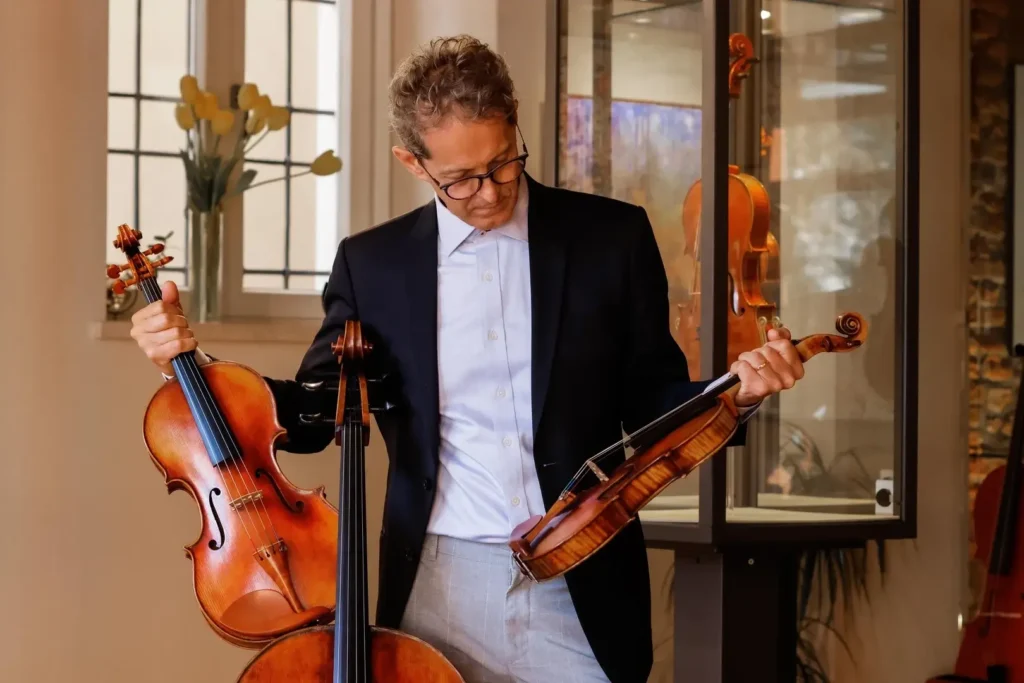
How Great Names Are Formed: Canone, Leduc, Primrose
Some names become legendary in their own right. The Canone, a Guarneri del Gesù once owned by Niccolò Paganini, carries a nickname referring to its powerful, cannon-like sound, a trait so remarkable that it defined the instrument’s identity forever after.
Other names come directly from the musicians who played them. The Leduc, another Guarneri del Gesù dated 1744, takes its name from a historical owner whose association with the violin became inseparable from its identity. Amorim Fine Violins offers a faithful copy of this instrument, built to capture the tonal character that made the original so admired.
The same pattern holds for violas. The Primrose takes its name from William Primrose, one of the most influential violists of the twentieth century, whose ownership elevated the instrument’s historical standing. A copy inspired by this heritage, crafted by Luiz Amorim, allows violists today to experience proportions and tonal qualities rooted in that same lineage.
Even instruments built as tributes rather than originals carry this naming logic forward. A cello built as a copy of a Domenico Montagnana, crafted by Luiz Amorim, borrows the identity of a historically important maker to signal the tonal and structural qualities a player can expect.
Why Provenance Protects Authentication
Provenance functions as a chain of custody. Each documented transfer of ownership, each appearance in an auction record or museum collection, adds a link that makes forgery or misattribution far harder to sustain. A violin that can be traced through generations of respected owners, dealers, and institutions is far less likely to hide errors in its attribution.
This is particularly important in a market where skilled copies exist alongside originals. Rare instruments with unbroken provenance are protected from doubt precisely because their history has been recorded and verified at each stage.
How Violin Provenance Is Documented
Provenance is typically documented through certificates of authenticity issued by recognized experts, historical bills of sale, auction records, exhibition catalogs, insurance appraisals, and correspondence between past owners or dealers.
Photographs and written descriptions from earlier decades also help confirm that an instrument’s physical characteristics have remained consistent over time.
Reputable dealers maintain these records carefully, and any serious acquisition should include a full provenance file alongside the instrument itself.
Why Provenance Really Matters for Violin Value
Ultimately, provenance is one of the strongest drivers of value in the fine violin market. Two instruments of similar quality and condition can differ enormously in price if one carries a documented history through notable hands and the other does not. Provenance reduces risk for buyers, which in turn increases what they are willing to pay.
For investors, this makes provenance research as important as physical inspection. For musicians, it means that choosing an instrument often means choosing to become the next name in a story that began generations earlier. Those exploring rare instruments with strong documented histories are, in effect, investing in certainty as much as in sound.
Amorim Fine Violins Connects You to True Provenance and Makers
Every instrument in the Amorim Fine Violins collection is chosen and represented with this same respect for history.
Each violin, viola, and cello comes with a documented past, verified attribution, and the kind of careful record keeping that protects both its authenticity and its value for the next owner.
Whether you are a musician searching for an instrument with a story worth continuing, or an investor building a collection grounded in trust, working with a dealer who understands provenance makes all the difference.
Those ready to see what a well documented history looks like in practice can browse the current selection of rare instruments, each one accompanied by the research and paperwork that turns a fine violin into a lasting legacy.
Talk to a specialist about this topic
Featured Instrument
 AVAILABLE
Violin by Antonio Stradivari "Lam; Ex-Scotland University"
Antonio Stradivari — c.1734
View Instrument