Full Description
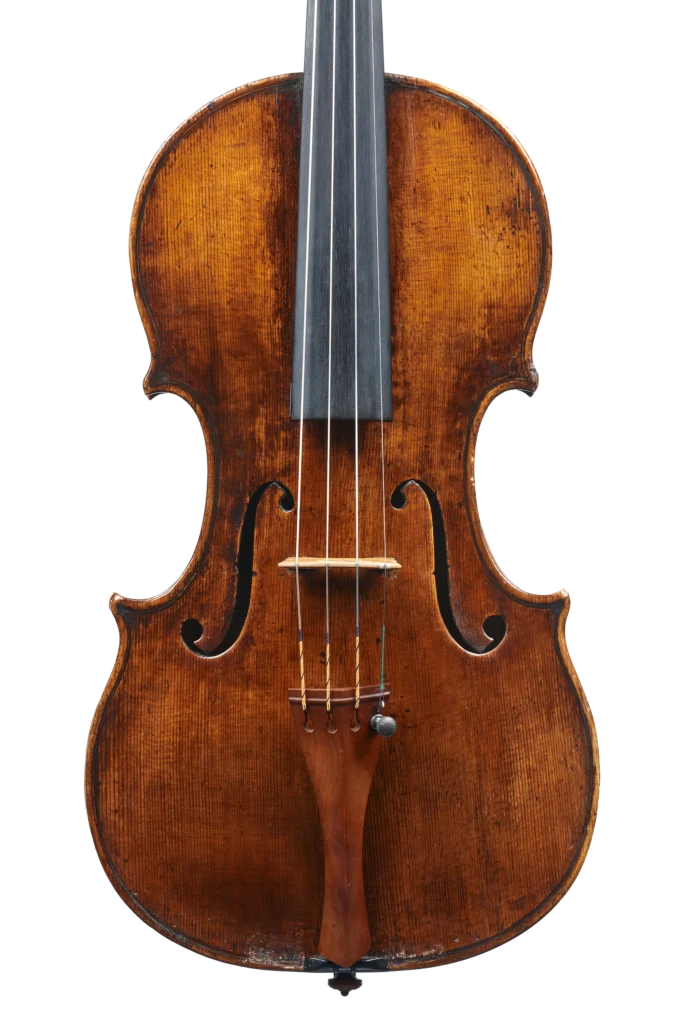
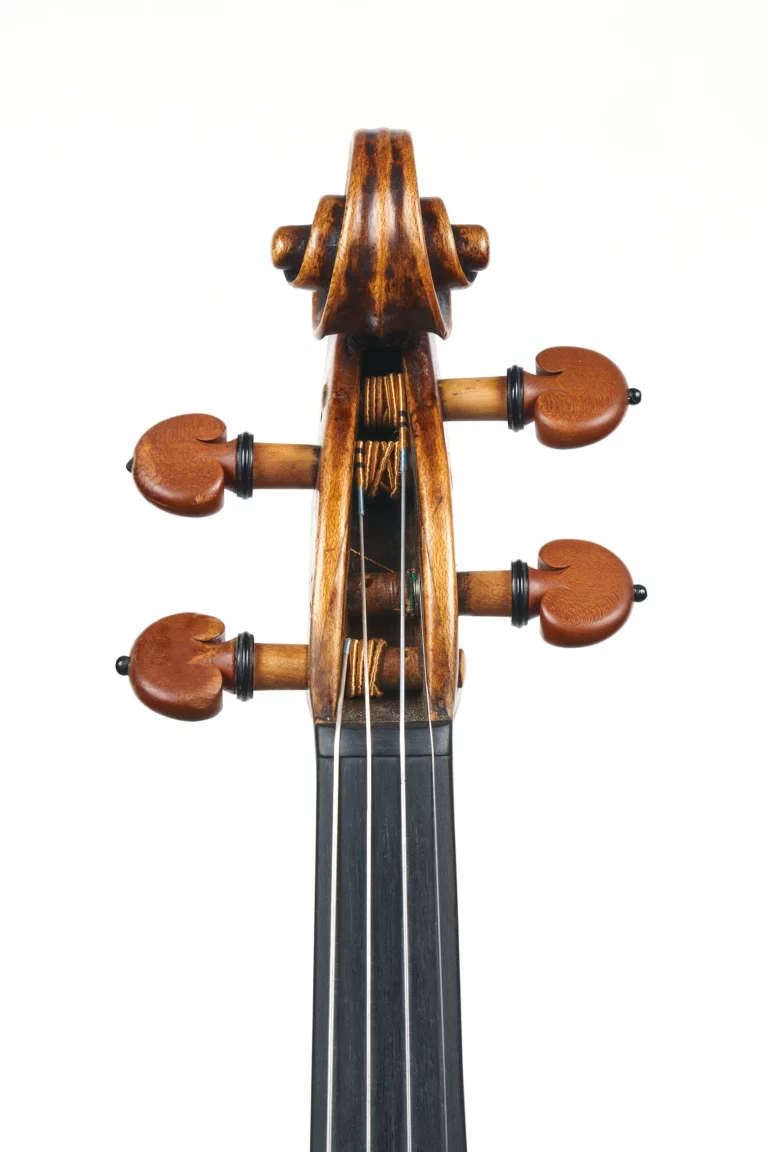
This stunning Italian masterpiece by Giovanni Grancino, made in Milan in 1695, is not only a lovely and outstanding example of the maker's work but also a great piece of violin-making history. The instrument portrays the excellence found in Grancino's best output and represents the foundational chapter of the Milanese violin-making tradition. The strong large pattern, the arching, the refined edges with fluting and purfling, the elegant sharp-edged scroll design, and the high-quality, lovely red-brown varnish—everything combines the highest standards of excellence achieved at the height of the Milanese school.
Grancino's approach managed to create a unique aesthetic style that did not run against the nature of the wood and the natural resins used, but enhanced their own natural qualities. The varnish is part of what is often considered his highest virtue: as is common in the work of Grancino and in that of many who followed him in Milan, this instrument carries the oily, red-brown composition with softer resins and the more elegant, occasionally lightly craquelured texture associated with his finest production. The back is in two pieces of maple of faint broad figure, with sides and scroll to match, and a spruce top of medium grain.
The violin's recent history adds an exceptional layer to its significance. The instrument was purchased in 1950 by Hungarian-Canadian violinist Géza de Kresz (1882–1959) in New York from the collection of Emil Herrmann, accompanied by Herrmann's signed certificate of the same date. A pupil of Ševčík, Eugène and Théophile Ysaÿe, Albert Lavignac, and Jacques Thibaud, de Kresz served as concertmaster of the Vienna Tonkünstler, Bucharest Symphonic, and Berlin Philharmonic orchestras, was a founding member of the Hart House Quartet in Toronto, and toured for over thirty years in duo with his wife, Norah Drewett. He taught at the Liszt Academy in Budapest, the Mozarteum in Salzburg, the Stern Conservatory in Berlin, and the Hamburg Conservatory, among others.
As both a defining work of the founder of the Milanese classical school and a distinguished concert instrument with a documented twentieth-century artistic provenance, this 1695 "Géza de Kresz" stands among the most compelling examples of late-17th-century Italian violin making available today.