Full description
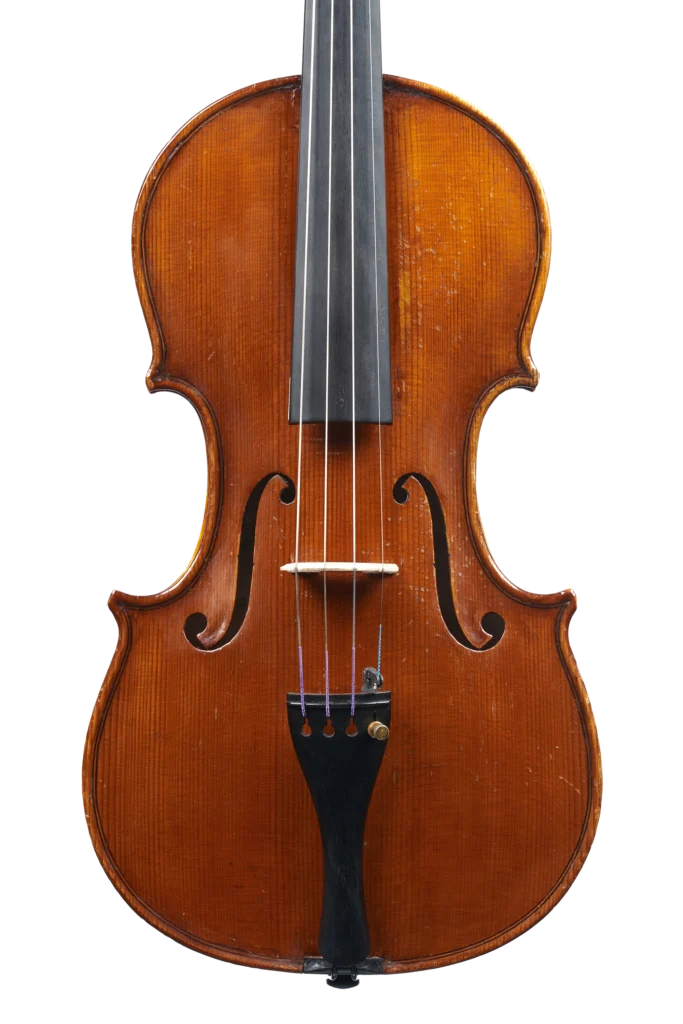
A fine and mature example of Camillo Mandelli’s Milanese craftsmanship, this 1942 violin is built on his personal Stradivari-inspired model, strongly influenced by the Antoniazzi tradition. The outline is elegant and fluid, with rounded C-bouts, moderately elongated corners, and mildly strong arching. The robust, rounded edgework and narrowly fluted purfling reflect the disciplined structure of the modern Milanese school.
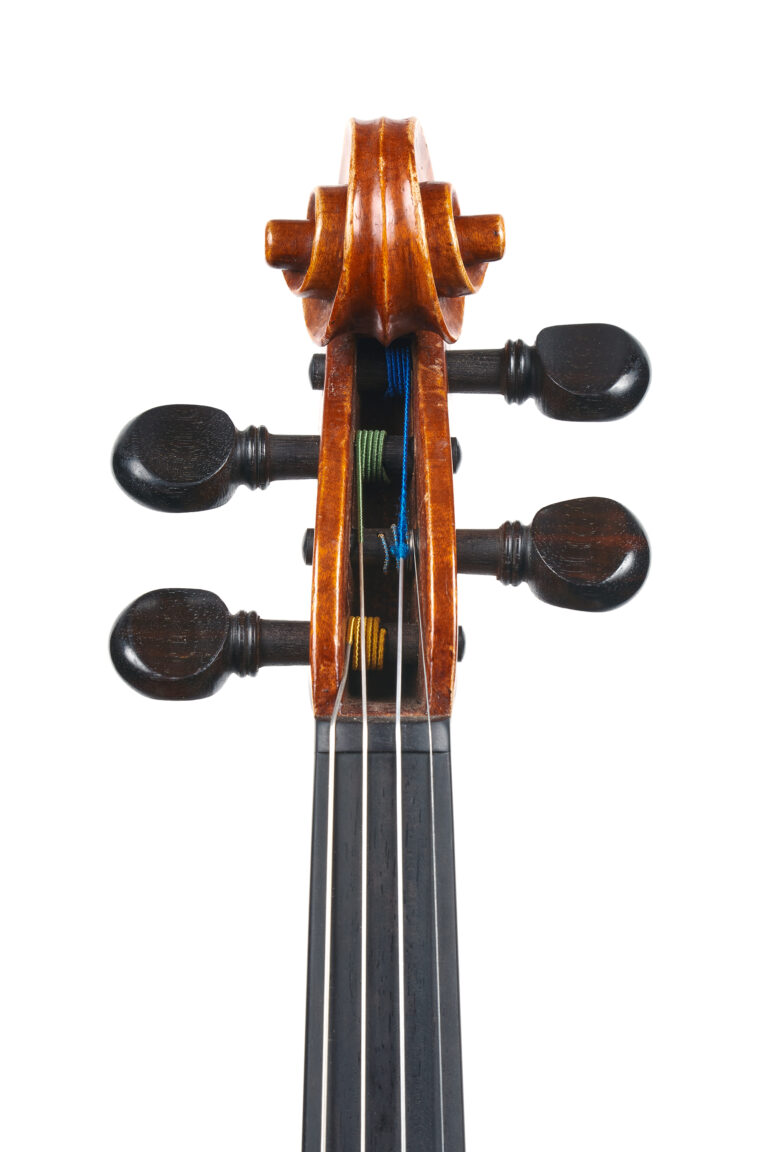
The scroll is finely carved with a deeply cut throat and precise chamfers, while the f-holes are classically Cremonese in style, gracefully integrated within the arching. The instrument features a two-piece Italian spruce top and a striking one-piece quarter-cut maple back of broad, luminous flame.
Covered in a transparent orange spirit varnish over a light golden ground, this example shows the maturity and refinement of Mandelli’s later work. Tonally, it offers a bright, direct, and sweet voice with immediate responsiveness and depth.
Preserved in mint condition, this violin represents an excellent choice for the discerning professional musician or collector of fine Milanese instruments.

dimensions
sound characteristics
Bright, Sweet and Direct
Audio
00:00/
Camillo Mandelli
Known as Camillo da Calco, was a pupil of Leandro Bisiach and the Antoniazzi brothers in Milan. Active in Buenos Aires from 1899 to 1920 before returning to Italy, he remained closely linked to the Bisiach tradition throughout his career. His work reflects Antoniazzi-inspired models, fine materials, and golden to red-brown spirit varnish. Mandelli’s instruments are valued for their clarity, balance, and solid Milanese craftsmanship.
Learn moreCOMPARE WITH SIMILAR INSTRUMENTS...
A Violin for sale by Lorenzo Frignani
Violin by Lorenzo Frignani, Modena, 2025
A Violin for sale by Luiz Amorim
Copy of Joseph Guarneri “del Gesù” Panette, ex-Stern, 1737
Violin bow by Marc Laberte, Mirecourt 1940
By Marc Laberte |
This fine violin bow by Marc Laberte, made in Mirecourt in the 1940s, represents the solid craftsmanship and practical elegance of the French workshop tradition during the early 20th century. Produced within the respected Laberte-Humbert Frères atelier, it reflects the disciplined construction and reliability that made Mirecourt bows widely appreciated among professional and advanced musicians.
The round stick is carved from Pernambuco of a vivid brown color, selected for its balanced density and resilience. The wood offers an excellent combination of strength and flexibility, giving the bow a stable and confident character. The head follows the traditional French outline, cleanly defined and well proportioned, expressing the straightforward and functional aesthetic typical of Laberte’s work of this period.
Mounted in silver, the bow features a classical ebony frog fitted with a mother-of-pearl eye and a matching ebony and silver button. The fittings are executed in the refined Mirecourt style, combining durability with understated elegance. This example remains in excellent condition, preserving its original integrity and craftsmanship.
In playing, the bow offers a steady and reliable response, with secure articulation and balanced control across the string. Its dependable and robust character makes it particularly suitable for musicians seeking consistency and stability in daily performance.
A very good and representative example of Marc Laberte’s mid-century production, this bow stands as a testament to the enduring practicality and musical effectiveness of the Mirecourt bow-making tradition.
Get advice about this instrument
[INSTRUMENT NAME GOES]
Do you want to know more about this masterpiece? Contact us, and our experts can share their thoughts on this beautiful instrument. Let us help and advise you to find your dream instrument.

