Antonio Stradivari’s violins are not sitting in private drawers waiting to be discovered. Today, the surviving instruments belong to a select group of owners: major museums, central and commercial banks, dedicated music foundations, and a small circle of private collectors and virtuoso soloists.
Of the more than 1,100 instruments Stradivari is believed to have made in his lifetime, roughly 650 survive, and between 450 and 512 of those are violins, according to research shared by the Los Angeles Chamber Orchestra. That scarcity is precisely what shapes who ends up owning them, and why so few Stradivarius violins ever appear for public sale.
Understanding who holds these instruments today also explains a great deal about how the market for rare stringed instruments actually functions, a subject closely tied to how violins appreciate in value over time.
How Many Stradivarius Violins Survive Today
Stradivari worked in Cremona for roughly seven decades, refining a personal model after 1680 that became the benchmark the violin world still measures itself against, a legacy explored in depth in this look at Stradivari’s finest surviving work.
Many instruments were lost to fire, war, neglect, or simple deterioration over three centuries. What remains is a finite, closed pool.
No new Stradivarius violins will ever be made, and that fixed supply, set against rising global demand from institutions and collectors, is the single biggest driver behind auction prices that now regularly reach into the tens of millions.
The Sasakawa Music Foundation and Its Instrument Loan Project
Formerly known as the Nippon Music Foundation, the Tokyo based Sasakawa Music Foundation renamed the organization in December 2025, and it remains one of the largest institutional owners of fine stringed instruments in the world.
The foundation holds 21 pieces made by Stradivari and Giuseppe Guarneri del Gesù, including 15 Stradivarius violins, a viola, three cellos, and two del Gesù violins.
Rather than keep them locked away, the foundation runs an Instrument Loan Project, launched in 1994, that places its violins in the hands of promising musicians under the age of 35, typically for terms of two to seven years, at no cost to the player.
Recipients have included Ray Chen, María Dueñas, Timothy Chooi, and Giuseppe Gibboni, among many others, each entrusted with instruments such as the 1722 Jupiter or the 1714 Dolphin. The arrangement gives rising soloists access to instruments they could never otherwise afford, while ensuring the violins themselves stay in active concert use.
Great Museums and Public Collections
Museums represent a different model of ownership, one built around permanent preservation rather than rotating loans. The Smithsonian’s National Museum of American History displays the Axelrod Quartet, a matched set of Stradivari instruments that includes the 1709 Greffuhle violin.
The Ashmolean Museum in Oxford holds the Messiah Stradivarius of 1716, an instrument so pristine it is believed to have barely been played, with an estimated value near 20 million dollars, a figure that places it among the most valuable violins ever discussed, alongside others detailed in this ranking of the world’s most expensive violins.
The Royal Academy of Music in London similarly holds Stradivari instruments as part of its permanent collection, using them primarily for study, exhibition, and occasional performance rather than long term loans to touring soloists.
European Banks as Stradivarius Owners
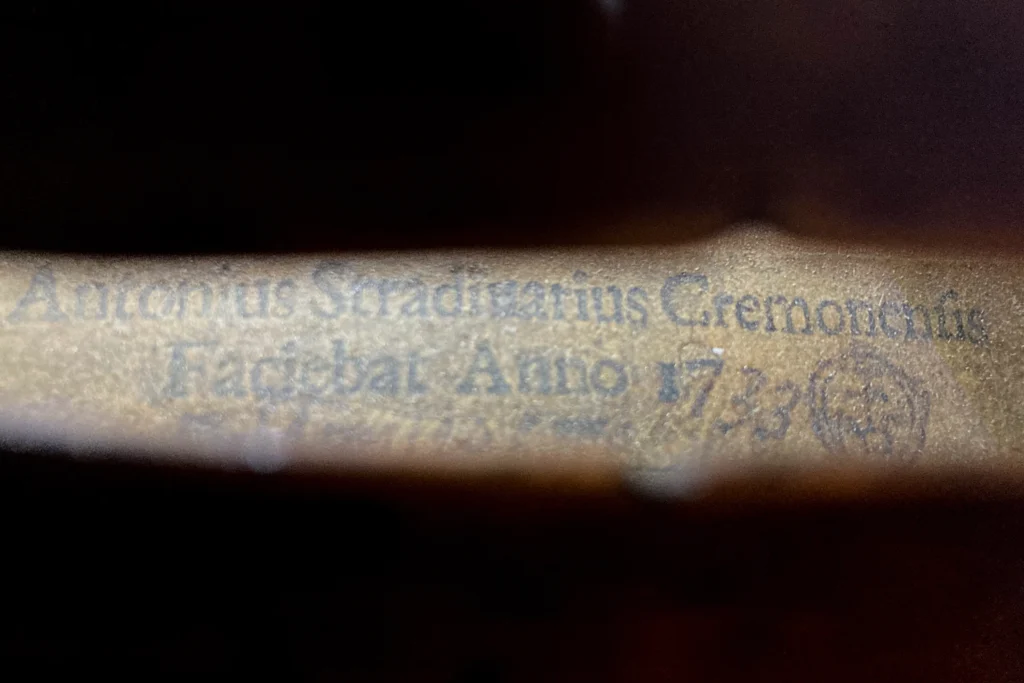
Banks entering the Stradivarius market may seem unusual at first, but the logic is straightforward once the asset class is understood. The Austrian National Bank, the country’s central banking authority, has held Stradivari and Guarneri instruments for decades, treating them as cultural assets tied to national prestige.
Germany’s L-Bank Baden Württemberg has owned a 1724 Stradivarius since 1989 and, like the Sasakawa Foundation, awards its use to selected musicians.
Commercial banks have also entered this space at times, motivated by a mix of branding value and genuine appreciation for the instruments’ role in cultural life, even as many financial institutions ultimately concluded that funding a handful of concert appearances offered limited return compared to other sponsorship options.
Private Collectors and Soloist Owners
Not every Stradivarius sits inside an institution. A number of private collectors, some based in Asia, Europe, and North America, have assembled personal holdings of Stradivari and Guarneri instruments, often working with specialized dealers to source and authenticate them, a process examined further among the rare instruments handled by established dealers today.
Organizations such as the Chicago based Stradivari Society act as intermediaries between these private patrons and professional musicians, currently placing more than 25 instruments worth over 30 million dollars combined into the hands of touring soloists including Joshua Bell, Hilary Hahn, and Gil Shaham.
In these arrangements the patron retains ownership while the artist performs on the instrument, often for an indefinite period, and in some cases the musician eventually purchases the violin outright once their career reaches a certain level.
How the Loan System Works and Why It Matters
The mechanics behind these loans reveal something important about how the market values these instruments. A foundation, bank, or private patron acquires a Stradivarius as a long term holding, often through a specialized dealer, then places it with a carefully selected musician rather than leaving it in storage.
This is not simply generosity. Stringed instruments made from wood benefit from being played regularly, and an idle violin can lose some of the tonal responsiveness that took centuries to develop. Lending the instrument to an active performer keeps it in optimal playing condition while also raising its profile through concert appearances and recordings, which in turn supports its market value.
For the owner, the arrangement also carries real financial logic. These instruments have historically appreciated at a steady pace over long periods, and unlike gold or fine art, they generate visibility every time a soloist performs with them in a major concert hall.
For the musician, it is often the only realistic path to playing an instrument that costs several times more than a home, since few working artists could otherwise afford one.
The fact that central banks, national foundations, and sophisticated collectors are willing to commit tens of millions of dollars to these loan programs is itself a signal of how seriously the market treats Stradivari instruments as a durable asset class rather than a passing luxury.
What Stradivarius Ownership Means for the Violin Investment Market
The ownership landscape around Stradivarius violins tells a consistent story. These instruments move almost exclusively between museums, foundations, banks, and a narrow group of collectors and soloists, rarely reaching the open retail market and almost never losing value once acquired by a serious institution.
For anyone evaluating fine instruments as a long term holding, that pattern of concentrated, deliberate ownership, paired with active loan programs designed to keep violins performing rather than sitting idle, offers a useful model for how value is preserved and built over generations.
Amorim Fine Violins works with collectors and musicians navigating exactly this kind of decision, helping match serious buyers with instruments whose provenance and playing history support long term value.
From Museum Vaults to Your Collection: Amorim Fine Violins
Every Stradivarius in a museum vault, bank collection, or foundation program began the same way: with an owner willing to invest in an instrument built to outlast generations. That same principle applies at a more accessible level across the fine instrument market today, where collectors and musicians alike are building their own long term holdings.
Amorim Fine Violins works directly with buyers seeking that kind of instrument, offering a curated selection of rare instruments sourced, authenticated, and matched to serious collectors and performing musicians.
Talk to a specialist about this topic

Featured Instrument
 AVAILABLE
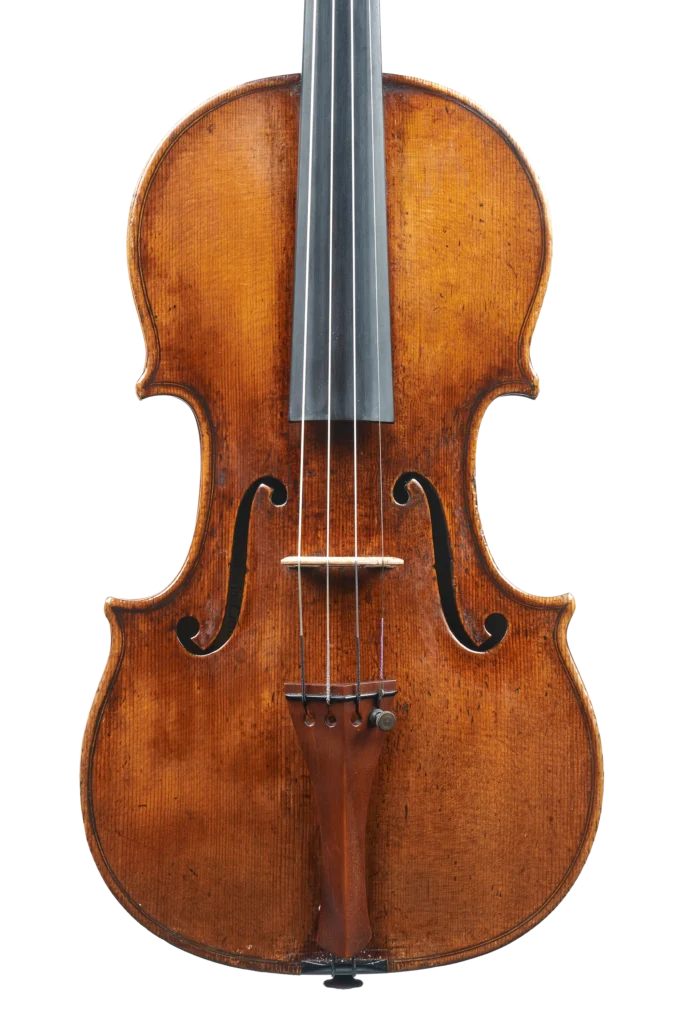
Violin by Antonio Stradivari "Lam; Ex-Scotland University"
Antonio Stradivari — c.1734
View Instrument