In This Article
The finest violins ever made share a rare combination of qualities that transcend time, fashion and market cycles. Whether crafted by the great Cremonese masters of the seventeenth century or by the most accomplished living luthiers of today, these instruments occupy a singular position — as objects of cultural heritage, as tools of artistic expression and as long-term stores of value for those who understand what they are looking at.
This guide explores the principal factors that define a fine violin's worth, from the technical elements of construction to the documentary evidence of provenance and the market forces that determine how instruments are valued and exchanged.
What Makes a Violin Truly Fine
The distinction between a fine violin and an ordinary instrument is not simply a matter of price. It is a matter of intention, execution and survival. A fine violin was made by a trained hand working within a tradition of accumulated knowledge, using materials selected with care and shaped with tools refined over generations.
The Role of the Maker
No factor influences the long-term value of a violin more decisively than the identity and reputation of the maker. Instruments by Antonio Stradivari and Giuseppe Guarneri del Gesù command the highest prices ever recorded at auction — not merely because of their age, but because of their demonstrable superiority as acoustic instruments and their irreplaceable position in the history of Western music.
Contemporary makers of the first rank occupy a different but increasingly important tier of the market. A violin built today by a luthier of international standing — one whose instruments are played by soloists and held in institutional collections — represents a legitimate investment proposition with a documented appreciation trajectory.
The Five Pillars of Violin Value
Five interlocking factors determine the long-term value of any fine violin. Understanding each is essential before any serious acquisition decision.
- Maker's reputation — The luthier's standing within the international community of makers, dealers and performers. Public auction records, peer endorsements and museum acquisitions are reliable signals.
- Provenance — The documented chain of ownership, supported by certificates of authenticity, dendrochronology reports and historical records wherever possible.
- Condition — The degree to which the instrument retains its original structure, varnish and acoustic integrity. Prior repairs are not necessarily disqualifying, but they must be disclosed and assessed by an independent expert.
- Playability — The tonal qualities of the instrument as evaluated under realistic playing conditions. No certificate can substitute for an audition in the hands of a trusted performer.
- Documentation — The completeness and reliability of the paper trail accompanying the instrument. An instrument without verifiable documentation cannot reach its full potential value, regardless of its physical qualities.
Antique vs. Modern: What Collectors Should Know
Two broad categories define the serious end of the market. Understanding the differences between them is essential for any collector approaching the field for the first time.
| Feature | Antique Violins | Modern Handmade Violins |
|---|---|---|
| Value Stability | Highly stable; top examples have appreciated consistently for decades | Strong upside on the best living luthiers, with growing recognition |
| Sound Quality | Mature, complex tonal palette shaped by centuries of playing | Clean, projecting voice; develops further with regular use |
| Availability | Extremely scarce; finite historic supply, much locked in collections | Limited but accessible — multi-year waitlists for top makers |
| Maintenance Needs | Specialized care, periodic restoration, climate-sensitive | Lower maintenance overhead; simpler insurance and travel logistics |
| Entry Point | Generally six to seven figures and above | Typically $50,000–$100,000 for established living masters |
A Note on Authenticity
"A fine violin is never just an object. It is a vessel of history, emotion and artistic evolution — and one of the few assets that improves with use."
— Luiz Amorim, Master Luthier, Cremona
Authentication is not a single document. It is a body of converging evidence — visual, technical, historical and acoustic — assembled by experts with the relevant knowledge and access to comparable instruments. No single certificate, however prestigious its issuer, is sufficient on its own.
The most reliable authentication processes involve:
- Physical examination by at least two independent experts
- Dendrochronological analysis of the top and back plates
- Comparison with documented instruments by the same maker
- Review of the instrument's ownership history against known sales records
- Acoustic evaluation by a professional performer
How to Begin Your Journey
Acquiring a fine violin is not a transaction. It is the beginning of a relationship — with the instrument, with the maker, with the history it carries and with the network of specialists who can help you understand and protect your investment over time.
The most successful collectors share a common approach: they take their time, they seek expert guidance at every stage, and they prioritize instruments they can live with — instruments that reward daily contact and reveal new qualities over years of ownership.
If you are considering your first serious acquisition, or if you are looking to expand an existing collection with greater confidence, the right conversation to have is not with a salesperson. It is with an advisor who has no interest in any particular transaction and every interest in your long-term satisfaction.
This article is intended for educational purposes. Individual instruments vary significantly in condition, provenance and market value. Amorim Fine Violins recommends independent expert consultation before any acquisition decision.
Talk to a specialist about this topic
Featured Instrument
 AVAILABLE
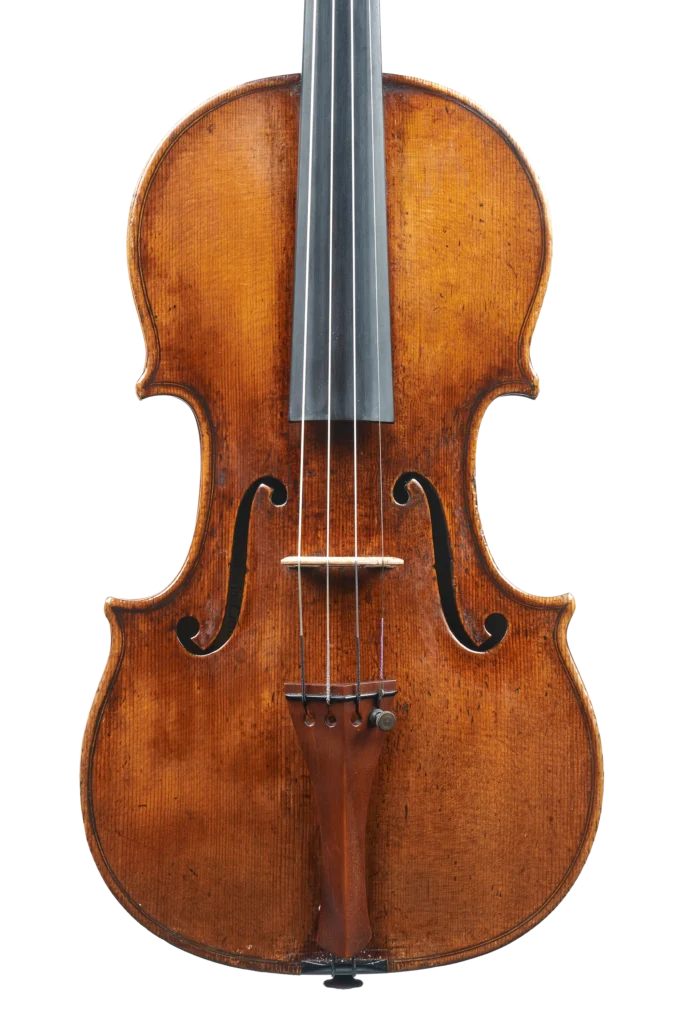
Violin by Antonio Stradivari "Lam; Ex-Scotland University"
Antonio Stradivari — c.1734
View Instrument