A Guide to Professional Violins — What Serious Musicians Should Look For
What makes a good professional violin a masterfully crafted instrument, the kind that performing musicians can rely on? If you’re looking for a stringed instrument that knows your every move, you’re not just purchasing a tool, you’re selecting your voice. This guide breaks down what defines professional violins, how they differ from student models, and what to consider when investing in a long-term performance partner whether you’re researching the violin for professional musicians, comparing professional violin brands, or looking for the best professional violin to elevate your artistry, this deep dive will help you in finding your ideal instrument.
A professional violin is more than an expensive or beautifully made instrument. For an advanced player, its value begins with what it allows them to do: communicate clearly at a whisper, sustain sound under pressure, move between registers without losing character, and feel in control throughout a demanding performance.
The decision is deeply individual. An instrument that projects impressively in a concert hall may not respond naturally to a particular bowing technique; a violin admired for its provenance may not be the best musical partner for its prospective owner. This guide explains what distinguishes professional violins from student instruments, how to compare contemporary, modern, and old fine examples, and how the Amorim atelier approaches testing and setup.
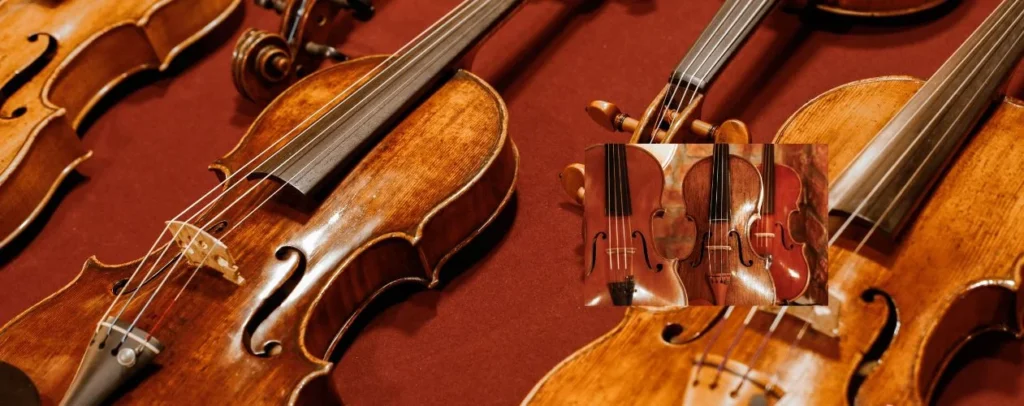
What Makes a Violin “Professional”?
There is no universal price threshold or certification that makes a violin professional. The more useful definition combines construction quality, a carefully considered setup, and the ability to answer the technical and artistic demands of an advanced musician. Handcraftsmanship, maker reputation, and select materials matter, but they do not replace a playing evaluation.
In the Amorim atelier’s assessment, an exceptional instrument should project a clear voice while remaining comfortable and intimate under the player’s ear. It should react to small changes in the bow, maintain clarity in all four strings, and preserve its musical personality at both pianissimo and full strength. Equally importantly, it must suit the individual musician.
For a broader explanation of craftsmanship, authorship, sound, and condition in fine instruments, see Understanding Fine Violins. That wider framework complements, rather than replaces, the musician’s performance-based tests in this guide.
The Qualities to Listen and Feel For
- Projection, not just loudness: ask someone to listen from a distance. The sound heard under the ear is not the same as what reaches the back of a room.
- Responsiveness: notice how promptly a note speaks, particularly at low bow pressure, in string crossings, and at the start of a phrase.
- Balance across registers: test bass, middle, and treble registers, including positions and strings less frequently used in your standard repertoire.
- Dynamic range and tone colour: a suitable professional violin gives the musician choices between intimacy and intensity without losing focus.
- Playability and physical comfort: string height, fingerboard condition, neck geometry, and setup should support long rehearsal sessions rather than create avoidable effort.
Craftsmanship, Materials and Setup: Different Parts of the Same Result
The maker establishes an instrument’s underlying architecture through the model, wood selection, arching, graduation, f-holes, and construction methods. These decisions influence its possibilities, although no single measurement or species of wood determines its sound. The finishing of the scroll, purfling, edges, and varnish can also reveal the maker’s technical and artistic approach.
For a closer look at the skills behind these decisions, see the world of violin luthiers.
Setup is a separate but vital stage. The bridge, soundpost, strings, and tailpiece influence response, balance, and feel. In the atelier’s experience, very small soundpost adjustments can be audible, but their result depends on the whole instrument and must be judged by a qualified luthier. The team also pays close attention to the afterlength between bridge and tailpiece, testing configurations by ear rather than treating a single ratio as universally correct.
This distinction matters when trying a violin. An instrument with a poor setup may feel restricted even when its underlying construction is excellent. Conversely, adjustments cannot turn every instrument into every kind of musical voice. Before concluding that a violin is not professional enough, an experienced specialist should determine whether it is revealing its actual potential.
As the Amorim atelier explains in its technical Q&A, the initial conversation concerns what the musician hears, what has changed, and what they need. Gaian Amorim oversees the acoustic setup of instruments leaving the workshop, with adjustments tailored to the individual player.
A setup assessment should therefore come before dismissing an instrument for an uneven response. The atelier describes checking bridge fit, soundpost placement, strings, and afterlength as interacting variables, always in relation to the player’s requirements. These are professional adjustments: they should not be attempted by a player without an experienced luthier.
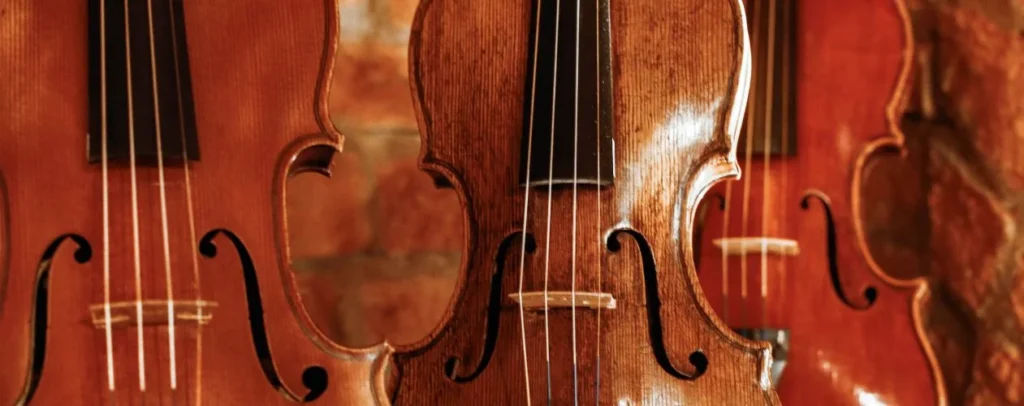
Entry-Level vs. Intermediate vs. Professional Violins
The labels are useful starting points, not rigid acoustic categories. Entry-level instruments prioritize accessibility and reliability for developing technique. Intermediate instruments typically offer more carefully selected materials, refined workmanship, and a setup better suited to advancing musicians. Professional instruments are chosen for the precision, breadth of expression, and consistency expected in demanding musical work.
Construction Quality and Craftsmanship
A student violin can be an excellent educational tool without being a fine handmade instrument. An intermediate violin may have solid spruce and maple, hand-finished components, and improved fittings. In a fine professional violin, workmanship extends through the plates, arching, edges, internal structures, finish, and final setup; individual maker choices become part of the instrument’s identity. These differences need to be verified on the individual violin rather than inferred from a product category alone.
Sound Quality and Playability
Rather than asking whether a violin sounds simply warmer or louder, compare how it behaves in demanding passages: soft attacks, quick string crossings, shifts into high positions, extended bow strokes, and changes in colour within the same phrase. An instrument that offers a greater range of controllable responses can support an advanced player’s artistic development in ways a basic instrument may not.
Price, Value and Long-Term Considerations
A professional violin is not automatically a financial investment. Market value depends on factors such as maker, attribution, provenance, condition, rarity, and comparable sales, while musical suitability depends on how a particular instrument works for a particular player. The two can overlap without being identical. A contemporary violin may offer a musician a better match than a much more valuable historical instrument.
For readers interested in the distinction between recognized makers and commercial brands, our guide to violin brands and their makers explains the terminology in greater detail.
Contemporary, Modern and Old Fine Violins: What Changes for the Player?
Fine instruments can be considered across three broad historical categories. These are descriptions of period and provenance, not fixed rankings of sound. The published distinctions vary somewhat across the trade; for consistency, this guide uses contemporary for recent and current making, modern for broadly late-19th- to mid-20th-century instruments, and old fine for earlier historical examples. Boundaries can overlap and should be checked in a specific instrument’s documentation.
Contemporary Violins: A Living Tradition
Contemporary makers may work with classical Italian models while interpreting wood, arching, varnish, and setup through their own practice. Their instruments can offer professional sound and close communication with the maker or workshop. Documentation normally begins with the contemporary maker and can be maintained from the instrument’s creation onward.
Modern Violins: Individual Makers and Schools
Modern instruments reflect the work of individual makers and regional traditions active around the late 19th and first half of the 20th century. Their construction and sound cannot be reduced to a single tonal stereotype: the workmanship, model, condition, and setup of the actual instrument should determine whether it suits a musician.
Old Fine Violins: History, Condition and Musical Suitability
An old fine violin brings historical craftsmanship and potentially substantial documentary and collector interest. But age does not guarantee a more complex tone, superior projection, or greater musical suitability. Original material, structural integrity, the quality of earlier repairs, and confidence in attribution are essential considerations, alongside playing quality.
The Amorim Lab dossiers show why historical instruments must be evaluated individually. A particularly revealing example is a Fratelli Gagliano violin from around 1800, whose original neck and scroll have been preserved separately while replicas are fitted for modern performance. This unusual state of preservation illustrates how historical integrity and contemporary playability can coexist, provided that alterations are carefully documented and assessed. For readers interested in historic instruments as a collection, explore Rare & Historic Instruments.
For a dedicated explanation of period terminology, read Contemporary vs. Modern Violins.
| Consideration | Contemporary | Modern | Old Fine |
| Period | Current/recent makers | Broadly late 19th to mid-20th century | Earlier historic instruments |
| Construction | Maker-specific contemporary practice | Maker- and school-specific techniques | Historical materials and workshop methods |
| Playing assessment | Response, balance, projection, comfort | Same musical tests; account for current condition | Same musical tests; account for condition and repairs |
| Documentation | Maker certificate and service history | Maker attribution and provenance when available | Expert attribution, provenance and condition records |
| Care and condition | Setup and normal maintenance | Inspection of wear, repairs and setup | Detailed structural and restoration assessment |
| Market considerations | Maker reputation and demand | Maker, rarity, condition and demand | Attribution, preservation, provenance and demand |
The practical lesson: these categories help frame the search, but they do not predict which individual instrument will best suit a player.
How to Choose the Right Professional Violin
Start With Your Repertoire and Working Conditions
Define the environments in which the violin must perform: solo repertoire with orchestra, chamber music, orchestral work, recording, and touring may place different demands on clarity, blend, headroom, and physical comfort. No instrument should be evaluated solely by its famous name, age, visual appeal, or asking price.
A More Useful Professional Violin Trial
The Amorim atelier recommends removing as many changing variables as possible when comparing two violins. Play the same passages in the same room, on the same day, in direct succession; use your own bow; ask a trusted listener to hear the result from across the space; and make recordings to revisit without the immediate physical sensation of playing.
A particularly useful discipline from the Amorim atelier is to test in a short sequence while tonal memory is fresh. Play two contrasting passages on each instrument, swap back promptly, and have the listener describe projection, balance, and clarity without seeing which violin is being played. This is a practical comparison technique, not a controlled scientific experiment.
- Compare soft dynamics first, then powerful passages. Listen for clarity and personality rather than loudness alone.
- Test all four strings, transitions between registers, upper positions, attacks, and sustained notes.
- Repeat the test in a larger room or hall if possible; the under-the-ear experience may be misleading.
- Play the repertoire you actually perform, including music that exposes weaknesses rather than only flattering passages.
- Allow time for familiarity and professional setup evaluation before making a final decision.
A short showroom appointment cannot reproduce an extended rehearsal or a concert. Ask the atelier which trial formats and conditions are available for your location and instrument, rather than assuming a standard loan period. Where a longer trial is possible, note how your response changes after the first impression.
The bow also changes the way a violin responds. For the factors involved, see Choosing the Right Violin Bow.
Ask What Can Be Adjusted and What Cannot
If a violin seems uneven, resistant, or unusually bright, an experienced luthier can help distinguish a setup issue from a characteristic of the instrument itself. The soundpost and bridge are particularly influential, but their adjustment is specialist work; small changes can produce different results depending on the violin. Setup is also affected by seasonal conditions, so a trial should be interpreted in context.
Check Documentation and Condition Before Committing
For contemporary instruments, request the maker’s certificate and available service history. For historical instruments, consider the attribution and its supporting expert opinion, condition report, provenance, and documentation of major restoration. No single label, certificate, or laboratory technique proves authorship in isolation. Amorim’s authentication documentation describes a combined examination of construction, historical comparison, and selected imaging or dendrochronology where applicable.
The purpose is not to replace the musician’s ear with paperwork, but to understand what is being acquired, how it can be maintained, and what risks should be disclosed before a purchase.
For instruments of substantial historical value, a documented assessment can draw on photographs, comparative study, condition reporting, and, when relevant, scientific examination. The Amorim Lab addresses that evidence-led examination; a certificate remains an expert opinion, not a substitute for playing or an absolute guarantee of authorship.
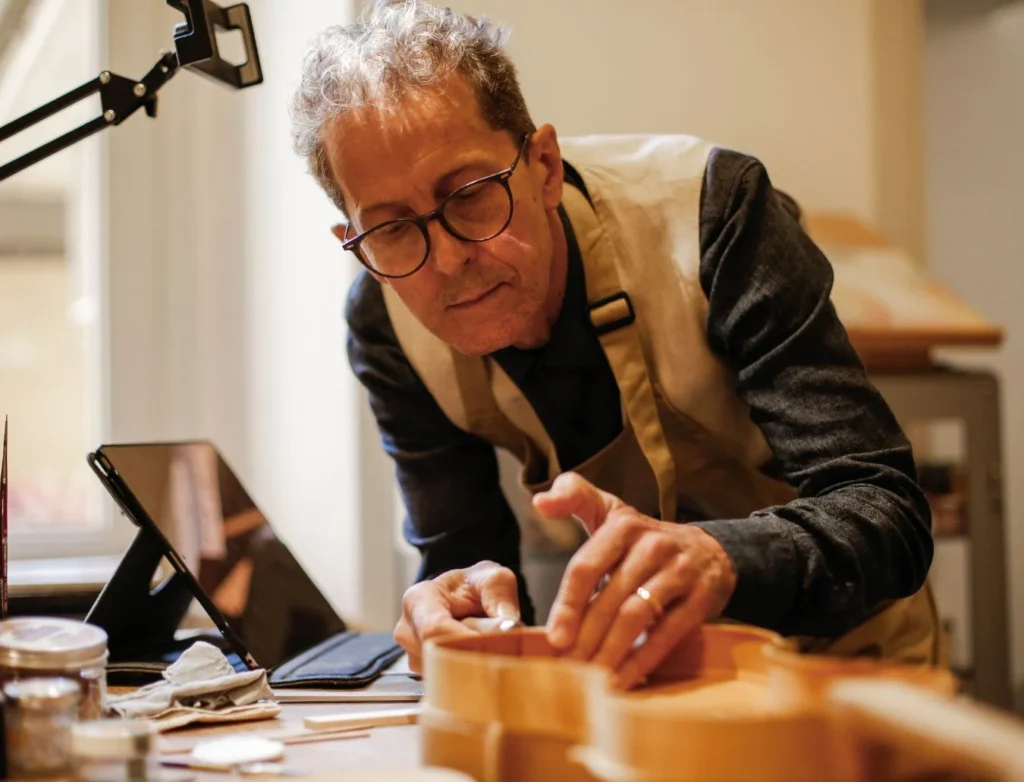
Why Professionals Work With the Amorim Atelier
Based in Cremona, Amorim Fine Violins combines making, restoration, expert examination, and individual advice for musicians. Luiz Amorim’s work involves close study of historical Italian models, while Gaian Amorim oversees acoustic setup for instruments prepared for clients. That experience matters in a professional search: the same violin can be considered as an object of craftsmanship, a maintained instrument, and a practical musical partner.
If you are searching for a violin as a working musician, For Musicians explains the audience the atelier supports. For the practical route from first conversation to selection and purchase, see Buy From Amorim. More complex acquisition decisions, including the assessment of provenance and condition, can call for Amorim Advisory.
For an example of contemporary practice, the Amorim dossiers document a Luiz Amorim violin inspired by the Stradivari “Willemotte” model, and a cello based on Domenico Montagnana’s “ex-Eisenberg”. These are useful examples of the workshop’s research into historical models, rather than evidence that every instrument shares the same tonal profile.
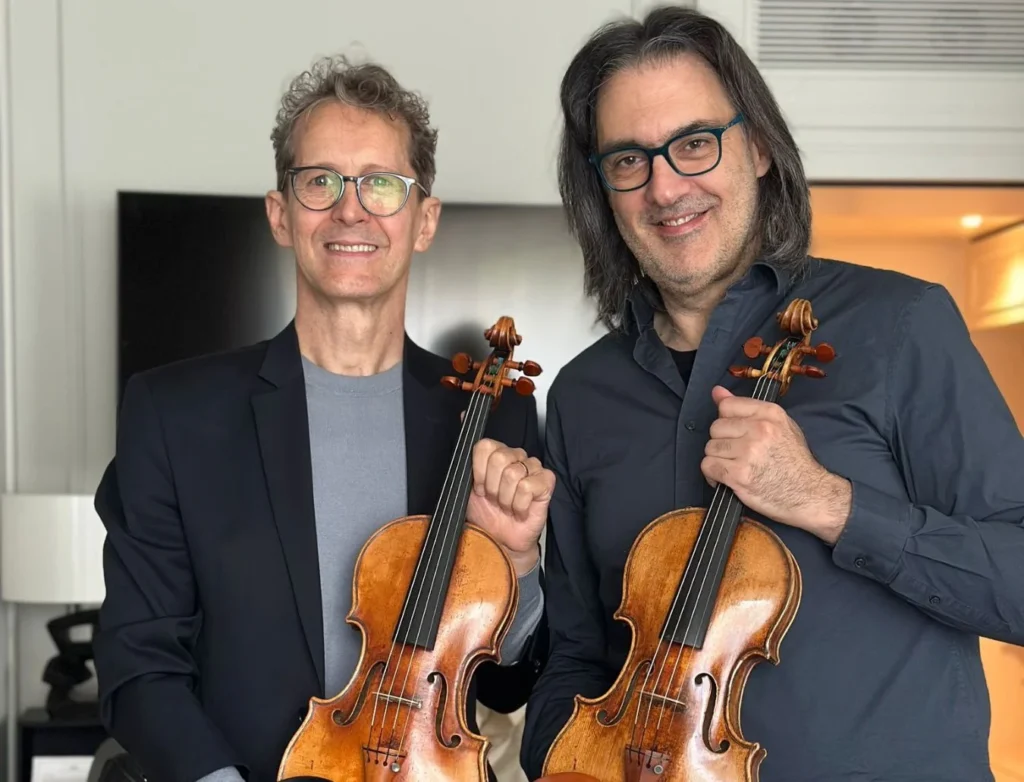
Artists and Musical Perspectives
The Amorim atelier documents work and conversations involving musicians including Giuseppe Gibboni, Eric Silberger, and Leonidas Kavakos. These are distinct relationships, not interchangeable endorsements. The atelier Q&A attributes the following observation to Kavakos: “The more you play the more you find, and this is what matters to a violinist.” The remark describes a quality that a short demonstration may not reveal, highlighting the depth of the instrument's character.
Where to Try Professional Violins
The best choice comes from testing an instrument in musical conditions that matter to you, understanding its setup, and examining the documentation appropriate to its age and attribution. The Amorim team in Cremona can help players compare instruments and identify adjustments or further investigation worth undertaking.
The next step is a conversation about repertoire, working conditions, and budget, followed by a carefully structured trial. Explore the selection of violins, learn how Amorim accompanies an acquisition, or discuss a complex search with the advisory team.
Explore the violin collection or learn more about the assisted acquisition process.
Talk to a specialist about this topic

Featured Instrument
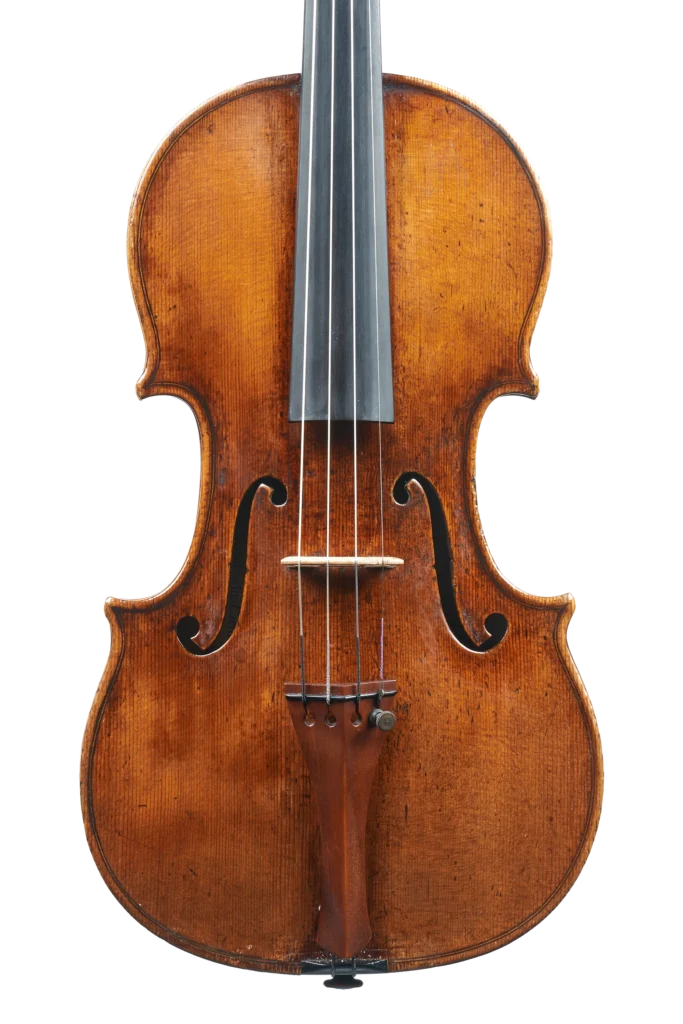 AVAILABLE
Violin by Antonio Stradivari "Lam; Ex-Scotland University"
Antonio Stradivari — c.1734
View Instrument