When collectors and musicians search for the best violin brands, what they are really looking for is trust: an assurance that the instrument they choose was built with skill, care, and proven materials. That trust does not come from a manufacturer’s logo.
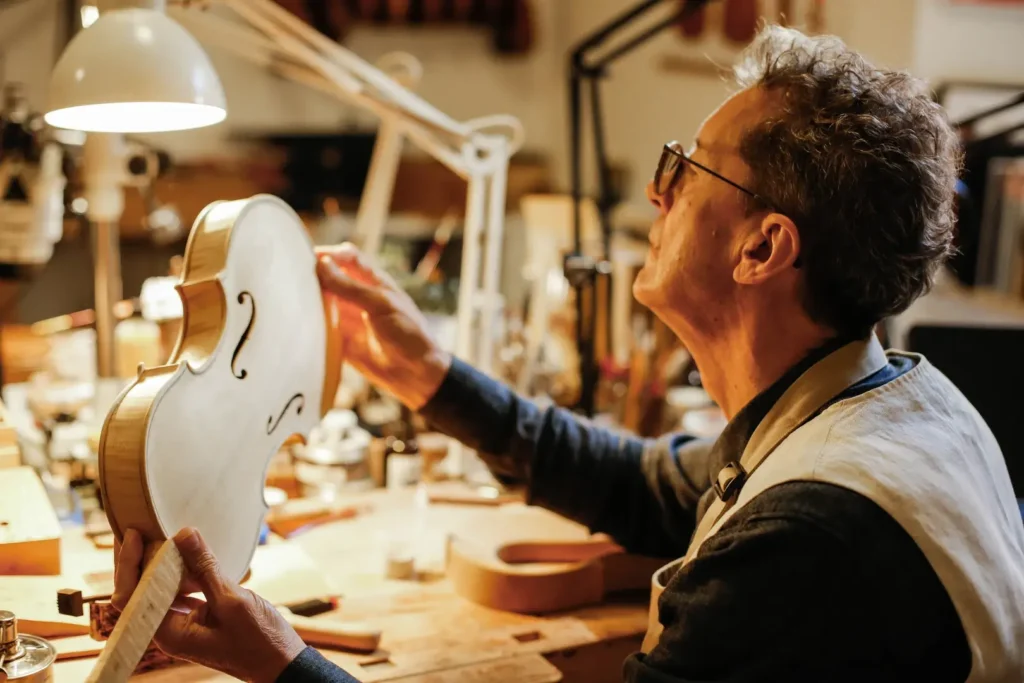
It comes from the maker who shaped the wood, tuned the plates, and applied decades of training passed down through a specific lineage of craftsmanship. In the world of fine violins, quality is tied to the individual luthier and the school that trained them, not to a company name stamped on a label.
This guide walks through why that distinction matters, introduces the schools and makers who shaped the instrument as we know it today, and shows how that same tradition continues in contemporary work. Understanding this shift is the first step toward choosing an instrument for the right reasons.
Why Violins Don’t Have “Brands” Like Other Products
Searching for a “brand” makes sense for most purchases. It is a natural shorthand people use for almost everything they buy, from cars to electronics. But violins come from a different production model entirely, and understanding that difference changes how you evaluate an instrument.
Mass produced string instruments are built in factories, often assembled from standardized parts with limited variation between units. These instruments carry a company name, and that name mostly tells you about consistency: every unit will be roughly similar in build quality and sound.
Fine violins work the other way around. Each instrument is handmade by a single luthier or a small workshop, using wood selected specifically for that piece, carved and voiced according to that maker’s training and personal judgment.
The name attached to a fine violin is the maker’s own signature, and it tells you something entirely different from a brand: it points to a specific set of hands, a specific school of technique, and a specific acoustic philosophy.
This is why collectors and professionals spend more time researching the maker than comparing manufacturer catalogs. If you are exploring instruments built this way, browsing a collection organized by maker and provenance, such as the violin selection available through Amorim Fine Violins, gives a clearer picture of what actually separates one instrument from another.
Main Schools: Where the traditions started
Violin making developed along distinct regional traditions, each with its own construction methods, sound preferences, and aesthetic choices. These are commonly referred to as schools, and recognizing them helps explain why instruments from different regions can sound and look so different, even when built in the same era.
Cremona
Cremona, Italy is the most influential center in the history of violin making. It is the birthplace of the modern violin form and home to the masters who defined the instrument’s proportions, arching, and varnish techniques.
Cremonese instruments are known for their balance between projection and warmth, a result of construction principles refined over generations of apprenticeship within the same workshops.
Brescia
Predating Cremona’s rise, the Brescian school produced instruments with a bolder, more rustic character. Brescian makers favored broader dimensions and a darker, more powerful tone, and their work laid important groundwork for the acoustic principles Cremonese makers would later refine.
Venice
The Venetian school developed its own distinct voice, often associated with elegant craftsmanship and a brighter tonal color. Venetian makers worked in a city defined by trade and artistic exchange, which shaped a style that was both technically precise and visually refined.
Mirecourt
Outside Italy, the French town of Mirecourt became a major center of violin making, blending careful workshop production with strong technical training. Mirecourt instruments are typically valued for their consistency and craftsmanship, representing a slightly different tradition from the more individualized Italian schools.
Classical Makers: Those that made the Standards
A select group of names sit at the top of violin making history, and best makers is really the accurate term for them, not brands in any conventional sense.
Each represents an individual craftsman whose instruments are still played, studied, and collected today, centuries after they were built.
Stradivari
Antonio Stradivari is widely regarded as the most important figure in violin making history. Working in Cremona, he refined the instrument’s proportions and arching to achieve a balance of projection, clarity, and warmth that remains a benchmark for makers today.
His instruments are among the most sought after in the world, and much has been written about how to identify authentic Stradivari craftsmanship, including detailed guides on label identification and provenance.
Guarneri
Giuseppe Guarneri del Gesù, a contemporary of Stradivari, took a different approach to construction, producing instruments with a darker, more powerful voice. His work is closely associated with virtuoso performance, and many professional soloists consider a Guarneri instrument to represent the height of tonal depth and character.
Guadagnini
Giovanni Battista Guadagnini worked across several Italian cities throughout his career, adapting his style as he moved. His instruments are prized for their versatility and refined craftsmanship, and today they command significant value at auction. For collectors researching this maker specifically, a closer look at Guadagnini violin prices and history offers useful context on what drives their market value.
Gagliano
The Gagliano family established a lasting workshop tradition in Naples, producing instruments across multiple generations. Their work reflects a distinctly Neapolitan interpretation of Italian violin making, valued for craftsmanship that remained consistent across decades of family training.
For readers who want a broader view of how these names compare across the full history of the craft, a detailed overview of the best violin makers of all time traces this lineage from its earliest roots through the modern era.
Contemporary Makers: Keeping the tradition alive
The tradition established by these classical schools did not end with the old masters. It continues today through luthiers trained in the same principles of hand craftsmanship, material selection, and acoustic precision.
Alessandro Di Matteo
Alessandro Di Matteo graduated with honors from the Antonio Stradivari International School of Violin Making in Cremona and has earned recognition through numerous international competitions over his career.
Since 2001 he has also served as a faculty member at the same institution, training the next generation of makers while continuing to build instruments modeled after Stradivari and Guarneri. His path into lutherie began unusually, as a professional violinist whose curiosity about acoustics led him to formal training in Cremona under respected local masters.
Mattia Riva
Mattia Riva trained at the Civica Scuola di Liuteria in Milan before opening his own atelier in Varese, where he specializes in instruments inspired by the Milanese tradition of makers like Giuseppe Ornati and Leandro Bisiach. His craftsmanship has been recognized with gold medals at the ANLAI competitions for professional violin makers, and he has exhibited his work at international fairs across Europe and Asia, building a reputation that extends well beyond Italy.
Andrea Cabrini
Andrea Cabrini graduated from the Antonio Stradivari International School of Violin Making in Cremona in 1991 and spent the following four years working alongside Maestro Francesco Bissolotti and his sons, absorbing the traditional Cremonese approach to construction.
He later trained under Pierangelo Balzarini and Alessandro Tossani before establishing his own workshop, where he continues to build instruments modeled after Stradivari and Guarneri del Gesù.
Sibylle Fehr-Borchardt
Sibylle Fehr-Borchardt earned her diploma in Germany in 1989 before training further under Francesco Bissolotti in Cremona, where she has worked ever since.
She now runs a shared workshop overlooking Piazza del Duomo with her husband, fellow maker Gaspar Borchardt, building instruments rooted in the Cremonese construction method passed down from Stradivari.
Luiz Amorim
Among contemporary makers, Luiz Amorim represents this same commitment to traditional craftsmanship applied to modern instrument making. His work reflects the same principles that defined the great Cremonese and Italian schools: careful wood selection, hand construction, and a focus on acoustic quality over mass production.
Learning more about his background and approach offers a clear example of how classical training continues to shape violin making today
Find the Best Names in Amorim Fine Violins
Choosing a violin ultimately comes down to trusting the hands that built it. Whether you are drawn to the historical weight of a Cremonese instrument or the craftsmanship of a contemporary maker trained in that same tradition, the name that matters is the maker’s, not a manufacturer’s label.
Exploring a curated selection of violins organized around maker and provenance is the most reliable way to find a violin worth owning for the long term.
Talk to a specialist about this topic

Featured Instrument
 AVAILABLE
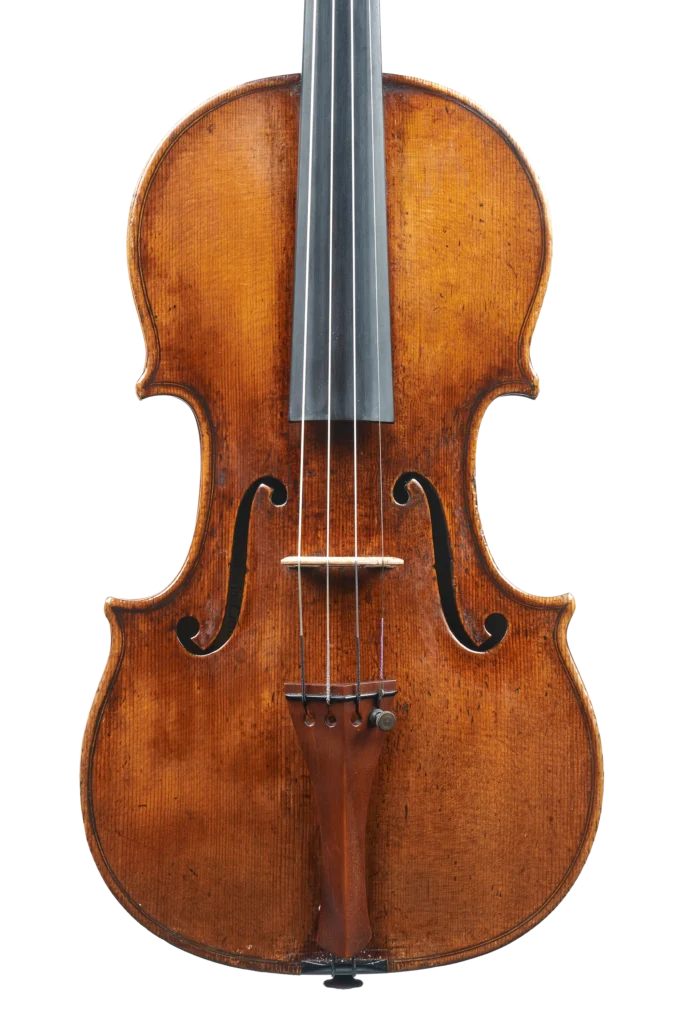
Violin by Antonio Stradivari "Lam; Ex-Scotland University"
Antonio Stradivari — c.1734
View Instrument