Full description
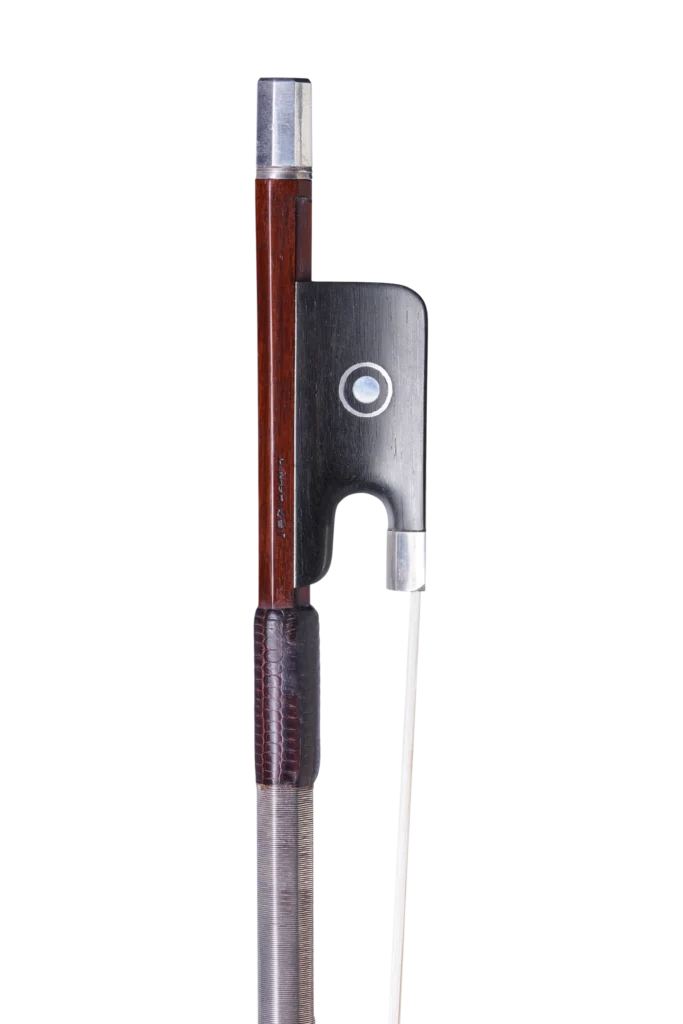
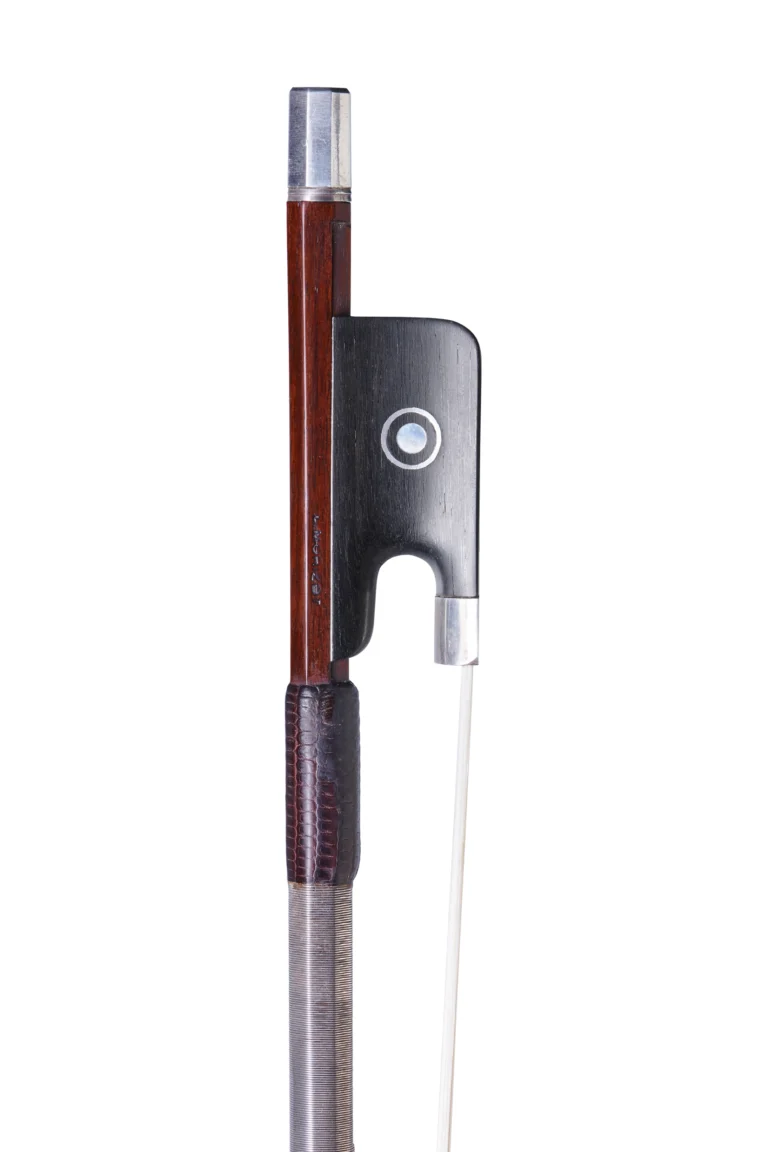
This viola bow by Louis Morizot Frères, crafted in Mirecourt around 1950, is a fine and characteristic example of the French bow-making tradition of the mid-20th century. Made from a carefully selected octagonal Pernambuco stick of warm red-brown hue, it reflects the strength, precision, and refined craftsmanship associated with the Morizot workshop.
The bow is mounted in silver and fitted with a traditional ebony frog featuring a Parisian eye. The frog displays the distinctive channelled rail fitting to the stick, a recognizable feature of the Morizot brothers’ work from this period. The head is elegantly shaped, maintaining a balanced and purposeful profile consistent with the school’s aesthetic.
In playing, the bow stands out for its quick response, precision, and lightness of articulation, offering both control and flexibility. It combines clarity and delicacy with sufficient strength and stability, allowing the player to explore a wide range of repertoire — from Baroque to modern — with ease. Its tonal palette is rich and nuanced, embodying the traditional French elegance and color that define the best bows of this lineage.
A versatile and reliable bow, it represents an excellent choice for demanding violists seeking both refinement and expressive capability.

dimensions
Louis Morizot ‘Frères’
Louis Joseph Morizot's five sons continued the family tradition of bow making. After establishing their own workshop in 1937, they embraced diverse influences, including Peccatte, Lupot, and Simon, expanding their craftsmanship. Besides crafting numerous bows, they mentored future artisans like Jean-Jacques Millant and Bernard Millant, ensuring their legacy's continuation. Despite challenges in the 1960s, their impact endures, with Morizot bows esteemed for their quality by musicians and collectors alike.
Learn moreCOMPARE WITH SIMILAR INSTRUMENTS...
Violin by Camillo Mandelli, Milan 1942
By Camillo Mandelli | , 1942
A refined example of Camillo Mandelli’s mature Milanese work, this 1942 violin is crafted on his personal Stradivari-inspired model, influenced by the Antoniazzi tradition. With its elegant curvaceous outline, mildly strong arching, robust, rounded edgework, and finely fluted purfling, it reflects the disciplined character of the modern Milanese school. The instrument features a two-piece Italian spruce top and a striking one-piece quarter-cut maple back, covered in a luminous transparent orange spirit varnish over a golden ground. Bright, direct, and sweet in tone with immediate responsiveness, it is preserved in mint condition and represents an excellent choice for the demanding musician or discerning collector.
Get advice about this instrument
[INSTRUMENT NAME GOES]
Do you want to know more about this masterpiece? Contact us, and our experts can share their thoughts on this beautiful instrument. Let us help and advise you to find your dream instrument.


