Few names carry as much weight in twentieth century French bow making as Louis Morizot. Known to collectors and dealers simply as Morizot père, he built a workshop in Mirecourt that grew, through his five sons, into one of the most productive and respected ateliers in the history of the craft.
For collectors and serious musicians researching French bows today, understanding the Morizot story is essential to understanding what a well made Mirecourt bow can offer a working violinist, violist, or cellist.
In this article, you will discover who Louis Morizot was and thow his five sons kept the business running after he handed it over, also, what actually sets a Morizot bow apart in terms of wood, mounting, and balance, and whether these bows still hold up as a serious choice for a working musician today.
Who Was Louis Morizot?
Louis Joseph Morizot was born on 22 March 1874 in Darney, a small town in the Vosges region of France, the son of an ironworker. Bow making was already present in his family line through his grandfather, and his father in law was a carpenter who also built violins, a connection that likely opened his first doors into the trade.
Morizot learned his craft properly, not casually. He trained first under Eugène Cuniot-Hury, then worked under Charles Nicolas Bazin, who at the time was regarded as the most influential bow making master in Mirecourt. The turning point in his development came around 1914, when he began working for Eugène Sartory, one of the towering figures of modern French bow making.
That period with Sartory shaped his hand more than any other single influence, and it shows clearly in the elegance and structural confidence of his mature work.
In 1919, Louis Morizot, called Morizot père, opened his own workshop at 5 rue Saint Georges in Mirecourt. Within a year, this small atelier began supplying bows to violin makers and dealers across France, and his reputation grew quickly.
He won the Grand Prix at the Exposition Artisanale de Paris in 1924 and a gold medal at the same exhibition in 1927, awards that placed him firmly among the leading makers of his generation.
How Did His Sons Maintain the Business?
Starting in 1920, Louis Morizot began training his sons directly in his own workshop. None of them ever left to apprentice elsewhere, a rare degree of continuity that gave the family atelier a remarkably consistent house style. In 1937, after nearly two decades working alongside their father, the brothers took over the running of the company, renaming it Morizot frères.
What made this second generation so productive was not just skill but organisation. Each brother specialised in a specific stage of bow making, turning the workshop into something closer to a small, disciplined production line without sacrificing craftsmanship.
- Louis Gabriel Morizot focused primarily on bass bows and frog work.
- Marcel Louis Morizot was responsible for producing simpler sticks with efficient consistency.
- André Auguste Morizot was regarded as the most skilled bender in the workshop and produced the finest bows mounted in silver and gold.
- Paul Georges Morizot handled winding, hairing, and polishing, the finishing touches that gave each bow its final feel in hand.
- Paul Charles Morizot, known within the family as “le chef,” managed the business itself while still finding time to craft frogs.
Under this division of labour, the postwar decade became the most productive period in the workshop’s history, with bows going out to violin makers and dealers throughout France and abroad. The family’s youngest son, René Morizot, took a different path, becoming a violin maker rather than a bow maker, and later a respected teacher at the National School of Violin Making in Mirecourt.
The atelier’s decline followed a familiar pattern for family businesses of that era. Louis Morizot père died in 1957, and the brothers passed away one by one over the following two decades, with the workshop finally closing its doors in 1970. No third generation stepped in to carry the name forward, which is part of why surviving Morizot bows are treated today as a closed, finite body of work rather than an ongoing production.
What Are the Characteristics of a Morizot Bow?
Morizot bows are recognisable to anyone familiar with the Mirecourt tradition, but they carry a personality distinct from Sartory’s own output, shaped by the family’s particular choices in material, construction, and finishing.
Pernambuco selection and wood quality
The sticks were consistently cut from dense, tightly grained Pernambuco wood, usually in warm orange brown tones. This attention to wood quality gave Morizot bows their characteristic combination of strength and responsiveness, allowing the stick to carry weight from the arm without becoming heavy or sluggish in the hand.
Sartory influenced mounting and frog design
By 1920, Louis Morizot had settled on a definitive model that borrowed the frog style closely associated with Sartory, refined further by his own sense of proportion. Frogs and buttons were typically fashioned from tight grain ebony, with silver mounting used across most fine examples, a hallmark of quality that also made the bows attractive to collectors decades later.
Balance suited to a strong bow arm
Many Morizot bows, particularly those made by Morizot père himself, are built with real substance. They tend to reward players with a pronounced, confident right hand, transferring arm weight cleanly through to the string without demanding excessive pressure from the player.
Stylistic evolution across two generations
While the earlier work of Morizot père remained closely tied to the Bazin and Sartory schools, the Morizot frères later broadened their references, drawing on models associated with Peccatte, Lupot, and Simon. This willingness to adapt kept the workshop technically relevant well into the middle of the century, even as newer approaches to bow making began appearing elsewhere in France
Are Morizot Bows Worthy Now?
For a modern player or collector, the Morizot name sits in an interesting position.
The workshop is often described as part of a trio of the greatest bow makers working in Mirecourt during the first half of the twentieth century, a lineage that runs directly through Sartory’s influence and connects, stylistically, back toward the towering historical benchmarks of the craft, names like Tourte and Peccatte, whose innovations still define what a great bow should do.
Morizot bows are not positioned as rivals to those historic makers in terms of rarity or auction record, but they represent something equally valuable to a working musician: a consistent, well engineered, and genuinely playable instrument produced by hands trained directly in that same lineage of excellence.
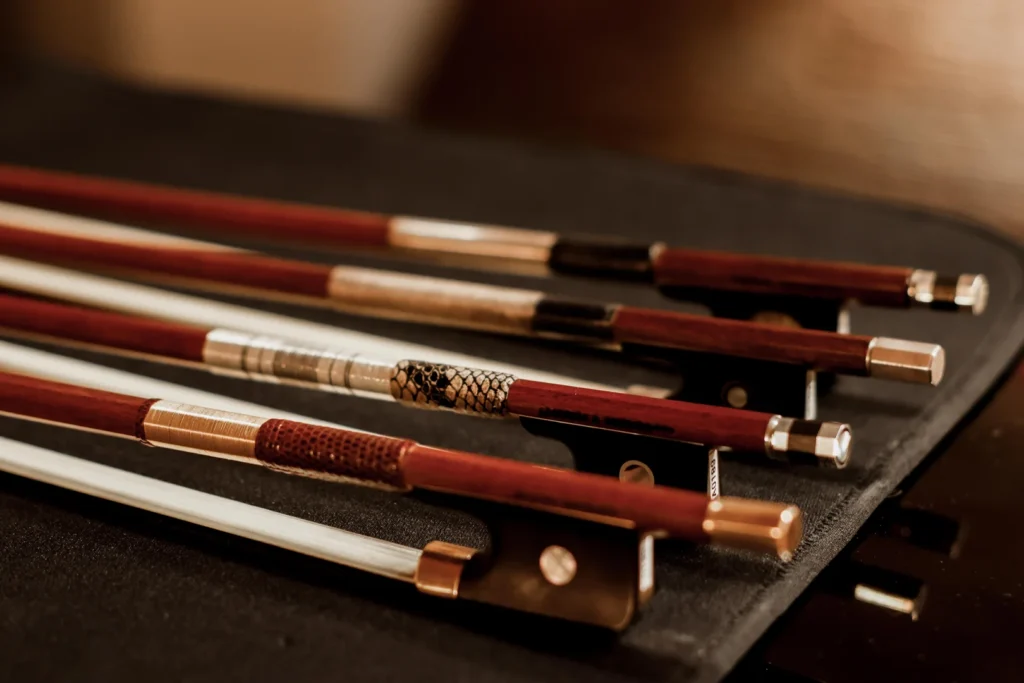
A fine illustration of what this generation of Mirecourt work looked like at its best is the Violin Bow by Morizot Père, Mirecourt, 1920, made during the very years Louis Morizot was working in close proximity to Sartory’s influence. This bow retains its original silk and silver winding and leather grip, both rare survivals for a piece of this age, and shows the dense, deep grained Pernambuco and tight grain ebony fittings that define the maker’s finest output.
It is a heavier, stronger bow suited to players with a pronounced right hand pronation who want a stick capable of carrying real arm weight straight through to the string, a practical demonstration of everything that made the Morizot workshop so trusted by musicians of its era.
The Morizot legacy also extends outward through the pupils the brothers trained, including Bernard Millant, Jean-Jacques Millant, Marcel Lapierre, and Roger François Lotte, whose own father, François Lotte, became one of the most prolific bow makers to come out of Mirecourt.
Alongside makers like Marc Laberte, another major figure in the town’s bow making tradition, these names form a connected web of craftsmanship that collectors and musicians continue to seek out for the same reasons players sought out Morizot bows nearly a century ago: reliability, refined proportion, and a tone that speaks with real French character.
Get Your Bow From the Best French Makers Now
A bow this well made is not a relic to admire from a distance, it is an instrument meant to be played.
Whether you are drawn to the strength and history of a Morizot père original or curious about the wider circle of Mirecourt makers who trained under the family’s roof, Amorim Fine Violins curates a collection of fine violin, viola, and cello bows built around exactly this kind of provenance and playability.
Explore the current selection, and let a piece of Mirecourt’s golden era find its way into your hand.
Talk to a specialist about this topic

Featured Instrument
 AVAILABLE
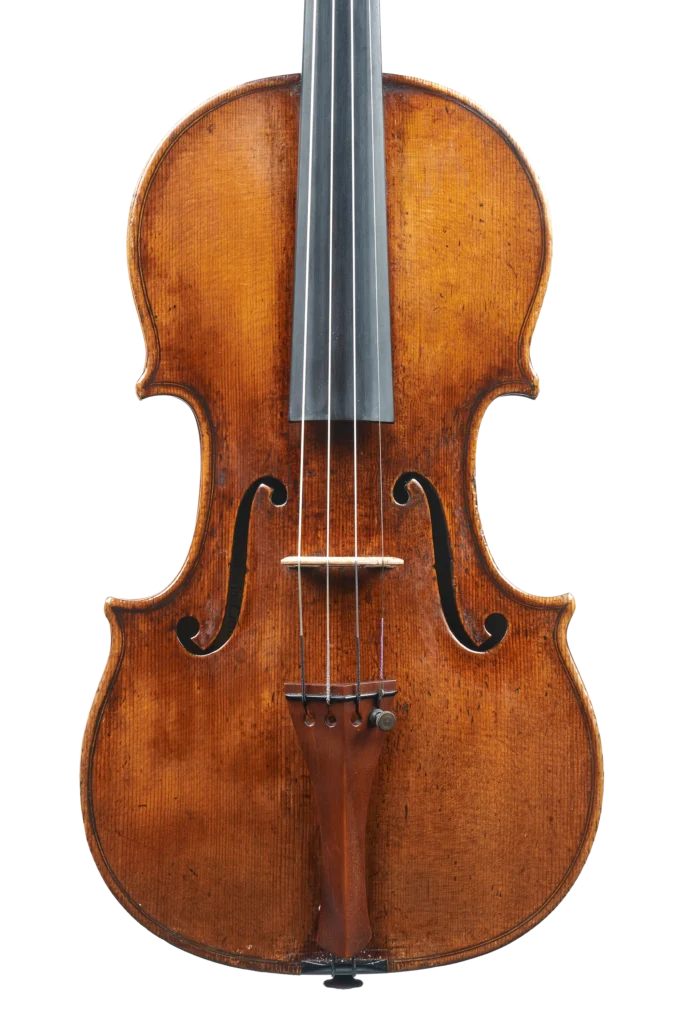
Violin by Antonio Stradivari "Lam; Ex-Scotland University"
Antonio Stradivari — c.1734
View Instrument