Selling a violin is not simply a matter of finding someone willing to buy it. A student instrument, a well-made contemporary violin, and a rare Italian antique each attract buyers, but they circulate in very different markets. Their selling prospects depend on the price being asked, the evidence supporting their identity and condition, and how closely they meet the needs of available buyers.
A violin may be valuable and still take time to sell. Equally, an instrument with a more modest price may find a buyer promptly because its intended market is broad and its asking price is realistic. Understanding that distinction is the starting point for evaluating violin liquidity.
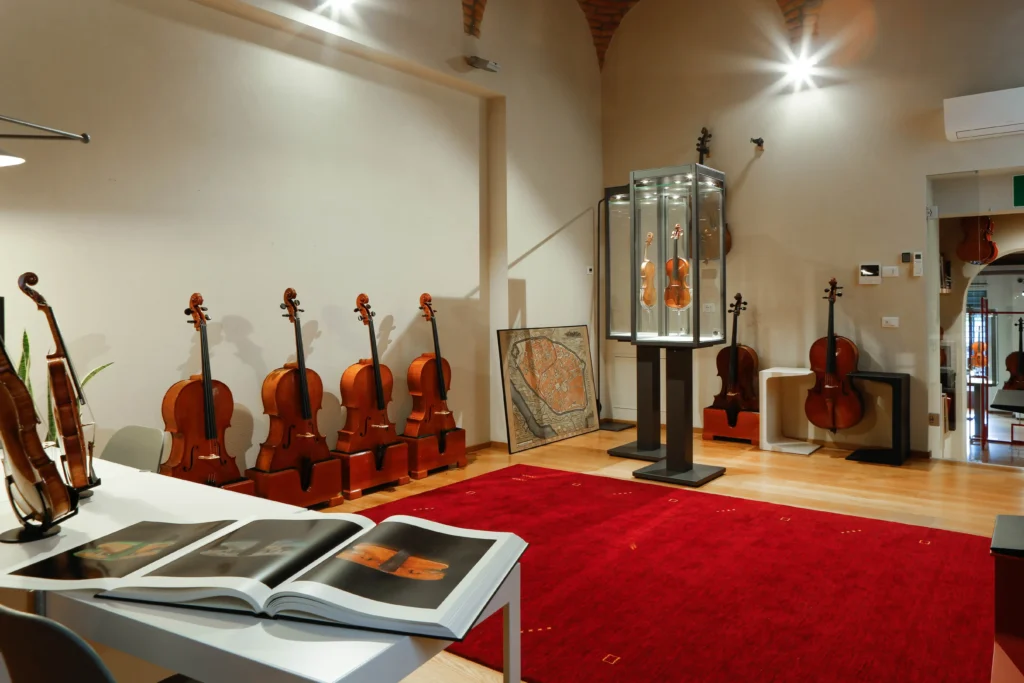
So, Are Violins Hard to Sell?
Sometimes. The difficulty is not inherent to the violin itself. It comes from the relationship between the instrument, its market, and the seller’s expectations. Common student instruments may be straightforward to offer locally, although competition from new instruments limits resale prices. A fine contemporary violin can appeal strongly to professional musicians, but the maker’s reputation, performance, and pricing matter. An important historical violin may attract international interest while requiring a longer, more selective search for a buyer.
A rare violin does not necessarily sell quickly, and age alone does not confer rarity or value. Likewise, a long period on the market is not proof that an instrument is unimportant. It may indicate that the appropriate buyer has not yet been reached, that the available documentation raises questions, or that the asking price is not aligned with comparable transactions.
What Does Liquidity Mean in the Violin Market?
Liquidity describes how readily an asset can be sold at a price consistent with its market value. For fine instruments, it involves more than the existence of an appraisal. It also depends on the number of credible prospective buyers, their willingness to pay, the time needed to reach them, and the concessions required to complete a transaction.
Consider two fine violins carrying similar estimated values. One may have clear attribution, a well-documented condition history, and a musical character that suits several professional players. The other may be an important historical object but appeal to a narrower group of collectors. Both can be valuable, yet the first may be easier to place when it comes to market. This is an illustration of how buyer appeal works, not a prediction about any particular instrument.
Value and liquidity therefore answer different questions. Valuation asks what an instrument is worth under a defined set of market assumptions. Liquidity asks how achievable a sale at that value is within a given period. A seller who needs an immediate transaction may face different choices from an owner able to wait for a suitable buyer. There is no universal timetable for either situation.
For collectors, this distinction belongs alongside the broader assessment of fine violin investment and its risks. Historical price appreciation does not guarantee an easy or profitable future sale.
Why Are Some Fine Violins Easier to Sell Than Others?
Maker, Reputation, and Market Demand
The maker establishes an important starting point. Instruments by historically influential makers, respected schools, or established contemporary luthiers can attract attention because buyers have reference points for craftsmanship, attribution, and previous transactions. But reputation is not a substitute for evaluating the individual instrument. A lesser-known maker can also attract serious interest when the work is exceptional, convincingly documented, and well positioned for its intended audience.
Scarcity needs to be considered together with demand. A violin can be unusual without having an active group of interested buyers. Conversely, an instrument by a maker with an established following may be more straightforward to market, provided its price reflects quality, condition, and comparable examples. The relevant question is not only “How rare is it?” but “Who would want to own and use this particular instrument, and at what price?”
Authenticity, Provenance, and Documentation
Before buyers can discuss value with confidence, they need to understand what the instrument actually is. For an antique violin, maker attribution may require examining the model, scroll, f-holes, varnish, construction methods, and historical references. A certificate from a recognised specialist is important, but the supporting evidence matters too. Attribution is an expert conclusion supported by comparative examination, not something established by a printed label alone.
At Amorim Fine Violins, our documented approach to violin expertise and certificate issuance brings technical examination together with research into the maker and the instrument’s history. The resulting dossier can record provenance, condition, and the reasons supporting a particular attribution. Such information helps prospective buyers understand what they are being offered and what uncertainties, if any, remain.
A documented example from the Amorim Lab concerns a violin now attributed to Carlo Giuseppe Testore, made in Milan circa 1715. A 1906 Hill certificate identified it as the work of Carlo Antonio Testore. Later comparative assessment supported attribution to Carlo Giuseppe, with dendrochronological evidence consistent with the proposed period.
This does not establish that the revised attribution increased its resale value. It shows why buyers need to examine the reasoning and records behind an attribution.
Provenance adds another layer: past ownership, published references, collection histories, earlier certificates, and documented performances can help establish a credible history. Gaps do not automatically make a violin inauthentic, but unexplained claims can make diligence slower and diminish buyer confidence. A well-maintained archive is useful precisely because it allows the next owner to assess evidence without having to reconstruct the past from the beginning.
Condition, Restoration, and Originality
Historical instruments have often been repaired, adjusted, or restored during centuries of use. Restoration is not necessarily disqualifying. What matters is the nature and location of the intervention, its quality, its effect on structural integrity, and how faithfully the instrument’s original material has been preserved. A small, stable repair is different from serious structural damage or extensive replacement of original material.
In the Amorim Lab’s technical dossiers, condition is documented using visual examination and, where appropriate, ultraviolet and infrared imaging and X-ray analysis. These complementary methods help identify old cracks, reinforcements, retouching, and other interventions that may not be obvious in ordinary photographs. They do not produce a simple numerical liquidity score. Instead, they give buyers and specialists a clearer basis on which to assess risks and compare instruments.
Condition and originality should also be distinguished. An authentic violin may include a later scroll, a replaced component, or extensive historical restoration. These facts do not make the instrument worthless, but they belong in its condition documentation and market assessment. A seller gains little by presenting a heavily restored instrument as pristine; transparent disclosure makes a serious evaluation more productive.
Musical Performance and Buyer Appeal
Sound and playability matter profoundly to a musician, but they do not determine historical or collector value on their own. A violin that projects clearly in a hall, responds readily under the bow, and balances well across its registers may suit a demanding performer, regardless of whether it commands the highest collector price. Another instrument may be admired primarily for its historical significance.
The Amorim atelier distinguishes musical suitability from market value: the former depends on the relationship between an instrument and a particular player; the latter depends on maker, provenance, condition, and demand. These considerations sometimes overlap. An instrument that interests both professional musicians and collectors may have more potential buyers than one appealing almost exclusively to either group. That can support liquidity, without making a quick sale certain.
How Much Can You Get for Selling an Old Violin?
There is no reliable general price range for an “old violin”. Two instruments of similar age can have radically different market positions because one is a documented work by a recognised maker and the other is an anonymous workshop instrument. Condition, originality, and quality of execution can also separate examples made by the same person. The first useful question is therefore not how old the violin appears, but what it can reliably be identified as.
A professional assessment should establish attribution, examine condition, and compare the instrument with relevant market evidence. A formal appraisal must also state its purpose and date: an insurance replacement value is not automatically the amount a seller should expect to receive in a private transaction. Asking prices, published auction results, and completed private sales offer different types of information.
| Price term | What it tells you |
| Appraised value | An expert’s estimated value for a defined purpose and date; not a guaranteed sale price. |
| Asking price | The amount requested by the seller or dealer; it may not reflect a completed transaction. |
| Auction hammer price | The winning bid, before any buyer’s premium and distinct from the seller’s proceeds. |
| Net sale proceeds | What the seller actually receives after applicable commissions and expenses. |
Record auction sales deserve particular care. A multimillion-dollar sale of an exceptional Stradivari tells us very little about an ordinary antique violin. Nor should a single headline result be used to infer a general return on investment. The identity of the instrument, sale conditions, fees, and differences between auction and private markets are all relevant to interpretation.
For an individual instrument, a professional violin appraisal and valuation can establish a defensible starting point and clarify which evidence supports the valuation. Before setting an asking price, that assessment should be considered alongside the intended sales channel and the owner’s timescale.
Private Sales, Dealers, and Auctions: How Liquidity Changes
The route to market matters as much as the presentation of the instrument. Each channel reaches buyers differently and involves its own timing, costs, and expectations.
| Sales channel | Potential advantage | Points to consider |
| Specialist dealer or consignment | Targeted presentation to musicians and collectors; evaluations and trials can be arranged. | Negotiated fees and potentially a longer search for the right buyer. |
| Specialist auction | Defined sale date, public bidding, and a recorded result when a lot sells. | An estimate is not a guarantee; reserves, commissions, and an unsold lot affect the outcome. |
| Private sale | Discretion and flexibility in negotiating with a known buyer. | A narrower network may limit exposure; comparable private-sale prices are often not public. |
Different auction channels serve different audiences. For example, the structure of Tarisio Auctions distinguishes catalogued fine instruments from trade-oriented lots that may require restoration or have uncertain attribution. This is a useful illustration of market segmentation: the same venue is not necessarily appropriate for every violin.
Owners looking for a practical account of preparing an instrument and choosing where to offer it can also consult our guide on how to sell violin and cello near me. Here, the central concern is why the choice of channel affects liquidity rather than the steps involved in placing a listing.
How to Protect a Violin’s Resale Potential
Much of a successful future sale is prepared before the owner decides to sell. A fine instrument benefits from careful stewardship, an organised documentary history, and periodic reassessment of its condition and market position.
Keep the documentary record. Keep certificates, prior appraisals, invoices, published references, and provenance records together, alongside photographs and reports documenting repairs or conservation work. A contemporary violin should retain the maker’s certificate where available. If an antique instrument has conflicting attributions, those records should be preserved rather than selectively omitted; a specialist can evaluate the evidence and explain its implications.
Protect the instrument’s condition. Regular examination by a qualified workshop helps identify developing issues before they become more serious. Excessive polishing, unnecessary revarnishing, and inappropriate restoration can permanently compromise original material. The goal is not to make a centuries-old violin look new but to preserve its structural and historical integrity. Decisions about any treatment should be made with an experienced specialist, particularly when the instrument may have significant market value.
Review valuations periodically. Review valuations when circumstances warrant it, especially after substantial changes in the instrument’s condition, documentation, or relevant market. Amorim advises clients to review formal appraisals periodically, commonly every three to five years. This does not imply that values rise at each review. It simply keeps insurance, estate, and sale decisions connected to current evidence.
Plan the exit route early. Finally, plan the likely exit route before a sale becomes urgent. An instrument acquired primarily for performance may be judged differently from one chosen for historical importance. Knowing which audience is most likely to appreciate the violin, and which compromises in timing or price an owner would accept, can prevent a rushed decision later.
Selling a Fine Violin with Professional Guidance
The difficulty of selling a violin is rarely answered by its age or price alone. A clear attribution, documented condition, relevant musical or historical appeal, and realistic market positioning help establish the conditions for a credible sale. They cannot eliminate uncertainty, but they can make the instrument easier for qualified buyers to understand and evaluate.
At Amorim Fine Violins in Cremona, assessments of maker, condition, provenance, and market context inform the approach to each instrument. For owners considering a sale, the atelier’s dedicated process for selling through us provides an avenue for discussing presentation, qualified buyer outreach, and appropriate positioning. The aim is to find a suitable buyer on informed terms, rather than to promise a particular timeline or financial result.
Talk to a specialist about this topic

Featured Instrument
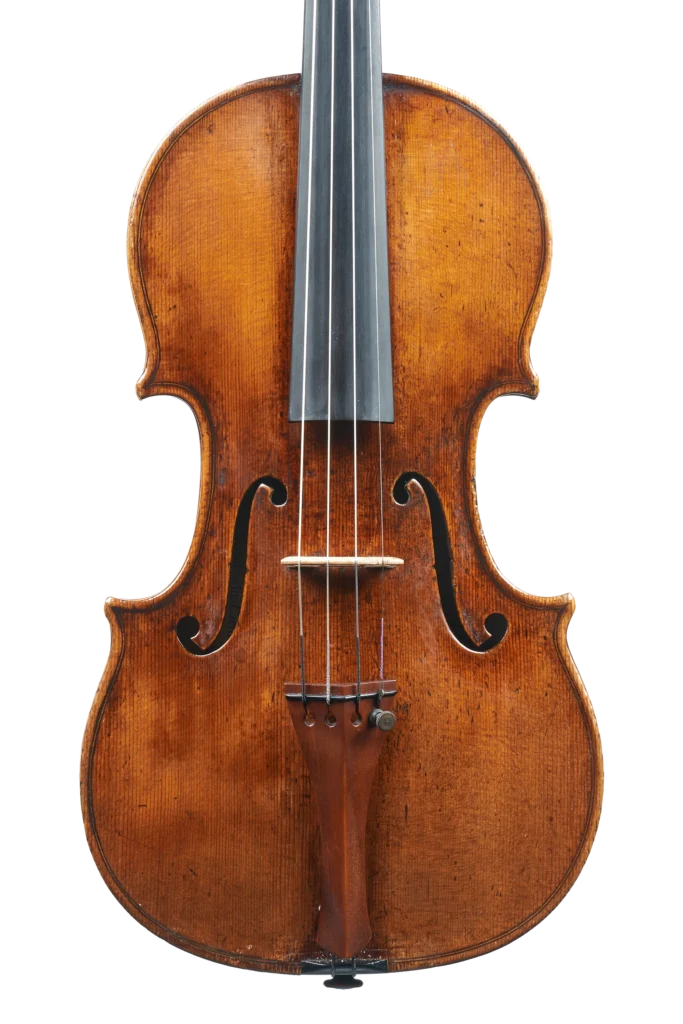 AVAILABLE
Violin by Antonio Stradivari "Lam; Ex-Scotland University"
Antonio Stradivari — c.1734
View Instrument