I am sure you have asked yourself at some point, why are violins are so expensive?
Handmade violins are more expensive than violins that are large-scale produced, but what makes violins so expensive? Today we want to show you what makes these musical instruments worth paying so much. These authentic Italian violins have an interesting story to tell.
A violin can be an accessible instrument for a beginner, an individually crafted partner for a professional musician, or a rare object of considerable historical value. All three may share the familiar outline of a violin, yet the reasons behind their prices can be entirely different.
So why are violins so expensive? Some cost more because of the skilled work and materials needed to make them. Others command much higher prices because of who made them, how few comparable instruments exist, what survives of the original work, and how confidently their history can be documented. A high price may reflect outstanding musical qualities, but sound alone does not explain the market for fine historical instruments.
Understanding that distinction is the starting point for making sense of violin prices.
Why Handmade Violins Cost More to Make
A carefully made violin begins long before the strings are fitted. The maker chooses the wood, establishes the model and proportions, carves the plates, shapes the neck and scroll, and brings the many parts into a functioning acoustic system. Small decisions affect the structure, response, and character of the finished instrument. Time is spent not only executing the work but judging it.
A workshop-made student violin may be produced with shared tasks, standardized dimensions, and efficient manufacturing processes. That can make a reliable learning instrument more affordable. In an individually handmade violin, the maker assumes responsibility for the relationship between material, design, and musical result, often refining decisions in response to the particular pieces of wood being used. Neither category should be judged by its label alone: instruments vary considerably within each.
The Skill, Time, and Precision Behind Violin Making
To become a capable luthier requires sustained training and years of practical observation. The craft is learned through tools, measurements, and models, but also through the ability to recognize when a seemingly small change improves or compromises the whole. In Cremona, the tradition associated with the Amati, Stradivari, and Guarneri workshops remains a living practice rather than a historical display.
The importance of this accumulated knowledge is reflected in the UNESCO-recognized tradition of violin craftsmanship in Cremona. Its account describes hand-shaping and assembling more than 70 pieces of wood around an inner mould, with makers responding to the acoustic characteristics of each component. Those details help explain why individual handwork cannot be priced in the same way as volume production.
The makers who developed the violin over centuries also left more than celebrated names. They established and refined construction approaches that contemporary luthiers still study. For a closer look at that historical development, see our article on where the violin originated.
The Role of Tonewoods, Arching, and Varnish
Spruce is traditionally used for the top, while maple is common for the back, ribs, and scroll. Yet the species or appearance of the wood is only a beginning. Density, stiffness, grain, seasoning, and suitability for a particular model all matter. The arching and graduation, or thickness, of the plates influence how the structure responds to string tension and vibration. A beautiful piece of wood cannot compensate for poor construction.
At the Amorim atelier, the selection and preparation of wood are part of the maker’s acoustic judgement. Luiz Amorim’s approach, documented by the workshop, includes evaluating wood by ear, studying the proportions of historical models, and adjusting plate thicknesses through listening as well as measurement. The atelier also makes its own varnish using natural materials. These are examples of deliberate workshop decisions, not a claim that any single recipe or material guarantees a superior sound.
Varnish has both protective and aesthetic roles and can influence how an instrument responds. Its quality lies in how it works with the construction, not simply in whether it appears richly coloured or old. A finely executed violin is the result of many compatible choices rather than one expensive ingredient.
Why Some Violins Are Worth Far More Than Others
Craftsmanship explains an important part of the cost of a contemporary handmade instrument. It does not, on its own, explain why certain historical violins command extraordinary prices. At that level, an instrument enters a market in which authorship, historical significance, scarcity, preservation, and documented evidence all matter.
This is also why the phrase fine violin describes more than a high price. It refers to an instrument whose making and identity can be assessed within a tradition, even as its musical usefulness remains an individual question.
The Maker’s Reputation and Historical Significance
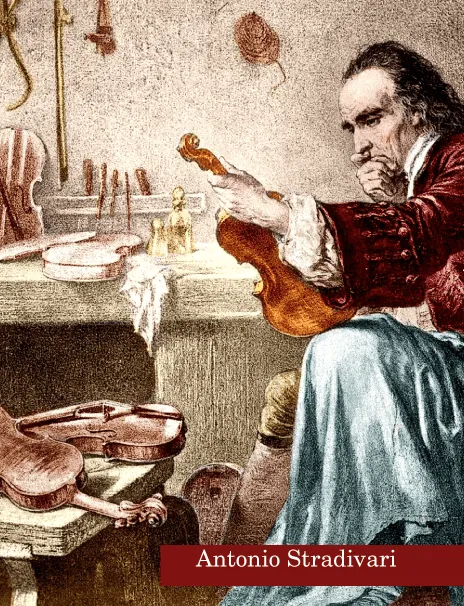
Two violins made with similar woods and dimensions may be valued very differently because of their makers. An instrument by a historically influential luthier carries a connection to an identifiable artistic tradition. In the cases of Antonio Stradivari, the Amati family, and Giuseppe Guarneri “del Gesù”, that importance extends to the development of the violin itself and to the generations of makers who studied their work.
Reputation is not simply a famous name attached to an instrument. Experts examine how an example compares with a maker’s recognized output: its model, proportions, workmanship, varnish, and period of production. Even within the work of one respected maker, some examples may be more refined, better preserved, or more representative than others. A maker’s historical importance can also reflect influence on subsequent workshops and schools, not merely prices achieved at auction.
Rarity, Age, and Authenticity
There is a fundamental difference between being old and being rare. Many old violins were produced in workshops and survive today without exceptional market value. By contrast, the number of surviving instruments securely attributable to a particular historical maker may be small, and only a fraction may be available for purchase at a given time.
Scarcity has meaning when combined with quality, demand, and a credible attribution. An instrument bearing a Stradivari label is not, for that reason, a Stradivari. Labels can be copied, replaced, or misleading; expert attribution examines the instrument itself. Characteristics such as the scroll, f-holes, purfling, arching, varnish, and internal construction are compared with documented examples.
At Amorim Fine Violins, instrument authentication is approached through physical examination, historical comparison, documentation, and, where appropriate, complementary scientific investigation. Dendrochronology can help establish the earliest plausible construction date of a violin’s spruce top, but it cannot establish the maker on its own. The strength of an attribution lies in the evidence considered together.
Condition, Originality, and Provenance
Two authentic violins by the same maker and from a similar period may still have markedly different values. The degree of surviving original material, the quality of previous repairs, and the stability of the structure can all influence a buyer’s assessment. Cracks, replacements, altered surfaces, and restoration work need to be understood in context; not every repair is equally consequential.
The Amorim Lab’s documented examinations illustrate why this matters. Its technical dossiers distinguish original varnish from later coatings and retouching, and map structural interventions using complementary approaches, including ultraviolet and infrared imaging. Such examinations can reveal details that ordinary visual inspection might miss. They do not turn condition into a simple score: each intervention must be evaluated for its location, extent, quality, and implications for preservation.
Provenance is another part of the picture. A history supported by earlier certificates, archival records, publications, or documented ownership may strengthen confidence in an instrument’s identity and place in history. A compelling story without supporting evidence carries less weight. Nor does a famous former owner automatically settle questions of authenticity or determine price.
Finally, the market provides context. Dealers and specialists consider comparable instruments, relevant auction results, documented transactions, and the availability of similar examples. An auction price is a useful public reference, but it is not automatically the retail value of another violin. Readers interested in the detailed mechanics can explore the factors influencing violin market value.
Does a More Expensive Violin Always Sound Better?
No. A higher price does not guarantee a better musical partner for every player. Price and sound intersect, but they are not identical measures. An important historical violin may be valued for its maker, scarcity, and preservation, while a contemporary handmade instrument may offer the response, projection, and ease of playing that a particular professional needs.
The atelier’s evaluation of musical quality goes beyond whether a violin sounds immediately attractive under the ear. A player needs to understand how the sound carries into a hall, whether the registers remain balanced, how quickly the instrument speaks under the bow, and whether it retains its character at both quiet and forceful dynamics. An instrument that impresses in a small room may behave differently in performance.
Setup also matters. The bridge, soundpost, strings, and other adjustments influence response and balance, sometimes significantly. A violin should not be judged solely from a brief trial with an unfamiliar setup, and a relatively modestly priced instrument that fits a musician well may be a more rewarding choice than a celebrated violin that does not.
This distinction is particularly important when comparing student instruments, contemporary handmade violins, and historical masterpieces. They are purchased for different combinations of practical, artistic, and cultural reasons. The best instrument for a musician is not determined by its price tag alone.
Are Expensive Violins Worth the Price?
The answer depends on what the buyer expects from the instrument. For a student, dependable construction, comfortable playability, and a sound that supports progress may matter far more than rarity or a celebrated maker. For an advanced or professional musician, responsiveness, projection, tonal range, and suitability for repertoire become central. A collector may also need well-supported attribution, preservation, provenance, and evidence of an established market.
It helps to separate three questions: How much did this violin cost to make? What musical possibilities does it offer this player? And what does the market recognize in this particular instrument? The answers can overlap, but they should not be confused.
A fine violin deserves to be understood as an individual object. The work of its maker explains part of its value; its identity, survival, and historical setting can explain much more. When the decision involves a significant acquisition, sale, insurance, or inheritance, a carefully documented professional violin appraisal can establish a more reliable basis for understanding its current market value.
Talk to a specialist about this topic

Featured Instrument
 AVAILABLE
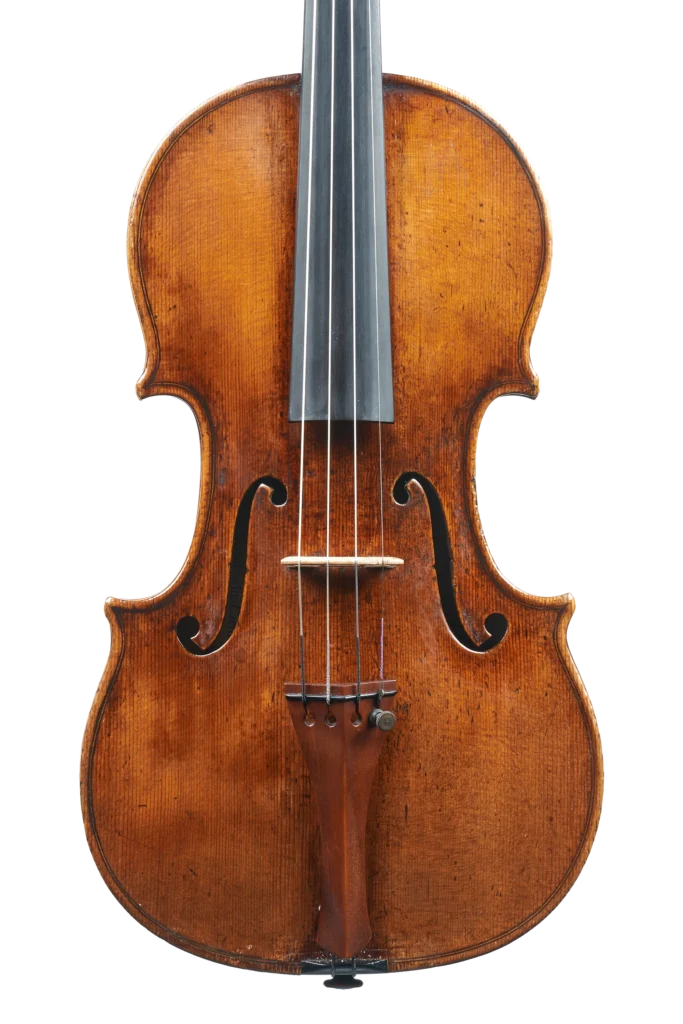
Violin by Antonio Stradivari "Lam; Ex-Scotland University"
Antonio Stradivari — c.1734
View Instrument