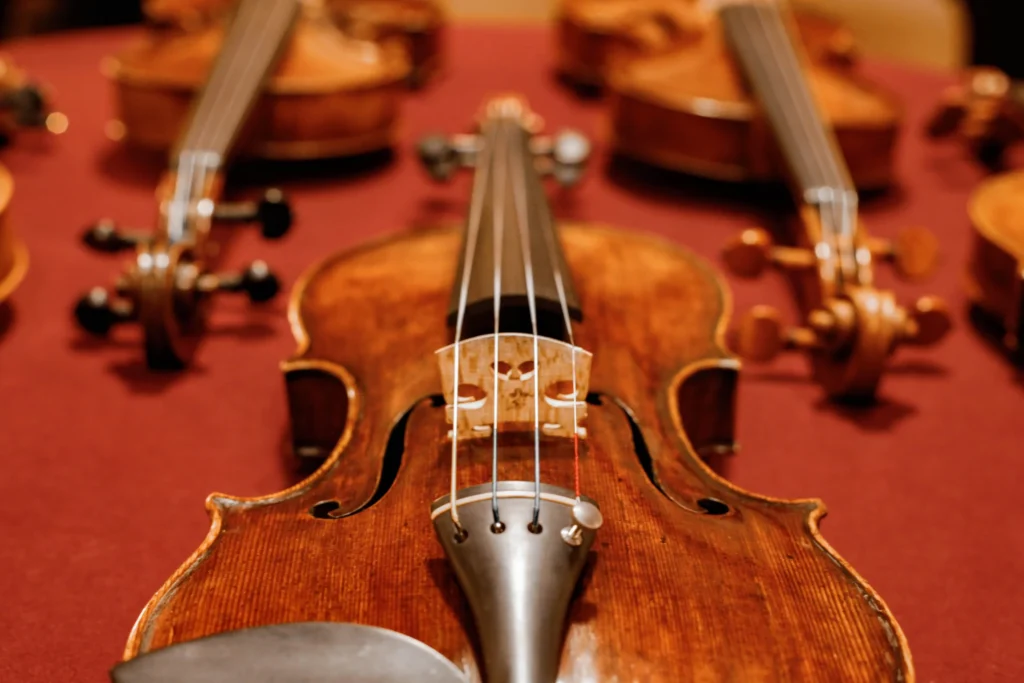
Understanding violin market value is essential for collectors, investors, and professional musicians alike. While a beginner may look at a violin as a tool for learning, collectors and seasoned players evaluate instruments through a much more sophisticated lens: origin, craftsmanship, maker, authenticity, condition, and long-term appreciation potential.
Unlike many modern consumer goods, violins can retain (and sometimes increase) their value over time. In fact, high-quality instruments are often regarded as violins as an investment, especially when crafted by historically significant makers or respected contemporary luthiers.
So what truly determines how much a violin is worth? Let’s explore the key factors.
How much do violins usually sell for?
The violin market value varies dramatically depending on the category of the instrument.
At the most accessible end, factory-made student violins can sell for as little as $100 to $800. These are designed primarily for beginners and educational purposes.
Intermediate violins typically range between $800 and $5,000, offering improved tone quality, materials, and craftsmanship.
Professional-level instruments often start around $10,000 and can range from $15,000 to $50,000+, depending on the maker and tonal characteristics.
Fine and collectible violins, particularly those made by renowned luthiers or historic European workshops, can reach $100,000 to several million dollars. Instruments crafted by Antonio Stradivari or Giuseppe Guarneri del Gesù, for example, have sold for $5 million to over $15 million at auction.
For collectors, the violin market value is not just about sound,it is about rarity, legacy, and historical significance.
Mass produced violins vs. fine violins
One of the biggest distinctions in the violin market is between mass-produced instruments and fine violins.
Mass-produced violins are typically factory-made in large quantities. While they serve an important role in music education, they rarely appreciate in value. Their resale market is limited, and they are generally not considered collectible.
Fine violins, on the other hand, are handcrafted by skilled luthiers. These instruments reflect individual artistry, superior wood selection, and meticulous varnishing techniques. Because of their uniqueness and limited production, they tend to maintain, and sometimes increase, their violin market value over time.
For collectors, this distinction is crucial. Fine violins carry artistic and historical weight that factory instruments simply cannot replicate.
Violin market values: According to playability and Origin
When assessing violin market value, two broad classifications are commonly considered: playing level and origin.
According to playing level
- Entry-Level ($100 – $5,000): Built for beginners and students. They prioritize affordability and durability over tonal complexity. These instruments rarely gain value and are not typically viewed as violins as an investment.Intermediate ($5,000 – $15,000): More suitable for advancing students and semi-professional players. They offer improved projection, better tonewood, and more refined craftsmanship. While not always collectible, certain workshop-made European instruments in this category may hold stable market value.
- Professional ($15,000 – $50,000+): Designed for concert performance and recording. They offer tonal depth, responsiveness, and projection suitable for demanding repertoire. Instruments by recognized contemporary luthiers or respected historic workshops can fall into this range and may appreciate in value, particularly when the maker builds a strong reputation.
According to origin
- Old or Antique ($20,000 to several million dollars): Ttypically over 100 years old, they often carry significant violin market value due to rarity, craftsmanship traditions, and historical importance. Italian instruments from the 17th and 18th centuries are particularly valuable.
- Copy ($5,000 – $50,000): Copies are instruments inspired by famous makers such as Stradivari or Guarneri. These can range widely in quality. A well-made copy by a respected luthier can still hold strong violin market value, even if it is not an original antique.
- • Contemporary($5,000 – $40,000+): Contemporaryviolins are built by contemporary luthiers. While newer, they can be exceptional in craftsmanship and sound. Instruments made by highly regarded modern makers can become attractive violins as an investment, especially when production is limited and demand increases.
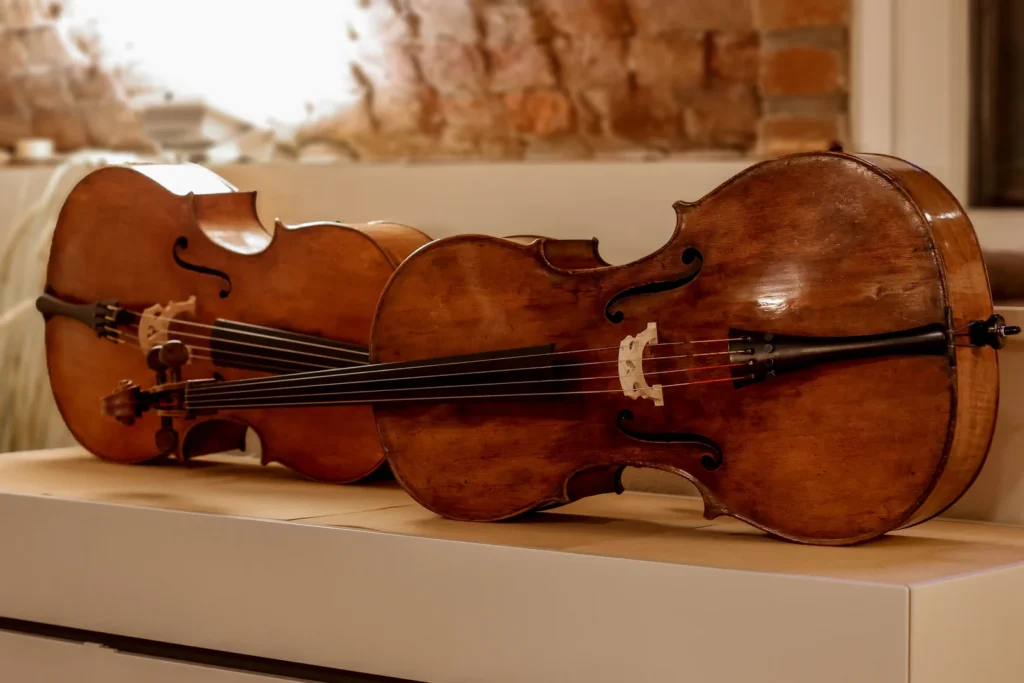
Factors that influence the violin market value
Beyond category and price range, several deeper elements determine a violin’s true worth.
Maker and provenance
The maker is often the single most influential factor in violin market value.
Violins crafted by legendary luthiers such as Antonio Stradivari or Giuseppe Guarneri del Gesù represent the pinnacle of collectibility. Their instruments are rare, historically significant, and highly sought after by elite musicians and investors.
However, respected contemporary makers also play a crucial role in today’s market. Modern luthiers such as Luiz Amorim, among others, contribute to the fine violin landscape with handcrafted instruments that combine traditional techniques with modern precision.
Provenance (the documented history of ownership) can significantly increase value. If a violin was played by a renowned soloist or comes from a prestigious collection, its violin market value may rise substantially.
Craftsmanship
The quality of workmanship directly impacts tone, durability, and aesthetic appeal.
Elements that collectors evaluate include:
- Wood selection (spruce top, maple back and sides)
- Arching and graduation
- Varnish quality
- Detail in purfling and scroll carving
- Structural precision
Exceptional craftsmanship not only enhances musical performance but also strengthens long-term violin market value.
Authenticity
Authentication is critical, especially in the antique market.
Certificates from recognized experts or established violin shops can dramatically influence value. Without proper authentication, even a potentially valuable instrument may struggle in the marketplace.
Forgery and misattribution are longstanding issues in the violin world. For collectors, verification is not optional. It is essential.
Condition (especially in old violins)
Condition plays a major role in determining violin market value, particularly for antique instruments.
Key aspects include:
- Cracks (especially soundpost cracks)
- Repaired damage
- Neck resets
- Varnish preservation
- Structural integrity
Professional restoration is common and acceptable in fine instruments, but excessive or poorly executed repairs may reduce value.
Collectors understand that age alone does not guarantee worth, preservation and expert restoration matter just as much.
Violins as an investment: A collector’s perspective
Many collectors view fine instruments as alternative assets. Historically, rare violins have shown strong long-term appreciation, particularly those from the Italian golden period.
However, violins as an investment require:
- Expert authentication
- Proper storage and insurance
- Professional maintenance
- A long-term perspective
Unlike stocks or real estate, violins combine financial potential with artistic and cultural value — making them uniquely appealing.
Explore Our Vitrine of Fine Violins
At Amorim Fine Violins, we understand that acquiring a fine instrument is both a musical and financial decision. Whether you are expanding a collection or considering violins as an investment, our carefully curated selection reflects expertise, authenticity, and long-term vision.
Each instrument in our vitrine is rigorously evaluated for craftsmanship, provenance, tonal excellence, and sustained violin market value. We prioritize transparency, documentation, and professional guidance, ensuring that every acquisition is made with confidence.
Discover instruments that are not only exceptional to play, but enduring in value, and trust Amorim Fine Violins to guide you in selecting a piece worthy of your collection.
Talk to a specialist about this topic

Featured Instrument
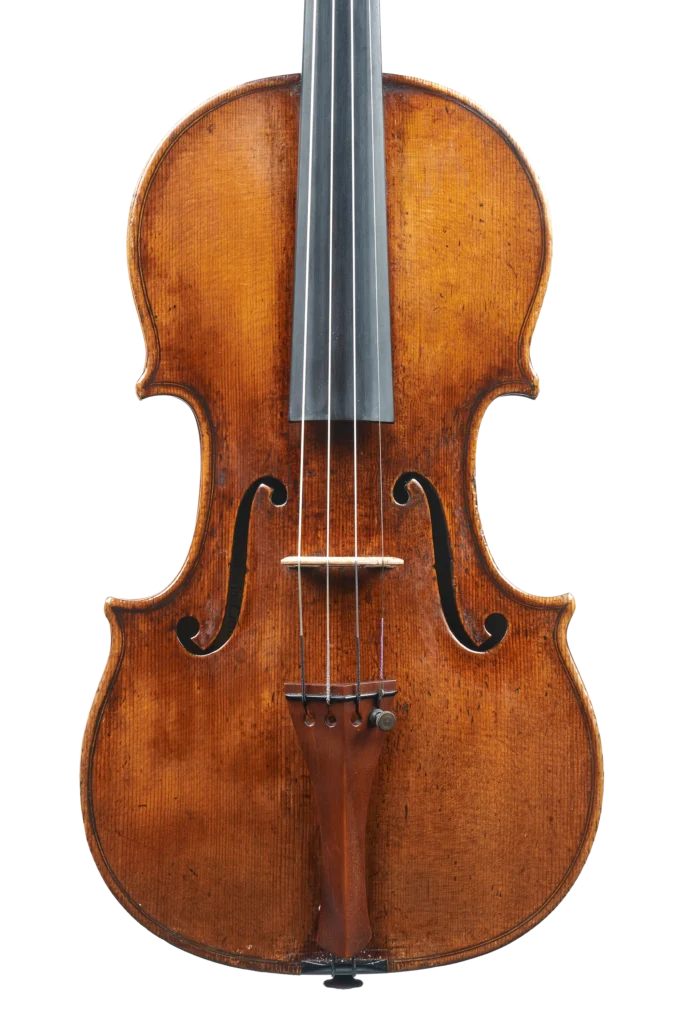 AVAILABLE
Violin by Antonio Stradivari "Lam; Ex-Scotland University"
Antonio Stradivari — c.1734
View Instrument