Full description
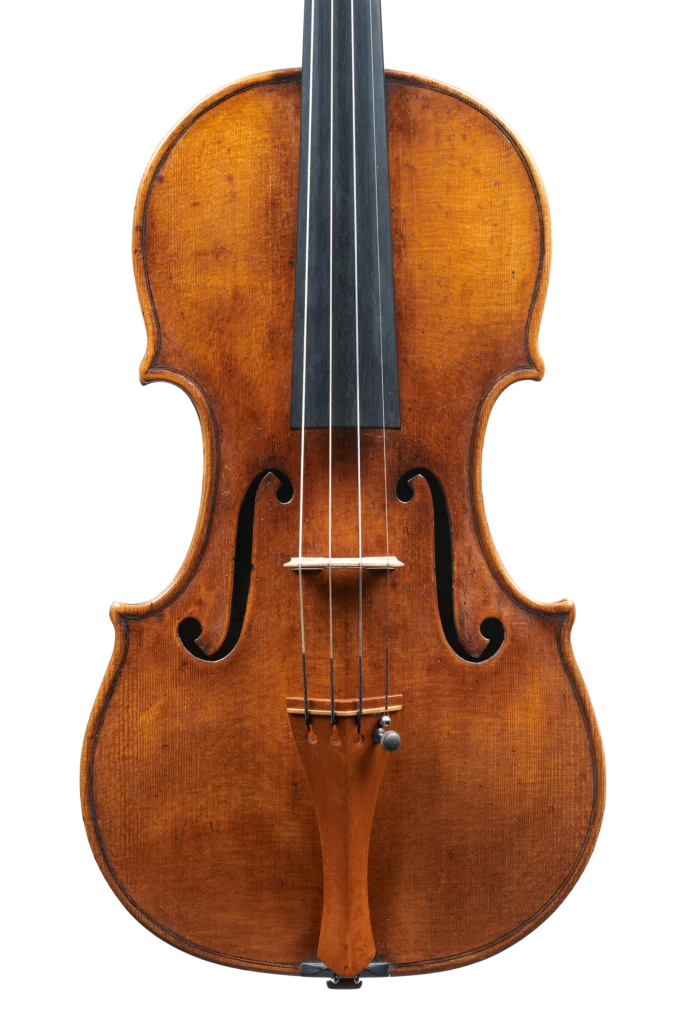
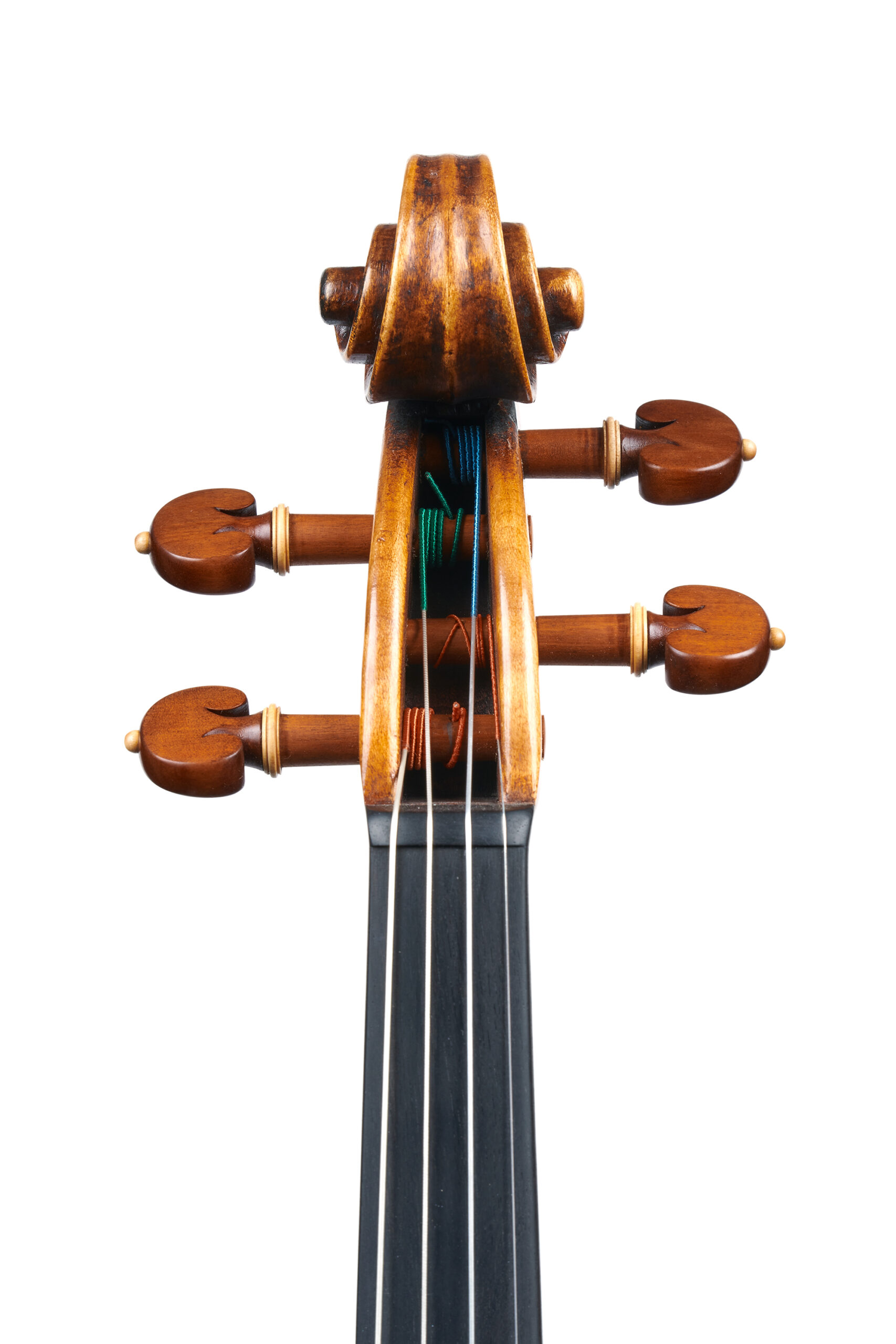
"This instrument represents a very important snapshot of Guarneri development towards his most personal and characteristic models. The F-holes shape and the model outlines already indicates a very innovative understanding of the instrument dynamics and concept, yet to be even further undergone. To be able to study it deeply in person allows one to learn so much about his work and about the natural aging marks such a fine violin can earn considering its great condition." The Stauffer, 1734 is from an earlier period of ‘del Gesù’s’ life. The body of the instruments is very Strad style since it was a period in which Guarneri was still under the shadow of Stradivari. Luiz likes to say that this violin has a strong character, with thicker edges resulting in a bold style. For Luiz the perfect purfling inlaid is its highlight. Luiz was inspired to make a copy of this instrument since it is being exhibited at the museum just next to us, and he has already had the opportunity to see, touch and study this instrument several times. It’s not a commonly copied model the ground color, and the beautiful wood chosen by Guarneri at that time caught his attention.

dimensions
sound characteristics
With a very projective tone, its velvet texture sound is what makes this violin so joyful to play. With a rather clear and colourful tone, the sound is yet deep and direct, feeling almost as if it comes out from ground through the player and then out the instrument. Very responsive with a very soloistic personality.
Audio
00:00/
Luiz Amorim
With a sensitive eye to nature’s shapes and textures, Luiz dedicates his career in the search for a complete and powerful sound in his instruments, together with the investment in impeccable finishing and aesthetics, imitating the style of the old masters.
Learn moreother violins you may like by this maker...
COMPARE WITH SIMILAR INSTRUMENTS...
Violin bow by Marc Laberte, Mirecourt 1940
By Marc Laberte |
This fine violin bow by Marc Laberte, made in Mirecourt in the 1940s, represents the solid craftsmanship and practical elegance of the French workshop tradition during the early 20th century. Produced within the respected Laberte-Humbert Frères atelier, it reflects the disciplined construction and reliability that made Mirecourt bows widely appreciated among professional and advanced musicians.
The round stick is carved from Pernambuco of a vivid brown color, selected for its balanced density and resilience. The wood offers an excellent combination of strength and flexibility, giving the bow a stable and confident character. The head follows the traditional French outline, cleanly defined and well proportioned, expressing the straightforward and functional aesthetic typical of Laberte’s work of this period.
Mounted in silver, the bow features a classical ebony frog fitted with a mother-of-pearl eye and a matching ebony and silver button. The fittings are executed in the refined Mirecourt style, combining durability with understated elegance. This example remains in excellent condition, preserving its original integrity and craftsmanship.
In playing, the bow offers a steady and reliable response, with secure articulation and balanced control across the string. Its dependable and robust character makes it particularly suitable for musicians seeking consistency and stability in daily performance.
A very good and representative example of Marc Laberte’s mid-century production, this bow stands as a testament to the enduring practicality and musical effectiveness of the Mirecourt bow-making tradition.

