Full Description
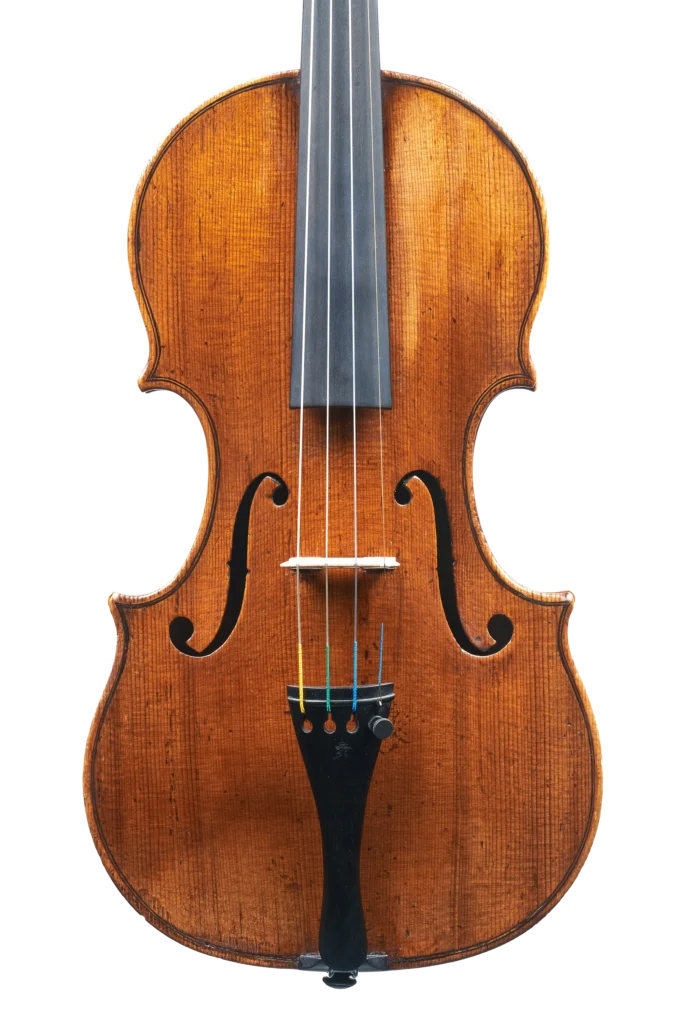
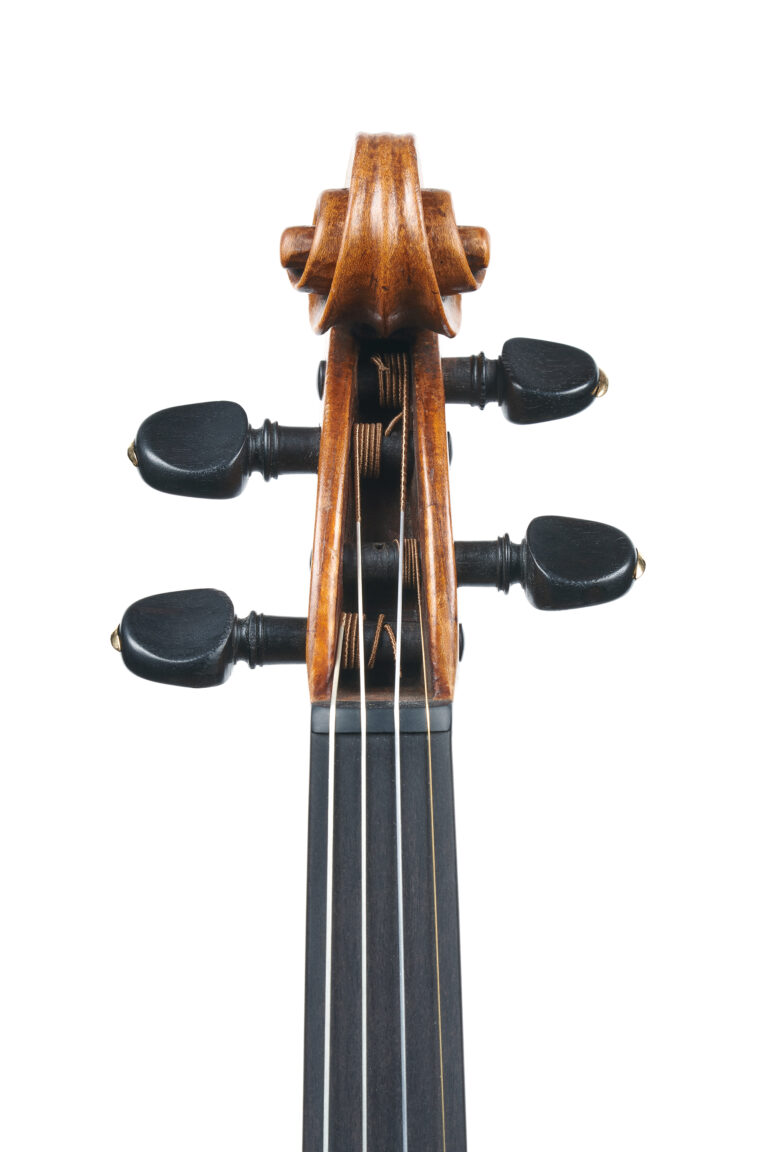
This stunning Italian masterpiece, crafted by Carlo Giuseppe Testore in Milan around 1715, is a testament to the brilliance of Milanese violin-making tradition. This instrument exemplifies the excellence found in Testore's best works and represents a significant chapter in the history of violin craftsmanship. The strong character craftsmanship notable in its decisive arching, the edges, fluting, and purfling, along with the oval diagonal inclined scroll design, highlight the high quality and expressiveness of the finest and most cherished maker of the Testore Family. The exquisite Golden varnish, of exceptional transparency and luminosity, enhances the natural beauty of the wood, creating a unique aesthetic that harmonizes with the instrument's organic qualities and even translates visually the aggressiveness and power of its sound.
The violin's sound is as strong and classy as its visual appeal. It is first documented on 4 May 1906 in London, when it was examined, certified, and sold by W.E. Hill & Sons. At the time, it was attributed to Carlo Antonio Testore, reflecting the close stylistic relationship between father and son. More recent comparative studies, supported by expanded databases and dendrochronological analysis dating the latest growth ring to 1700, have allowed a more precise attribution, confirming the instrument as the work of Carlo Giuseppe Testore. Following its sale, the violin passed to the Van Welsenes workshop in The Hague and was likely handled or restored there or later by Joseph Joachim Vedral. It remained in the Netherlands for much of the 20th century, eventually becoming the property of Dutch violinist and conductor Fokke Beekman in the late 1950s. Beekman owned and performed on the instrument for over fifty years, including work with the Netherlands Radio Philharmonic Orchestra and various recording projects with internationally renowned artists. After his death, the violin passed to his heirs, concluding a well-documented provenance marked by continuous professional use and careful stewardship.
This instrument is in a fine state of preservation. With little intervention in it over the years, the violin portrays one of the few classic Milanese Varnish styles found in the antique masterpieces, most probably used during the periods of humid winter in the north of Italy due to its higher-density resin recipe and higher stability to the cold. Much of the original varnish still adorns the instrument, giving its golden ground color life. Like most of Carlo Giuseppe's instruments, this exceptional violin was originally purfled at the back plate, and the back of the scroll was not carved later by a third-party intervention, as often happened to instruments of the later generations of the family. This not only indicates the higher level of skills applied to crafting this violin but also the care and enthusiasm the maker himself had for this instrument in particular.The top is made of two pieces of Italian spruce with fine to medium regular grain across the mirrored plates. The back is made of two matching pieces of slightly-flamed pattern maple with gorgeous and deep luminosity and the ribs and head. The varnish is of golden color, which later became the most used amongst the following generation of the family.