A violin soundpost crack is a crack in the top or back plate in the region where the soundpost bears against the wood. It describes damage to the body of the violin, rather than a split in the small wooden post itself. Because of its location, it requires careful assessment by a restorer.
The practical distinction is between a newly suspected crack and an old repair under review. The first needs prompt examination before further use. The second needs evidence of what was repaired and how that area is functioning today. Neither can be assessed reliably from the phrase "soundpost crack" alone.
A Small Contact Area with Structural Importance
The soundpost stands inside the violin between the top and back, near the treble foot of the bridge. Its fit matters both to the structure and to the way the instrument responds. Our article on the violin bridge and soundpost explains its role in setup.
The post bears against the plates at its ends. Damage at either contact area therefore concerns wood that has a structural role as well as an acoustic one. In the Amorim atelier, the surrounding wood and previous interventions receive close attention when this region is examined.
On the front, the crack affects the top plate, usually made of spruce. On the rear, it affects the back plate, usually made of maple. These locations present different restoration problems, so a report needs to identify the plate as well as the position and extent of the damage.
For a buyer comparing repaired instruments, "soundpost crack repaired" is consequently an incomplete description. A marked image and an account of the internal work provide a much more useful starting point.
From Damage to Diagnosis
An impact, such as a fall, can transmit force through the soundpost and damage the wood at its contact points. Excessive tightness or poor fit can also place damaging stress on the plates. Changes in humidity affect the dimensions of the wooden body and can alter the conditions in which the post sits.
The apparent cause and the physical finding need to be kept separate. An impact may explain when an owner first noticed a mark, but examination must still establish whether it is a crack in the wood, how far it extends and whether earlier work complicates the area.
If you suspect a new crack, stop playing and contact a qualified violin restorer promptly. Explain whether there has been an impact and send clear photographs if requested. Ask how to handle and transport the violin until it can be examined. Do not attempt to glue the crack or move the soundpost yourself.
Repairing the Wood That Supports the Post
A restorer assesses the crack together with the wood around it and any existing reinforcement. An open crack, a previously repaired crack and an area that has already received substantial intervention do not necessarily call for the same treatment. The repair plan needs to respond to the instrument that is actually on the bench.
At the Amorim Lab, examination and documentation are supported by diagnostic methods selected for the question being investigated. The aim is to connect the visible condition with the instrument's restoration history and identify any areas requiring attention.
The Role of an Internal Patch
A soundpost patch is an internal repair in which a carefully fitted piece of wood reinforces the affected region. It is inset into a prepared area of the plate. Repairing a top soundpost crack commonly involves this type of reinforcement because the restored area must withstand contact pressure from the post.
The fitted reinforcement and the repaired crack have to be considered together. A patch does not make the quality of the underlying work irrelevant. Its fit, the condition of the surrounding material and the subsequent soundpost setup all belong in the assessment.
A report that lists a patch is recording an intervention. It should explain why that intervention was needed where this can be established. The word alone neither documents the original damage nor certifies the repair's present stability.
Assessing an Earlier Restoration
In the Amorim atelier, our approach to restoration favours conservation of original material and intervention guided by structural or musical need. When reviewing an earlier repair, we look at its extent, execution and present condition, together with the documentation available.
A satisfactory assessment should explain what is known about the earlier work and what can be observed now. Restoration records can identify the restorer and the treatment; a current examination addresses whether the area needs further work or monitoring. Where records are absent, that gap should remain explicit. A repair's age does not establish its dependability, and restored cracks can reopen.
A Repaired Violin as a Playing Instrument and a Purchase
Once the structural assessment is complete, the musician and the buyer still have different decisions to make.
For the musician, a playing trial can explore response, balance across the strings and suitability for the intended repertoire, provided the violin has been assessed as ready for use. An attractive sound cannot establish the stability of a repair, just as a documented repair cannot tell a player whether the instrument will suit them.
For valuation, the affected plate, extent of damage, quality of restoration and preservation of original material must be considered alongside the maker, provenance and market evidence. Our appraisal and valuation process brings these factors together for the individual instrument.
A restoration estimate describes the cost of proposed work. It does not, by itself, measure the effect of the damage on market value. Applying a standard percentage discount overlooks both the individual repair and the qualities of the violin as a whole.
What a Buyer Should Have in Hand
Before committing to a repaired violin, the buyer should have a current condition assessment that identifies the affected plate, describes the intervention and records any further work recommended. Where available, restoration records and photographs should support that account.
If treatment is still required, clarify the proposed work and its cost before deciding on the acquisition. If the violin is ready for use, the decision can proceed on the basis of its documented condition, the playing trial and a price that reflects the individual instrument.
This is the documentation we discuss alongside musical suitability in our guided acquisition process. The purpose is to make the implications of the repair clear enough for the buyer to decide whether that particular violin meets their needs.
Talk to a specialist about this topic

Featured Instrument
 AVAILABLE
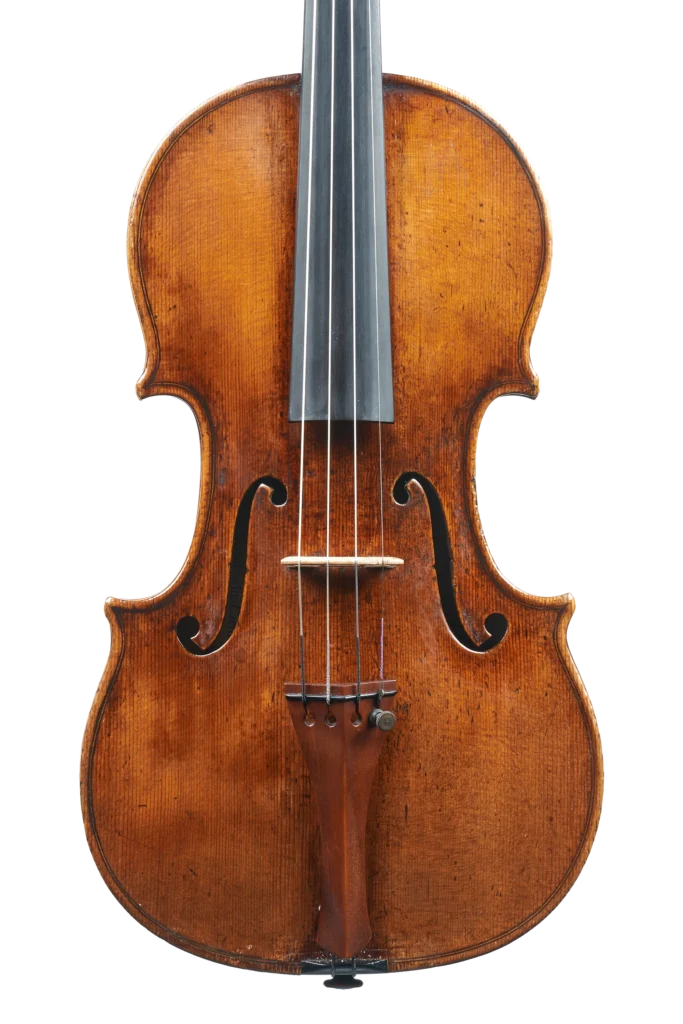
Violin by Antonio Stradivari "Lam; Ex-Scotland University"
Antonio Stradivari — c.1734
View Instrument