There is a point in most serious musicians' lives when the instrument they are playing is holding them back, and the instrument they need costs more than they can put on the table. It arrives at different moments for different players — the end of a conservatoire course, a first orchestral contract, a competition that demands more than the current violin can give. The problem is the same in every case. The career would move faster with the right instrument, and the right instrument is affordable only once the career has moved.
Rent to own exists to break that circle.
What rent to own means
A rent-to-own arrangement lets a musician play a fine instrument immediately, under a rental agreement, with the right to buy it at the end of an agreed period — and with what they have already paid counting toward the purchase.
It is not a loan, and it is not hire purchase in the consumer sense. The instrument remains the atelier's property throughout the rental. The musician plays it, performs on it, travels with it, and decides at the end whether to keep it. If they do, the money already paid is not lost: it becomes part of the price.
The second thing it does is less obvious and, for many players, more valuable. It removes the hardest part of buying a fine instrument: committing to one after an afternoon with it.
An hour in a showroom tells you how an instrument sounds under your ear in a quiet room. It does not tell you how it projects from the back of a hall, how it behaves in a dry rehearsal room in January, whether it will still suit you after six months with the concerto you are learning, or whether the quality you loved on first hearing becomes something you fight against. Those answers take months, not minutes. A rental period gives you the months.
How the programme works at Amorim
Eligibility. The programme is open to musicians and students resident in the European Union or Switzerland. This is a practical limit rather than a preference — insurance, transport and the legal framework of the rental agreement all work differently outside that area.
Choosing the instrument. You choose from the violins, violas and cellos selected for the programme. Our specialists advise on which suits your playing, your repertoire and the direction your career is taking, and we would rather tell you an instrument is wrong for you than place it.
The term. One year or two. You decide at the outset.
The deposit. 20% of the instrument's price, paid upfront.
The monthly rent. On a one-year term, 2.2% of the instrument's price each month. On a two-year term, 1.8%.
At the end. If you buy the instrument, the deposit and every monthly payment you have made count toward the purchase price. If you decide against it, you return the instrument and your 20% deposit comes back to you. The monthly payments are what you paid to play a fine instrument for a year or two — which is what they were.
The maths, on a real example
Percentages are harder to feel than numbers, so take an instrument priced at €20,000.
On a one-year term, the deposit is €4,000 and the monthly rent is €440. Over twelve months you pay €5,280 in rent, so you have put in €9,280 by the end of the year. If you buy, €10,720 remains. If you walk away, you take back your €4,000 and the year of playing cost you €440 a month.
On a two-year term, the deposit is the same €4,000 and the monthly rent is €360. Over twenty-four months that is €8,640, so you have put in €12,640. If you buy, €7,360 remains. If you walk away, you take back the €4,000 and the two years cost you €360 a month.
Two things follow from those numbers, and they are worth stating plainly.
If you intend to buy, the term barely matters to the total. Everything you pay counts toward the price either way. The two-year term simply spreads a larger share of it over a longer time, at a lower monthly figure.
If you are not sure you will buy, the two-year term is better value per year of playing — €360 a month against €440 — while the one-year term gets you out faster if the instrument turns out not to be yours. That is the real trade-off to think about before choosing.
The part most people overlook: the setup
An instrument is not finished when it is sold. How a violin responds under the bow depends on its soundpost, its bridge, its strings and the fine adjustments that only reveal themselves once a particular player has lived with it for a while.
Every instrument in the programme is set up in our workshop in Cremona before it leaves, and adjusted again during the rental as you discover what you want from it. This matters more in a rental than in a sale, because you are deciding whether to spend a significant sum on this instrument, and you should be deciding on the instrument at its best rather than at its factory default.
Who it suits, and who it does not
Rent to own is right for a player whose present instrument is limiting them, who can carry the monthly figure comfortably, and who wants to be certain before committing — a conservatoire student stepping up, a young professional whose first contract has raised what is being asked of them, a player who has narrowed a search to one or two instruments and cannot choose from short trials.
It is less suited to someone who is sure of the instrument and has the funds, who would simply be paying more over time for no benefit, and to anyone for whom the monthly payment would be a strain. An instrument should ease a career, not weigh on it.
Talk to us
Browse the instruments available, and tell us where you are and what you are trying to do. We will tell you honestly whether rent to own is the right route for you — and if it is not, we will tell you that too.
Talk to a specialist about this topic

Featured Instrument
 AVAILABLE
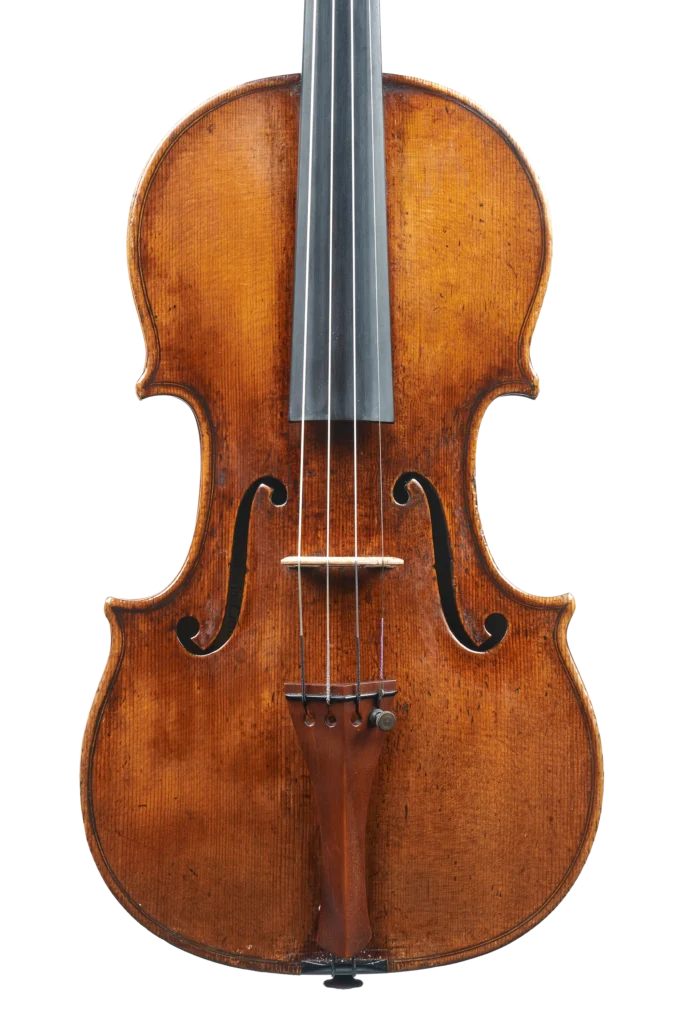
Violin by Antonio Stradivari "Lam; Ex-Scotland University"
Antonio Stradivari — c.1734
View Instrument