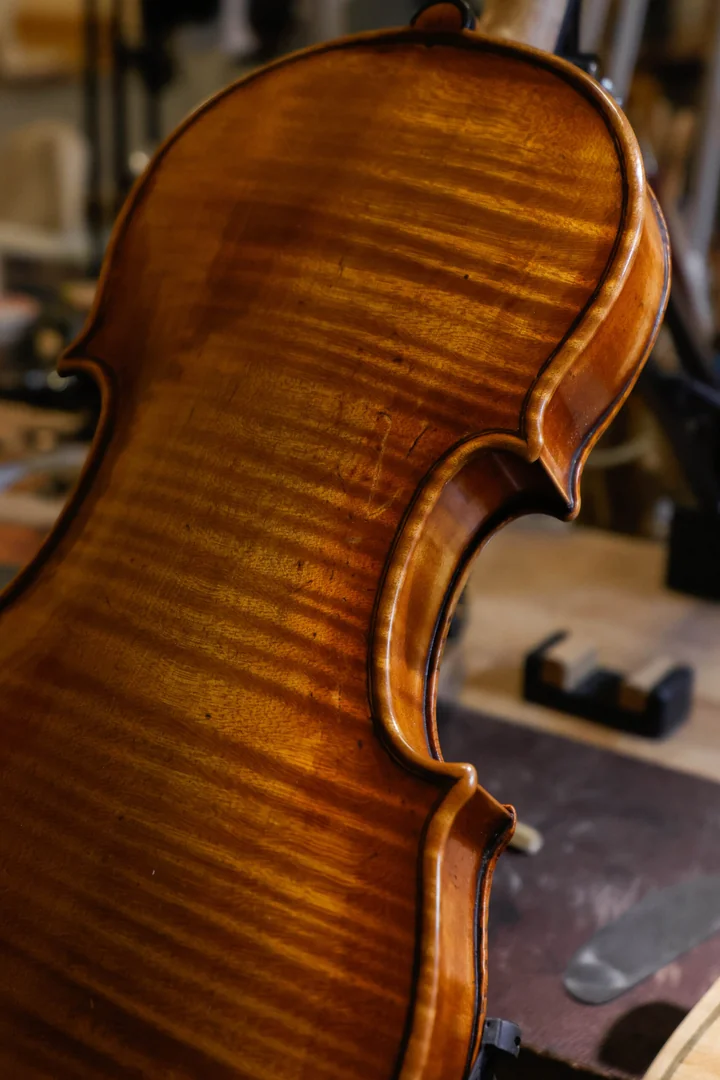
Amorim is, before anything else, a workshop, and a workshop that exists for a clear reason. We are here to support others in expressing themselves uniquely. A musician finding the instrument that becomes their voice. A collector building a holding that reflects a personal vision and protects it for the future. An institution stewarding a legacy that allows great music to continue being made.
Everything else we do, building, restoring, evaluating, advising, and accompanying, flows from this purpose. It shapes what we make, how we work, the conversations we have, and the relationships we build over time.

This artistic dimension is what gives an Amorim instrument its character, and what allows our reading of historical instruments to reach beyond technique.
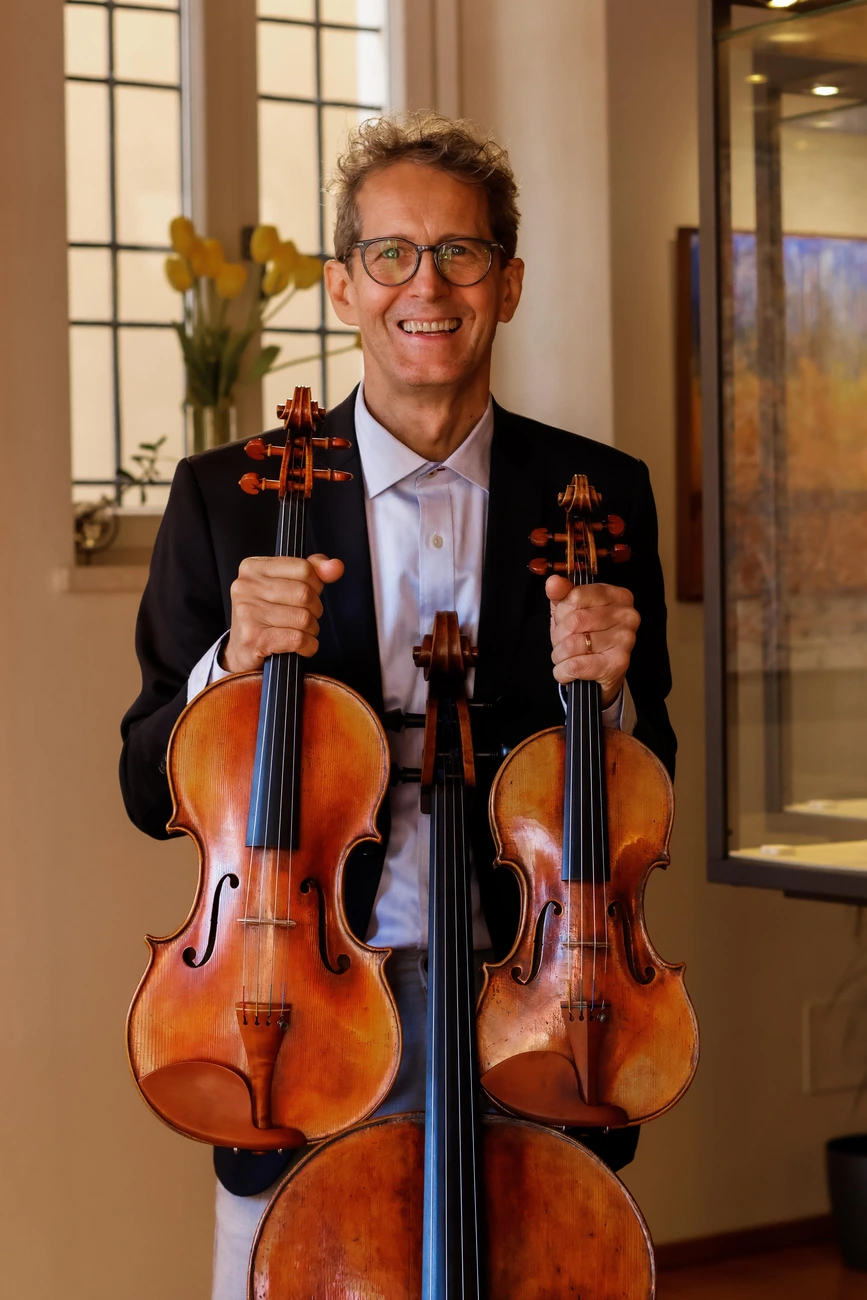
Whether played daily on the world's stages, preserved within a collection, or protected by an institution, each instrument's role is shaped by the person who stewards it, and our work serves that intent.
Shaped by its maker, its history, its condition, and the choices made about it over time, that identity must be preserved, not overwritten by our preferences.
Reading any one of these in isolation gives a partial picture. Serious work requires holding all three together.
A great instrument in the wrong hands is incomplete; so is a great musician without the right voice beneath the bow. Part of our work is recognizing when the match is right.
Cremona is not a heritage we invoke; it is a tradition we practice. Tradition only exists when it shapes the daily decisions made in workshops like ours, at the bench, in the laboratory, and in the showroom.
The new instruments we build are informed by centuries of historical models we have studied directly. The historical instruments that reach us are read with eyes trained by the act of making.
This artistic dimension is what gives an Amorim instrument its character, and what allows our reading of historical instruments to reach beyond technique.
These convictions are easier to state than to live by. We measure ourselves against them in every instrument we touch, every conversation we have, and every decision we make.