Bergonzi Violins
The rare instruments Carlo Bergonzi made (less than 50 remain today) are extremely elegant due to their outstanding materials, exquisite varnish, and consummate execution. A master in his own right, he created an authentic style and craftsmanship in making his violins and is overshadowed only by his contemporaries Stradivari and Guarneri ‘del Gesù.’
Carlo Bergonzi (1683–1747) stands among the defining makers of late classical Cremona. His surviving body of work is exceptionally small, yet his violins are immediately important to the history of the Cremonese school because they reveal a maker who absorbed the language around him without becoming a copy of anyone else. Today, the Cozio Archive lists 43 instruments attributed to Carlo Bergonzi I, including 41 violins, one viola and one cello.
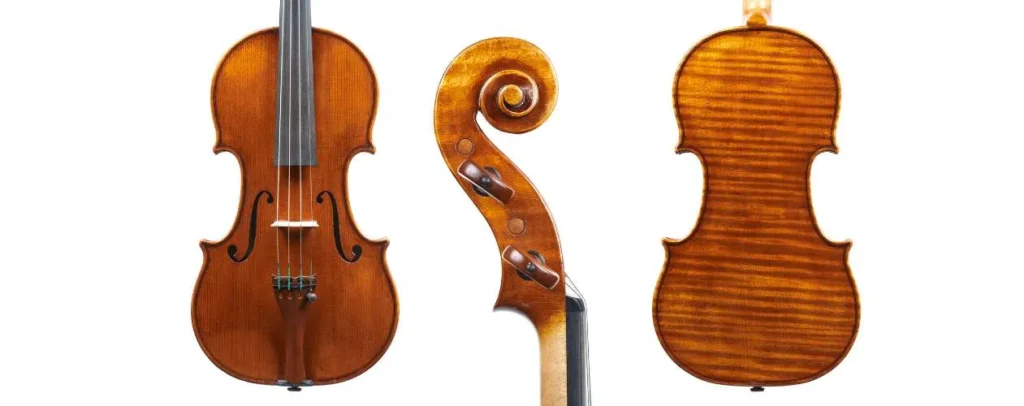
Bergonzi worked in the same city and generation as Antonio Stradivari and Giuseppe Guarneri “del Gesù”, but his mature instruments developed their own visual grammar: a compact and strongly shaped outline, narrow center bouts, bold soundholes, distinctive scrolls, carefully chosen materials and varnish of remarkable depth. For musicians and collectors, that combination of rarity, individuality and documented place in Cremonese history explains why a genuine Carlo Bergonzi violin is treated as much more than a secondary alternative to Stradivari or Guarneri.
Who Was Carlo Bergonzi?
Carlo Bergonzi was born in Cremona in 1683. Unlike members of the established Amati, Guarneri and Stradivari workshops, he did not come from an obvious violin-making family. His father appears in the historical record as a baker, and the details of Carlo's early training remain incomplete.
That uncertainty matters. Older accounts often placed Bergonzi directly in the workshop of Stradivari or Giuseppe Guarneri “filius Andreae”. More recent archival and stylistic research has shifted the discussion toward the Rugeri family. Research summarized by John Dilworth for Tarisio points to the physical proximity of Vincenzo Rugeri's workshop to the Bergonzi family home, as well as social and financial ties between the two families. The evidence supports a close Rugeri connection, but it is more accurate to describe Bergonzi's training as a well-supported historical hypothesis than as an unquestionably documented apprenticeship.
By the 1720s Bergonzi was working independently. Those decades placed him at a remarkable moment in Cremona: Stradivari had already transformed the proportions and arching inherited from the Amati tradition, while Guarneri “del Gesù” was developing an increasingly personal language of his own. Bergonzi knew this environment closely, yet the best of his work cannot be reduced to a mixture of the two better-known makers.
The connection with Stradivari became especially concrete near the end of Bergonzi's life. Around 1745–46, the Bergonzi family moved into the Casa Stradivari and participated in work on instruments and materials remaining after the deaths of Antonio Stradivari and his sons. This late collaboration is historically significant, but it should not be projected backward as proof that Bergonzi learned his craft in Stradivari's workshop.
What Makes a Carlo Bergonzi Violin Distinctive?
The safest way to understand Bergonzi is not through a single feature, but through the relationship between model, arching, soundholes, scroll, edgework, materials and working habits. This is also how fine instruments are read in professional attribution: one characteristic may be suggestive, while a coherent group of characteristics is much more meaningful. For a broader introduction to these relationships, see Amorim's guide to understanding fine violins.
Model, Proportions and Arching
The mature Bergonzi outline is especially recognizable through its comparatively narrow center bouts, broad upper shoulders and strong corners. Two moulds attributed to the Bergonzi workshop survive in the Museo del Violino in Cremona. Both are narrower through the center than the classic Golden Period Stradivari forms and are generally shorter in body length; documented Bergonzi violins rarely exceed about 353 mm.
His arching also evolved. Early instruments can show a more pinched or Rugeri-related character, while later examples tend toward flatter but still full curves. It is tempting to connect one geometry directly to one sound result, but an antique violin cannot be understood from arching alone. Plate thickness, wood, setup, condition and the individual player all interact with the model.
F-Holes and the Mature Bergonzi Style
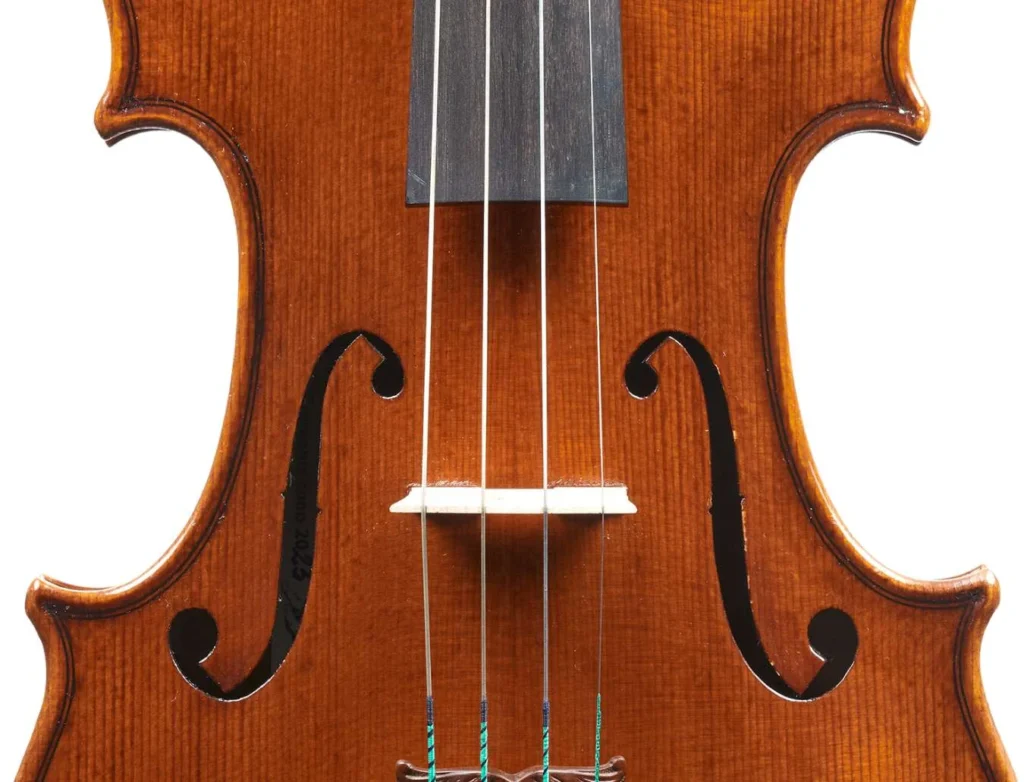
Bergonzi's soundholes are among the features most often used to recognize his mature style. They become larger and more assertive with time, commonly set low and wide on the table. In his later work the wings broaden and the aperture becomes longer and more open, a development that has often been compared with the evolving work of Guarneri “del Gesù”. The resemblance is important evidence of shared ideas within Cremona, but it does not make one maker derivative of the other.
Scroll, Corners and Workshop Details
The scroll is one of Bergonzi's strongest signatures. Mature examples are sharply organized, with a slender face, widely projecting eyes and a precise central axis through the volute. The chamfer can be exceptionally delicate and, unlike Stradivari and Guarneri, Bergonzi did not usually emphasize it with a black outline.
Other details become useful when read together. Documented instruments may show deep notches beside the back button, toothed-plane marks on the ribs, distinctive corner treatment and idiosyncrasies in the internal work. These are exactly the kinds of small decisions that experienced eyes use to distinguish a maker's hand from a later copy.
Wood and Varnish
Bergonzi had access to exceptional maple and spruce, including beautifully figured native Italian field maple, or oppio, in some earlier instruments. His varnish is not confined to one shade. Surviving examples range through warm orange-brown, red-orange and deeper reddish tones, often with the luminous quality associated with the finest Cremonese work.
The 1733 “Tschudi, Martzy, Salabue, Tarisio” violin, for example, is documented with a one-piece quarter-cut maple back, a two-piece spruce top and red orange-brown varnish. Another 1733 violin in the archive carries an orange-brown varnish and a two-piece maple back. Variability between genuine instruments is precisely why authentication cannot be reduced to matching a color, an outline or a label.
Bergonzi, Stradivari, Guarneri and Rugeri: Influence Without a Simple Lineage
Bergonzi is often introduced as a bridge between Stradivari and Guarneri “del Gesù”. The comparison is understandable, especially because players have long described the response of fine Bergonzi violins as occupying a space somewhere between the two. Historically, however, the relationship is more interesting than a simple midpoint.
His early work preserves clear affinities with the Rugeri tradition. As his style matured, Stradivari's influence can be seen in proportions, lower arching and the broader conception of the soundholes, while certain developments in the f-holes, corners and scrolls run intriguingly parallel to “del Gesù”. The makers were active in a small city and within overlapping professional networks. Similarities can therefore indicate shared visual and working ideas without proving a direct master-pupil relationship.
This distinction is important for both history and connoisseurship. A Bergonzi is valuable not because it resembles a Stradivari or a Guarneri, but because Bergonzi converted the language of classical Cremona into a coherent style of his own.
Owning one of these masterpieces is any player's dream, but collectors and investors will also be attracted to Bergonzi violins. These instruments are an excellent investment as their value will only increase over time. Imagine these kinds of violins like a famous work of art because, by all means, they are one! Many antique violins are owned by museums or played by famous musicians; their value and importance are limitless.
The Bergonzi Family After Carlo
Carlo was not the end of the family workshop. His sons Michele Angelo Bergonzi (1721–1758) and Zosimo Bergonzi (1724–1779) carried the name forward. Michele Angelo remained at the Casa Stradivari after Carlo's death in 1747 and continued to work from his father's models, while Zosimo forms the next branch of the family line.
Zosimo is especially relevant when tracing the later Cremonese tradition. He was the father of Nicola Bergonzi and Carlo Antonio Lorenzo Bergonzi II, and one of the surviving workshop moulds attributed to Carlo bears Zosimo's autograph. The family therefore connects the final decades of classical Cremona with the makers who worked in the city later in the 18th and early 19th centuries.
That continuity also explains why the surname alone is not enough to identify an instrument. A violin labeled or described simply as “Bergonzi” can refer to different generations, and the maker, period and attribution must be established before any meaningful discussion of historical importance or value.
Notable Carlo Bergonzi Violins
Because Bergonzi's documented output is so small, individual instruments have played an unusually large role in shaping how his work is understood. Three examples illustrate different aspects of his mature period.
The 1733 “Tschudi, Martzy, Salabue, Tarisio”
This 1733 violin is one of the best documented examples of Bergonzi's mature style. Its body measures 35.3 cm, with a one-piece maple back and red orange-brown varnish. Its provenance includes Count Cozio di Salabue, Luigi Tarisio and violinist Johanna Martzy. The Cozio Archive entry preserves the instrument's measurements and materials, making it a particularly useful reference for studying the maker.
Cozio also left an unusually vivid impression of a major Bergonzi violin, describing one 1733 example as his largest and best, and as “the strongest that I have owned and that I have ever heard.” Such historical comments are valuable because they show how Bergonzi's work was already being evaluated by a sophisticated collector within decades of the maker's lifetime.
The “Kreisler, Perlman”
The violin known as the “Kreisler, Perlman” is another central reference. Its dating has varied in the literature, commonly around 1733–35 or c. 1740 depending on the catalogue. More important than forcing a single date is what the instrument reveals about attribution. It carries an old reproduction Stradivari label dated 1716, even though the instrument is recognized as a Bergonzi. Tarisio documents the label and attribution history, making it a useful reminder that the paper inside an antique violin is evidence to be studied, not proof of authorship by itself.
The violin later became associated with Fritz Kreisler and Angel Reyes and was also owned for a period by Itzhak Perlman. Its history is one reason it remains among the best-known Bergonzi names outside specialist circles.
The 1735 “Earl of Wharncliffe, Knoop, Landau”
The 1735 “Earl of Wharncliffe, Knoop, Landau” belongs to the group of instruments most often cited when discussing Bergonzi at the height of his mature period. The association with Baron Johann Knoop places it within one of the great historical collections of fine instruments, while its preserved material and workmanship offer another point of comparison for understanding the range within Bergonzi's output.
How Is a Carlo Bergonzi Violin Authenticated?
A genuine Carlo Bergonzi violin cannot be authenticated from a label, a single photograph or one characteristic such as varnish color. Attribution requires a comparative process that asks whether the instrument as a whole belongs within the known range of the maker's work.
At Amorim Fine Violins, the authentication and certification process begins with examination by hand and comparison with documented reference instruments. Specialists consider the scroll, f-holes, arching, purfling, varnish, internal construction, materials, proportions and working habits. Provenance, historical certificates and scientific analysis can add support, but no single laboratory technique establishes authorship on its own.
For Bergonzi, this method is particularly important because the surviving corpus is small and reliable original labels are scarce. A label can be original, replaced, reproduced or unrelated to the hand that made the violin. The “Kreisler, Perlman” is a particularly clear historical example: a respected Bergonzi can carry a Stradivari label without becoming a Stradivari.
What Is a Carlo Bergonzi Violin Worth?
There is no single 2026 price for a Carlo Bergonzi violin. Public auction records can provide historical evidence, but they do not determine the present retail or private-market value of an individual instrument. Tarisio currently lists a historical auction record above US$1 million for the maker, achieved in 2005, but a current valuation must be based on the specific violin being examined.
For an instrument of this level, value is shaped by several factors working together:
- Certainty and quality of attribution, including the maker and period.
- Quality of the example within Bergonzi's known output.
- Condition, structural history, original material and quality of past restoration.
- Provenance, certificates and documentary history.
- Comparable transactions and current demand in the international fine-instrument market.
This is why asking what a “Bergonzi violin” is worth before establishing exactly what the instrument is can be misleading. Amorim's violin appraisal and valuation process separates attribution from valuation and bases the final figure on the instrument's condition and current market evidence.
Availability is similarly irregular. Important Bergonzi violins rarely appear as ordinary inventory, and many transactions in the upper end of the fine-instrument market take place privately. Collectors or musicians researching a specific historical maker can therefore use a dealer's public collection as a starting point rather than as a complete picture of what may be accessible. Amorim maintains a curated selection of rare and historic instruments and can advise on private opportunities when relevant.
What Can Musicians Expect From a Bergonzi?
Historical reputation often describes Bergonzi violins as combining some of the clarity associated with Stradivari with some of the depth and immediacy players associate with Guarneri “del Gesù”. That description can be useful as a tradition of player experience, but it should not become a promise about every surviving instrument.
For a musician, the relevant question is how a specific violin responds in the hand and in the room. Setup, bridge and soundpost, string choice, restoration history and the interaction between player and bow can all materially change the experience of the instrument. Two authenticated violins by the same maker may therefore feel and project differently.
This is also why a serious trial should separate historical prestige from musical fit. A Bergonzi may be extraordinary as an object of Cremonese history and still need to be evaluated as an individual working instrument.
Why Bergonzi Still Matters in Cremona
Bergonzi's importance extends beyond the rarity of his surviving instruments. He belongs to the final generation that experienced classical Cremonese violin making as a living workshop tradition rather than a historical style to be reconstructed. His work records a moment when Rugeri, Stradivari and Guarneri ideas were still circulating within the same city, yet individual makers could transform that common language into something unmistakably personal.
At the Amorim atelier, Carlo Bergonzi remains among the historical Cremonese makers whose working methods are studied for what they can teach contemporary making. That study is not about copying one visual feature. It means reading how outline, arching, f-holes, scroll, materials, varnish and tool work relate to one another, then understanding how the maker's choices function as a whole.
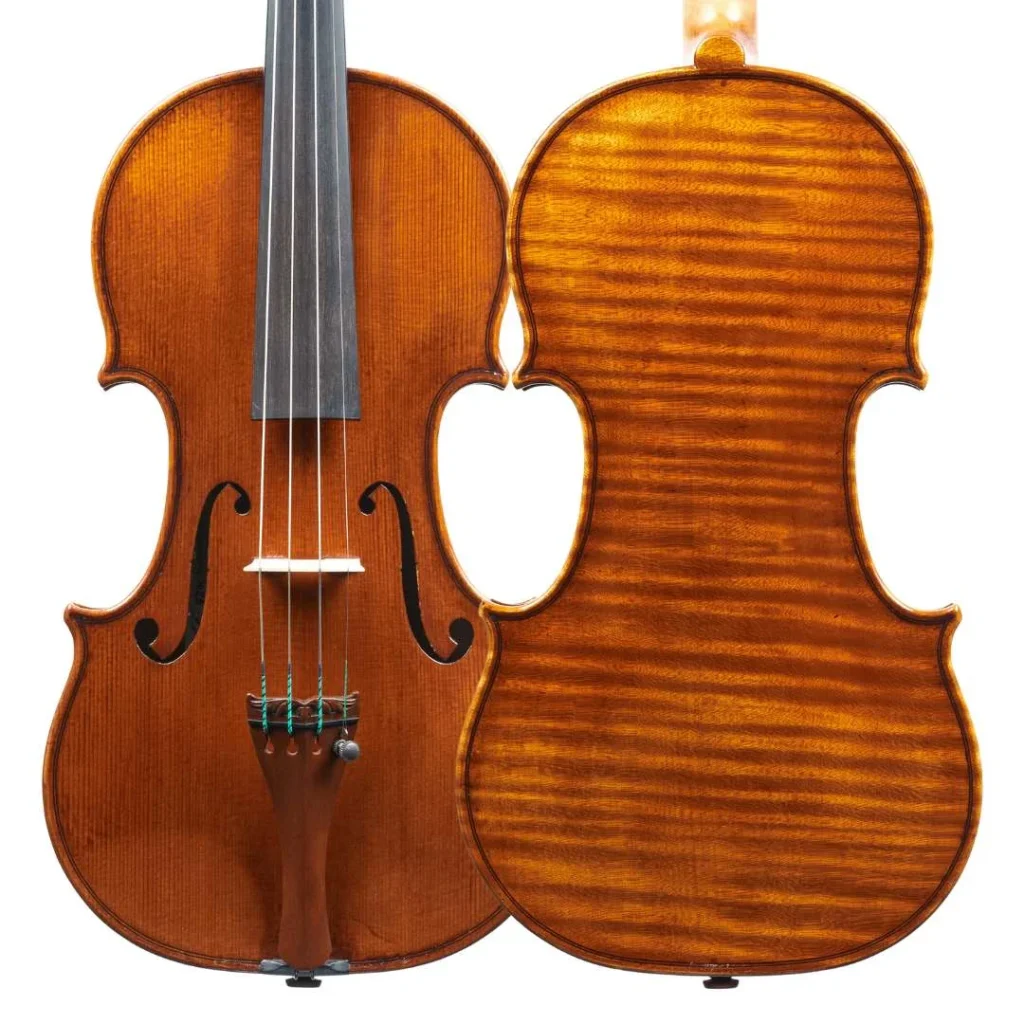
The current article also features a contemporary Bergonzi-inspired violin by Luiz Amorim. That relationship between historical study and contemporary making is one of the reasons Bergonzi remains relevant: his instruments are not only museum objects or market rarities, but working references for makers who continue the Cremonese tradition today.
Preserving a Rare Historical Violin
Ownership of an 18th-century violin brings responsibilities that are separate from its name or market value. Stable environmental conditions, careful handling, professional setup and regular inspection help preserve both structural health and the evidence that future experts may need to interpret the instrument correctly.
Humidity deserves particular attention because repeated expansion and contraction of wood can contribute to open seams, distortion and cracks. The appropriate response depends on the instrument, its case and the climate, so major interventions should always be discussed with an experienced luthier. Amorim's guide on how to take care of a violin covers daily care, storage, environmental changes and professional maintenance in greater detail.
Carlo Bergonzi's Place in Violin-Making History
Carlo Bergonzi is sometimes described through the names around him: Rugeri, Stradivari and Guarneri “del Gesù”. Those relationships are essential to understanding his world, but they should not obscure his own achievement. His mature violins combine a highly recognizable model, bold soundholes, refined scrolls, exceptional materials and a workshop language that is distinctly his.
The scarcity of documented examples makes every reliable Bergonzi an important source for scholarship. For musicians and collectors, the same scarcity makes careful attribution, condition assessment and provenance indispensable. A genuine Bergonzi is valuable not because its price is guaranteed to rise, but because it occupies a rare position at the end of Cremona's classical period and because the best surviving instruments continue to unite history, craftsmanship and musical use in a single object.
Preserving the Bergonzi Legacy
In order to protect the heritage of fine violins crafted by the Bergonzi family, it is fundamental to educate people about the importance of buying and owning a traditional handcrafted instrument compared to an industrialized one. By making his exceptional instruments in Cremona, Carlo Bergonzi was part of a legacy that has made Cremona the capital of violin-making in the world. Nowadays, luthiers study, are inspired by and make copies of Bergonzi’s instruments. He put down techniques of Lutherie that are used to this day. Protecting instruments made by the Bergonzi family means protecting traditional handcrafted violin making.
In this photo, you see a contemporary inspiration of a violin by Carlo Bergonzi made by Luiz Amorim.
In conclusion, we can say that Bergonzi violins are considered some of the best and rarest violins in the world. The Bergonzi family founded a legacy of the last master makers of the golden period of violin making in Cremona. Their violins not only have extremely important historical significance, but they also sound and look beautiful. This makes them an excellent investment for any musical enthusiast, whether they plan on playing, reselling or just collecting this kind of violin, the value will only increase over time. However, the budget, time, and care necessary for owning one of these instruments is not available to everyone so an instrument made by Bergonzi may not be the best fit for some people. If you’re interested in rare and historic violins, you should definitely check the fine instruments session. We have a wide selection of fine violins for sale, and it’s well worth browsing our collection to see what we have to offer. Check out our current options of fine violins, violas, and cellos available for sale. See Instruments
Talk to a specialist about this topic

Featured Instrument
 AVAILABLE
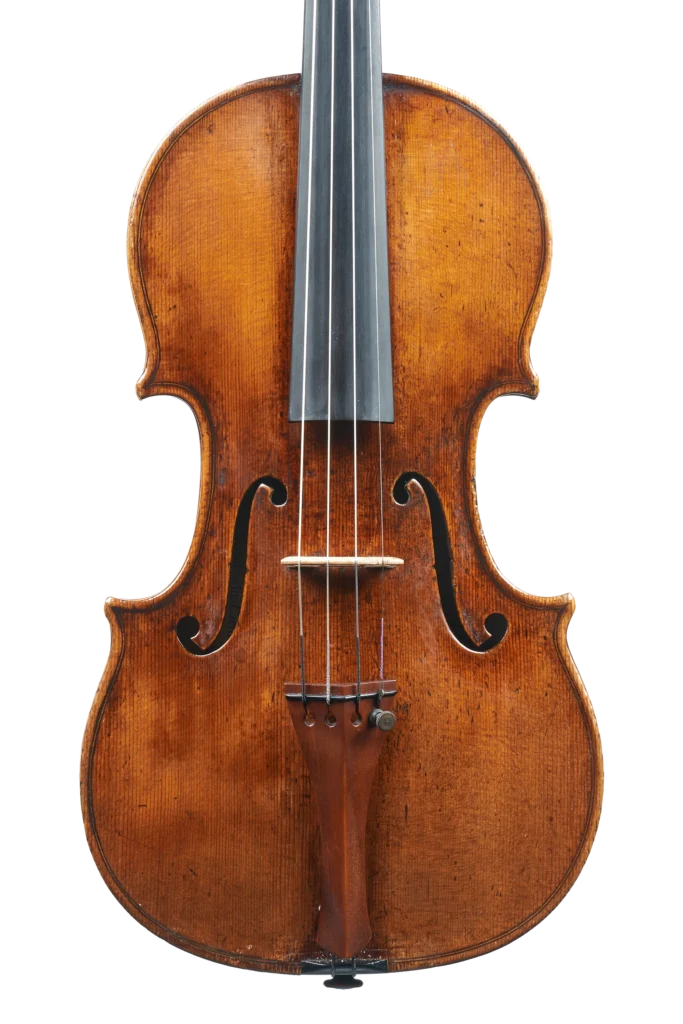
Violin by Antonio Stradivari "Lam; Ex-Scotland University"
Antonio Stradivari — c.1734
View Instrument