As musicians, we are constantly striving to improve our violin’s sound. One of the easiest ways to check if your violin’s sound is up to snuff is to physically examine the violin bridge and soundpost. These two small but important parts are responsible for carrying the vibration from the top of the violin to its bottom (the body). So, they surely affect your overall violin sound. The purpose of this guide is to help you understand how these two lesser-known parts of the violin work together and their role in your masterpiece. We’ll do that by explaining what the violin bridge and soundpost are, how they affect your violin’s sound, and how you can go about adjusting them.
What is the bridge of a violin?
A violin bridge is a key component of your violin, so you definitely need to know all there is to know about it and its importance. The violin bridge not only supports the strings and regulates their height, but also transmits the strings’ vibration to a bigger surface. What does that mean? It means that, by playing the violin with a bow, you apply energy to the strings, setting them into vibratory motion, creating musical sounds. However, the strings alone displace just a small air volume while vibrating, so the bridge conducts the strings vibration to a larger surface that displaces a larger air volume, thus producing louder sounds to the surrounding air. The larger surface is the violin top, where the bridge rests. It is a resonant area that helps to amplify the sound. Additionally, the bridge also acts as an acoustic filter, suppressing specific undesirable frequencies. (This is a bit more complex; let’s just not get that much into physics here).
Violin Bridge Adjustments
The bridge receives a lot of pressure when the strings are vibrating, so it might happen to its shape to be twisted, slant, or warped; always make sure that it is standing vertically straight in the top plate, with a sharp 90 degrees angle. This check improves the resistance needed to support the strings’ pressure, prevents you from having to change the bridge every now and then and it will maintain the set-up in its ideal configuration. When adjusting it, make sure to losen a bit of the strings to facilitate the movement. Do it carefully and gently; after all, we all know stringed instruments are delicate. If the bridge’s shape is already damaged, that’s a sign that you should visit a luthier; this might be causing problems to your sound.
Violin Soundpost
The Violin soundpost is one of those components of the violin that affects the tone quality. The soundpost is a small, rounded, tapering cylinder that is placed by friction, close to the bridge’s foot in the treble side, and it also acts as a supporter for the top plate. It transfers the vibration to the backplate, turning the violin’s body into a resonant box. The soundpost is the most important part of a violin since it is responsible for producing the sound. The violin strings are stationary, but the soundpost must be adjusted in order to establish an ideal tension. The main disadvantage of having a poorly positioned or thin soundpost is that there will be difficulties intoning the open strings. Slight changes in the violin soundpost position change the sound in a different way. Here are some of them: Placing it closer to the bridge enhances the lower strings, and the sound will be brighter. If you place it further from the bridge, it loses its brightness and makes the sound a little rounder. Placing it towards the inner side, towards the center, benefits the bass side and makes the sound darker. On the other hand, placing it towards the outside, closer to the f-hole, the sound will be more focused, tending to be clearer. Always remember, the idea is to seek a balanced sound to the taste of the musician. Its adjustment is as complex as the difference it can make to the violin’s sound. Make sure you go to a luthier every time you need to correct it!
How to install the bridge on a violin?
Installing a violin bridge is a delicate process that requires precision, patience, and a good understanding of violin setup. The bridge must be positioned exactly between the inner notches of the f-holes, standing straight and perpendicular to the top plate. Its feet must fit perfectly against the curvature of the violin’s top; even a small gap can affect vibration transfer and sound quality. Before installing the bridge, the strings should be loosened enough to allow movement without removing them completely. The bridge is then carefully slid into position under the strings, ensuring that both sides remain perfectly vertical. This angle is essential to withstand string tension and prevent warping over time. Because the bridge plays such a critical role in sound production, even minor installation errors can negatively impact tone, projection, and playability. For this reason, bridge installation is usually best left to an experienced luthier, especially for beginners or valuable instruments.
Can you replace your own violin bridge?
Technically, yes. You can replace your own violin bridge. However, whether you should is a different question. Replacing a bridge involves more than simply placing a new piece of wood under the strings. A proper bridge must be carefully cut, shaped, and adjusted to match your violin’s arching, string height, and playing style. Pre-cut bridges are available on the market, but they are only rough blanks. Without proper fitting, they can lead to poor sound quality, uncomfortable string action, or even damage to the instrument. An improperly fitted bridge can also fall or warp under string tension. If you are an advanced player with some setup experience, replacing a bridge on a practice violin can be a learning opportunity, but still risky. However, for intermediate to professional instruments, visiting a luthier is strongly recommended. A professional setup can dramatically improve tone, response, and overall playability.
What to consider when buying a violin bridge?
When buying a violin bridge, the most important factors are material, size, and quality. Violin bridges are traditionally made from maple, chosen for its balance of strength, flexibility, and acoustic properties. Higher-quality bridges are made from well-seasoned maple and have a tighter, more even grain. Bridge size and model also matter. Bridges come in different heights, widths, and styles, depending on the violin’s size and setup requirements. Common brands like Aubert or Despiau offer different grades, ranging from student to professional quality. It’s also important to remember that buying a bridge does not mean it’s ready to use. Even the best bridge requires professional cutting and fitting to suit your specific violin. Think of the bridge as a customizable component rather than a plug-and-play part. Investing in a good bridge and proper adjustment can significantly enhance your violin’s sound and responsiveness.
How to take care of the bridge and soundpost
Proper care of the bridge and soundpost is essential to maintaining your violin’s sound quality and structural integrity. Although these components are small, they are highly sensitive to tension, humidity, and handling.
- Regularly check that your bridge is standing straight and centered between the f-holes. Over time, tuning can slowly pull the bridge forward, causing it to warp. Gently correcting its position during string changes and keeping string grooves clean can help extend its lifespan. Avoid touching the bridge unnecessarily, as oils from your hands can affect the wood.
- The soundpost, on the other hand, should never be adjusted without proper tools and experience. Changes in humidity or temperature can cause it to shift or lose tension, which may result in a dull, unbalanced, or weak sound. If you notice sudden changes in tone, response, or volume, it may be a sign that the soundpost needs professional attention.
- To protect both components, store your violin in a stable environment, avoid extreme temperature changes, and keep your instrument properly humidified when necessary. Most importantly, schedule regular checkups with a qualified luthier to ensure your bridge and soundpost remain in optimal condition for the best possible sound.
Trust the Experts with Your Violin Setup
Your violin’s bridge and soundpost are fundamental to its tone, projection, and responsiveness. Keeping these components properly fitted and well maintained is key to unlocking your instrument’s full expressive potential. By understanding their role and ensuring they receive the care they need, you allow your violin to perform with clarity, balance, and character. At Amorim Fine Violins, we are dedicated to fine craftsmanship, exceptional sound, and supporting musicians at every stage of their journey. Whether you need expert adjustments, professional advice, or routine maintenance, our workshop is here to help your fine violin sound its very best.
Talk to a specialist about this topic

Featured Instrument
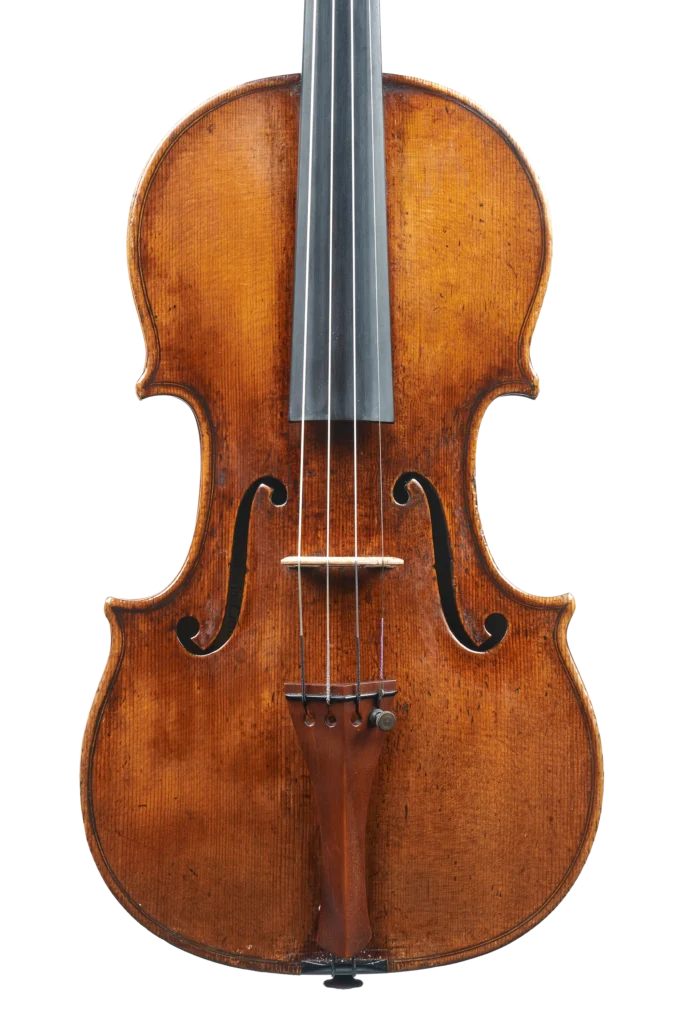 AVAILABLE
Violin by Antonio Stradivari "Lam; Ex-Scotland University"
Antonio Stradivari — c.1734
View Instrument