Full Description
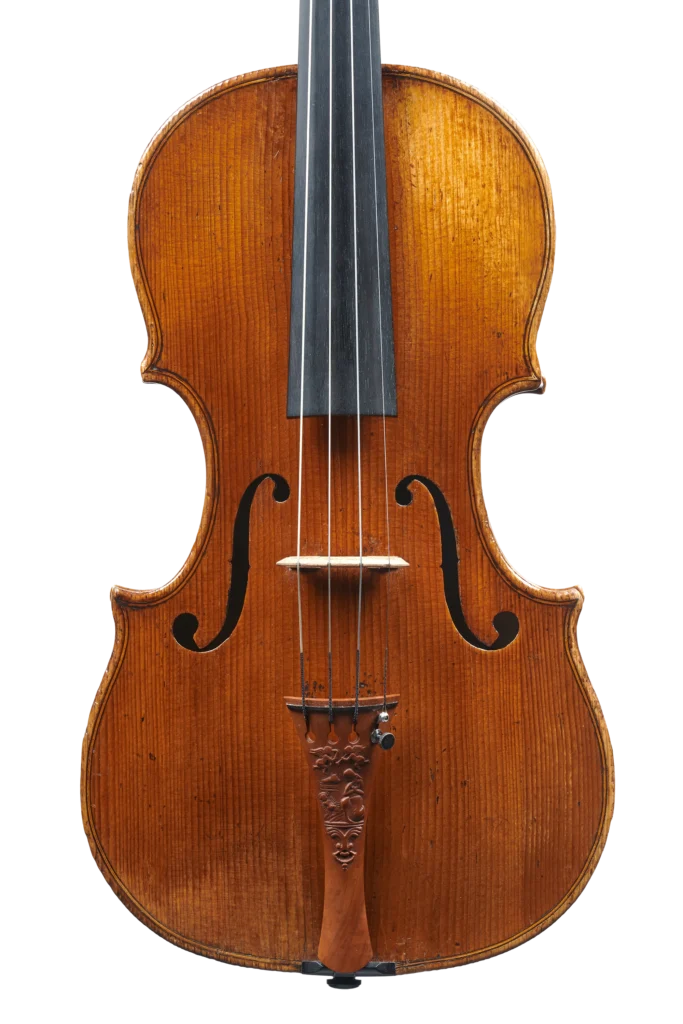
This rare and compelling violin by Giovanni Rota, made in Cremona in 1807, stands as an important witness to the final continuity of the classical Cremonese tradition at the beginning of the 19th century. Although deeply connected to the workshop environment of Lorenzo Storioni and the late Bergonzi circle, the instrument reveals a more independent and personal interpretation of the Cremonese models, moving away from the squared and rugged outlines associated with his contemporaries. The generous body shape, with rounded middle bouts and freely approached short corners, gives the violin a harmonious and confident presence, while the relatively flat and full arching reflects the acoustically driven principles inherited from the late Cremonese school.
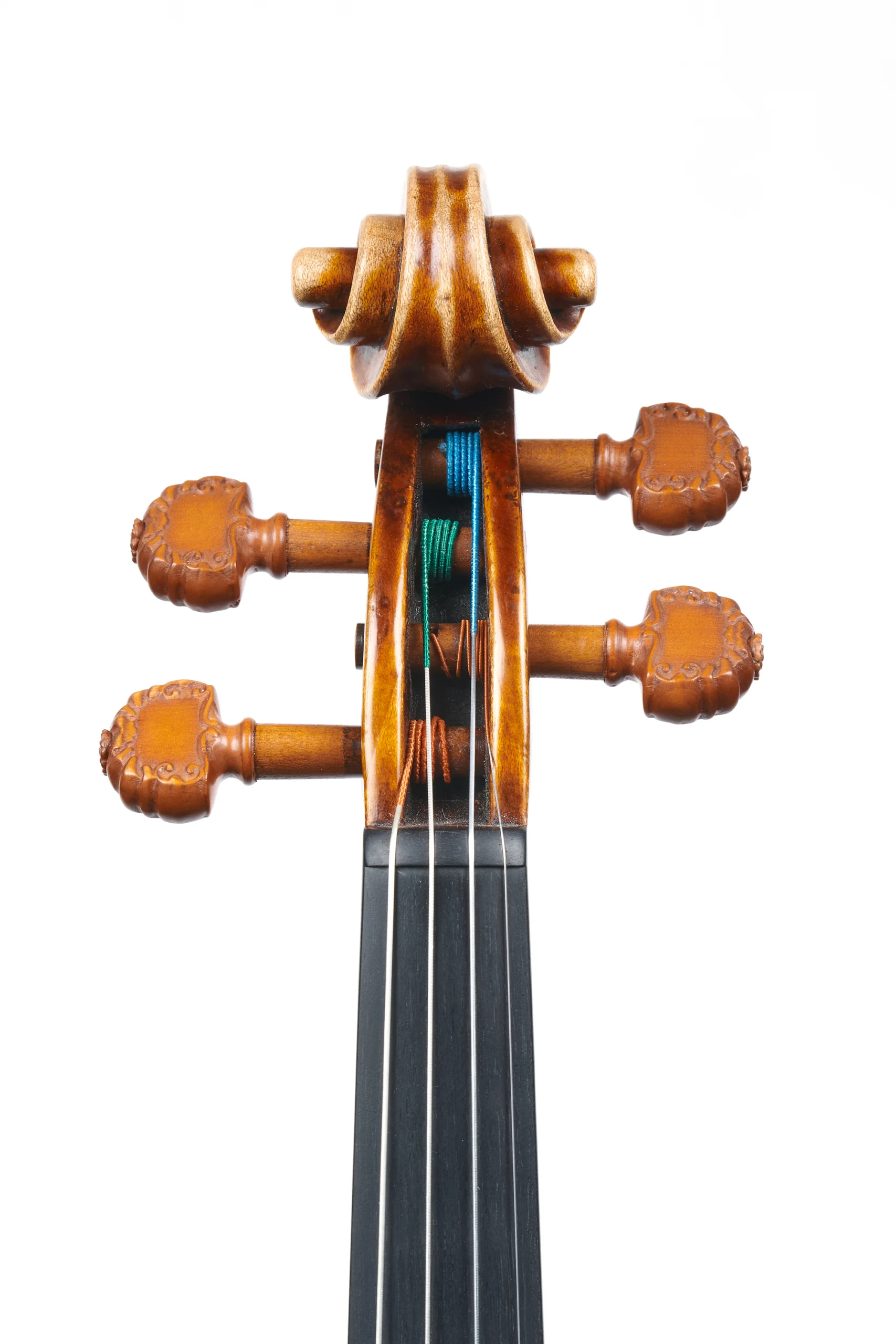
The edgework is bold and characteristically broad, softly rounded and lightly fluted, now beautifully worn by time and use, reinforcing the instrument’s strong sculptural identity. The f-holes are particularly refined, slightly hunched in their design with well-proportioned, rounded eyes and straight, delicately fluted stems, executed with remarkable symmetry and elegance in a style deeply rooted in the classical Cremonese tradition. The scroll, although later, dialogues convincingly with Rota’s aesthetic language through its broad and expressive volute turns.
The back is made from two pieces of quarter-cut maple of faint and irregular figure, enriched by striking medullary ray textures and subtle bird’s-eye markings that emerge horizontally through the cut of the wood. The top, unusually constructed from four pieces of spruce, displays a beautiful luminosity and consistency, with medium to broad grain carefully mirrored across the table. The varnish, of a light amber-orange color over a golden ground, remains remarkably preserved, retaining the slightly harder texture characteristic of Rota’s work and inspired by the varnish tradition of Storioni.
Tonally, the instrument possesses an impactful and commanding voice, with a thick and powerful core, a deep lower register, and an easy, generous projection. It combines the boldness and immediacy associated with the late Cremonese makers with an expressive warmth and openness that make it particularly compelling both musically and historically. Accompanied by certificates of authenticity from John & Arthur Beare (London), Carlson & Neumann (Cremona), and Amorim Fine Violins SRL, this is a rare surviving example from one of the last makers directly connected to the great Cremonese tradition—embodying the transition between classical Cremonese craftsmanship and the freer artistic spirit of the post-Stradivarian period.