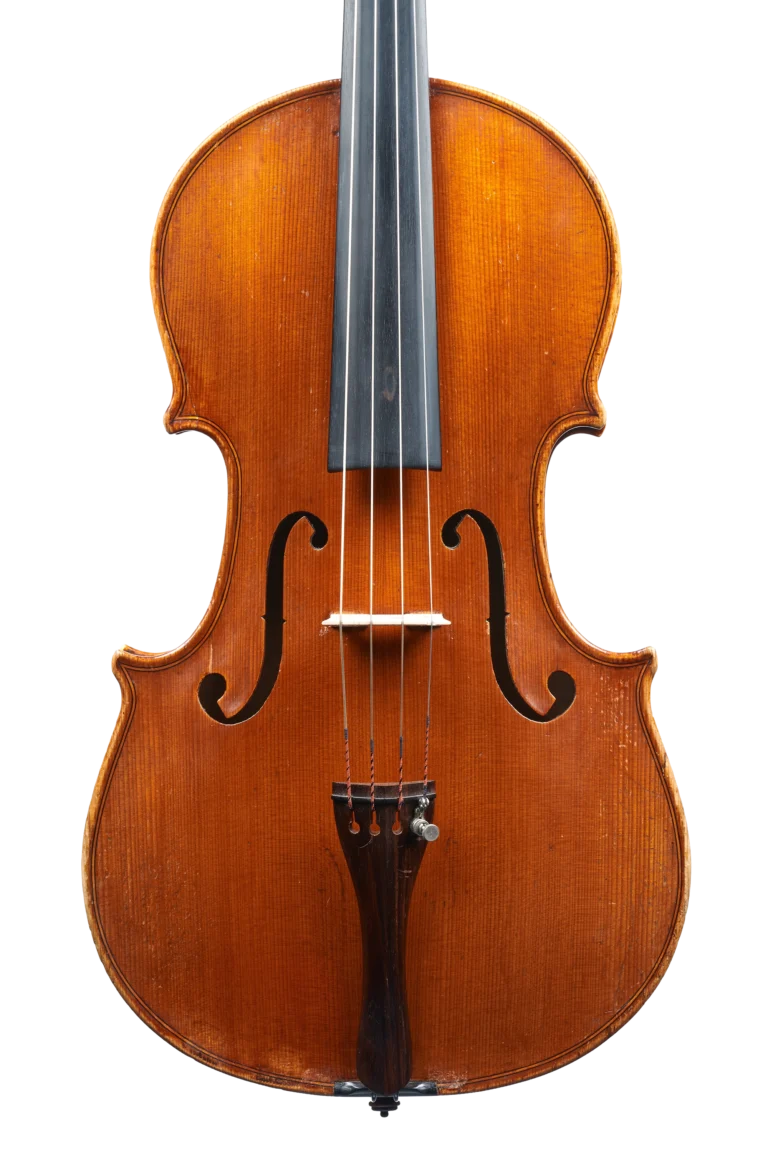
Fine Violas
Contemporary, modern and antique violas selected for craftsmanship, provenance and tonal excellence, certified by our atelier in Cremona.
CRAFTSMANSHIP, PROVENANCE AND VOICE
Each viola in our collection is selected for its tonal depth, responsiveness, craftsmanship and individual character. The collection includes contemporary instruments by distinguished makers alongside historic violas chosen for their provenance, condition and musical qualities, all carefully examined and certified by the Amorim Lab.
Our team supports musicians, collectors and institutions in finding a viola suited to their artistic goals, while also providing expert guidance for its long term care and preservation.
A Private Conversation
Some of our most exceptional violins never appear publicly. Our team can guide you through available pieces and private opportunities, tailored to your repertoire and intentions.
or write us at info@amorimfineviolins.com
About This Collection
The viola holds a distinctive place within the string family. Slightly larger and tuned lower than the violin, it brings warmth, depth and expressive colour to solo, chamber and orchestral music. Its origins can be traced to 16th century Italy, where it developed as the alto voice of the violin family.
At Amorim Fine Violins, each viola is selected with close attention to its individual character. Our collection brings together contemporary instruments by accomplished makers and historical examples chosen for their craftsmanship, condition, provenance and musical qualities.
Whether you are searching for a responsive instrument for professional performance or an important addition to a collection, our specialists offer guidance throughout the selection process.
The viola is valued for a voice that combines richness and intimacy. Its four strings are tuned C, G, D and A, a fifth below the violin, with the lower strings producing the particularly dark and resonant qualities associated with the instrument.
Unlike the violin, the viola does not follow a single standard body size. Differences in dimensions, proportions and string length can influence comfort, response and tonal character. For this reason, choosing a viola requires more than comparing makers or periods. The instrument should also feel natural in the hands and support the musician’s technique without unnecessary strain. Research and guidance from the American Viola Society similarly emphasise the relationship between size, string length, comfort and playability.
A successful match is one in which the instrument’s physical proportions, response and voice work together with the player.
Each period of viola making offers a different experience.
Contemporary violas provide the opportunity to discover the work of living makers. These instruments often combine traditional models with the maker’s own approach to proportion, arching, varnish and tonal development.
They can be especially attractive to musicians seeking clarity, responsiveness and an instrument whose voice can continue to develop through regular playing.
Modern violas reflect a wide range of European schools and individual making traditions. Depending on the maker and period, they may offer the character of an established instrument while retaining the stability and performance qualities sought by today’s musicians.
Their value should be considered through a combination of authorship, craftsmanship, condition, provenance and musical performance.
Antique violas can carry exceptional historical and artistic significance. Early Cremonese makers played an important role in defining the violin family, with Andrea Amati producing violas alongside violins and cellos during the development of these instruments in 16th century Cremona.
Because surviving historical violas are less numerous than violins, careful examination of attribution, alterations, dimensions and condition is particularly important before an acquisition.
Choosing a fine viola is a personal and technical process. The most prestigious name or largest instrument is not necessarily the right choice for every player.
The viola should feel balanced when held and allow comfortable movement across the fingerboard. Body length is important, but neck dimensions, string length, weight distribution and setup also affect the experience of playing.
A professional assessment helps identify an instrument that provides tonal depth without compromising freedom of movement.
A fine viola should respond clearly across its full register. Some players prefer a darker and broader sound, while others look for greater focus, projection or brilliance.
The best choice depends on the musician’s technique, repertoire, ensemble role and preferred tonal identity.
The maker’s work should be considered alongside the instrument’s present condition. Previous repairs, structural stability, originality, documentation and provenance can all influence its musical and historical significance.
Our specialists examine these elements to provide a clearer understanding of each instrument before a decision is made.
Our viola collection is shaped by expertise rather than volume. Each instrument is considered individually for its craftsmanship, tonal character, condition and relevance to the musician or collector.
From our atelier in Cremona, we combine traditional lutherie knowledge with detailed examination and documentation through the Amorim Lab. This allows us to support acquisitions with a considered understanding of the instrument’s authorship, condition and history.
Our work continues beyond the initial selection. We also provide setup, adjustment, restoration and long term care to help each viola perform at its best.
Frequently Asked
Common questions from collectors, musicians and institutions exploring our collection.
The viola is generally larger and tuned a fifth lower than the violin. Its lowest string is C rather than G, giving the instrument a deeper register and a warmer, darker tonal character.
There is no single full size measurement that suits every violist. The appropriate choice depends on the player’s arm length, hand size, technique and physical comfort, as well as the instrument’s string length and overall balance. We recommend evaluatin
The violas in our collection are examined and documented by our specialists. Contemporary instruments may include certificates issued by their makers, while modern and antique violas may be accompanied by certificates, provenance records and condition rep
Yes. Private trials can be arranged at our atelier in Cremona. The trial process allows musicians to compare tone, response, projection and physical comfort before selecting an instrument.
Yes. Our atelier provides professional setup, tonal adjustment, bridge and soundpost work, preventive inspection, conservation and restoration services for fine violas.
The main considerations include comfort, dimensions, response, tonal character, condition, provenance and the reputation of the maker. Most importantly, the instrument should complement the player’s technique and artistic goals.
Fine Italian Violins
From the first inquiry to long-term advisory, our team is here to guide every step of the journey with patience, precision and discretion.