


A Guide to Professional Violins: What You Should Look For?
Back to BlogA Guide to Professional Violins — What Serious Musicians Should Look For
What makes a good professional violin a masterfully crafted instrument, the kind that performing musicians can rely on? If you’re looking for a stringed instrument that knows your every move, you’re not just purchasing a tool, you’re selecting your voice.
This guide breaks down what defines professional violins, how they differ from student models, and what to consider when investing in a long-term performance partner whether you’re researching the violin for professional musicians, comparing professional violin brands, or looking for the best professional violin to elevate your artistry, this deep dive will help you in finding your ideal instrument.
What Makes a Violin “Professional”?
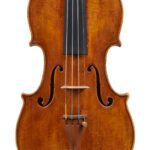
Overall, a professional violin is the result of exceptional craftsmanship, premium materials, and a setup designed to meet the demands of advanced performers.
These violins offer superior resonance, projection, and responsiveness, making them reliable tools for concerts, recordings, and long-term artistic development.
Some traits that will help you to identify one are:
- Premium tonewoods: Built from aged spruce and flamed maple selected specifically for resonance, stability, and tonal richness.
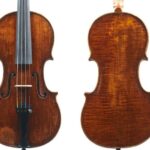
- Fully hand-carved construction: Every plate is carved and graduated by hand, allowing precise acoustic tuning and a more refined, complex voice.
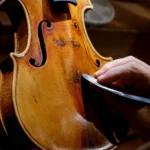
- Expert professional setup: A perfectly fitted bridge, soundpost, fingerboard, and strings that maximize projection, clarity, and responsiveness.
- Superior projection and tonal depth: A powerful, resonant sound capable of filling concert halls naturally, with rich overtones and a wide dynamic range.
- Documented provenance: Certificates and maker history that guarantee authenticity, preserve value, and support long-term investment potential.
Entry-Level vs. Intermediate vs. Professional Violins
Not all violins are built for the same stage of a musician’s journey. Understanding the key differences between entry-level, intermediate, and professional violins helps players choose an instrument that matches their technical needs, sound expectations, and long-term goals.
Construction Quality and Craftsmanship
Entry-level violins are typically mass-produced and designed to be durable, accessible, and budget-friendly. They often rely on laminated woods, machine assembly, and basic varnishes. While these instruments serve as a practical starting point, their construction prioritizes affordability over refined acoustic performance.
Intermediate violins, on the other hand, begin to incorporate elements of true craftsmanship. You’ll find higher-quality spruce and maple, partial or fully hand-finished components, and improved setups that support better intonation and ease of play. These instruments are built for advancing players who need a violin that responds more sensitively as they refine their technique and musical ear.
At the highest tier, professional violins are entirely handcrafted by experienced luthiers who meticulously select aged tonewoods and shape every detail for optimal resonance. These violins often exhibit unique varnish work, precise graduations, and acoustic refinement that elevates them far above factory-built models.
Sound Quality and Playability
The sound spectrum changes dramatically as you move up the quality ladder.
Entry-level violins tend to produce a thinner, sometimes nasal tone with limited projection. Their responsiveness is also more rigid, making subtle bow control more challenging.
Intermediate models offer greater warmth, clarity, and tonal balance. They project better, handle dynamic changes with more grace, and reward players who are starting to explore vibrato, phrasing, and expressive nuance.
Professional violins stand in a class of their own. They offer rich overtones, powerful projection, and remarkable depth across all registers. Their responsiveness allows for effortless articulation, making them ideal for advanced violinists seeking a concert-ready instrument or evaluating the best professional violins for long-term performance and artistic expression.
Price, Value, and Long-Term Investment
Price differences reflect not only craftsmanship, but also lifespan and long-term value.
Entry-level violins are the most affordable option, but they’re quickly outgrown as a player’s skills develop.
Intermediate violins represent a significant upgrade and can support a musician through conservatory or early advanced studies. While they’re more reliable and better sounding, they generally appreciate more slowly.
Professional violins, especially those built by respected luthiers are often considered long-term investments. With proper care, these instruments maintain or even increase in value due to craftsmanship, tonal maturity, and the limited availability of high-quality handmade violins.
For serious musicians, choosing a professional instrument is both a musical and financial decision.
Best Professional Violins for Advanced Musicians
Professional violins at the highest level share a lineage rooted in the great Italian masters (Stradivari, Guarneri, and Guadagnini) yet today’s serious performers often look for instruments that blend historical inspiration with modern reliability.
Amorim Fine Violins offers exactly that balance through three categories: Contemporary Violins, Modern Violins, and Old Fine Violins. Each category delivers exceptional craftsmanship, tonal sophistication, and the performance power required by demanding musicians.
Contemporary Violins: Classical Inspiration, Contemporary Craft
Contemporary violins are newly built instruments that draw direct inspiration from historic Italian models while benefiting fully from modern luthiery techniques and materials.
- Rooted in classical tradition: Modeled after Stradivari, Guarneri, and Guadagnini designs, capturing their proportions, arching, and tonal ideals.
- Modern precision and stability: Built with contemporary tools, controlled environments, and refined setups for consistent performance.
- Concert-ready sound: Designed for projection, clarity, and responsiveness suitable for solo, chamber, and orchestral settings.
Contemporary violins offer advanced musicians a refined Cremonese-style voice with the reliability and confidence of a newly crafted instrument.
Modern Violins: Personal Voice Within a Classical Framework
Modern violins move beyond strict historical replication, allowing the maker’s individual style and acoustic vision to shape the instrument—while still respecting classical foundations.
- Interpretative craftsmanship: Classical forms are reimagined with subtle adjustments in arching, graduation, and varnish.
- Expressive tonal profile: Often more powerful, flexible, or immediate in response, supporting modern performance demands.
- Designed for today’s performers: Built to withstand intense rehearsal schedules, touring, and contemporary repertoire.
These violins are ideal for musicians seeking a distinctive sound identity paired with modern projection and control.
Old Fine Violins: Heritage, Character, and Mature Tone
Old Fine Violins are historical instruments that carry the depth, complexity, and individuality that only time can create. Amorim Fine Violins focuses on well-preserved examples with strong tonal integrity and professional stability.
- Naturally matured sound: Decades or centuries of vibration produce layered overtones and tonal depth impossible to replicate in new instruments.
- Historical and artistic value: Often linked to established schools, workshops, or renowned makers, with documented provenance.
- Professionally restored and set up: Carefully adjusted to meet modern performance standards without compromising authenticity.
Old Fine Violins appeal to musicians drawn to character, nuance, and the expressive richness of aged instruments.
| Feature | Contemporary Violins | Modern Violins | Old Fine Violins |
| Primary Inspiration | Classical Italian models (Stradivari, Guarneri, Guadagnini) | Classical tradition with modern interpretation | Historical schools and period makers |
| Age of Instrument | Newly built | Newly built | Decades to centuries old |
| Craftsmanship | Precise contemporary craftsmanship based on historical templates | Individual artistic vision within classical structure | Period craftsmanship, carefully restored |
| Tone Character | Balanced, focused, and stylistically classical | Powerful, flexible, and expressive | Deep, complex, and naturally matured |
| Playability | Stable, responsive, and consistent | Immediate response with modern control | Refined through restoration and expert setup |
| Reliability & Stability | Very high | Extremely high | Dependent on condition and restoration |
| Visual Aesthetic | Faithful to classical models | Contemporary reinterpretation of classical forms | Authentic patina and historical character |
| Provenance | Full modern maker documentation | Full modern maker documentation | Often includes historical records |
| Best For | Players seeking classical sound with modern reliability | Professionals wanting a personal tonal identity | Musicians drawn to heritage and individuality |
| Long-Term Value | Strong performance value | High artistic and collectible potential | Can appreciate due to age and rarity |
How to Choose the Right Professional Violin
Selecting a professional violin is a deeply personal process. Beyond build quality and price, the right instrument must match your artistic goals, technical demands, and physical comfort.
Advanced musicians need a violin that elevates their voice, enhances their phrasing, and supports their long-term growth on stage and in the studio. Below are the essential considerations for choosing the ideal professional violin.
Find the Right Violin for Your Style
Each violinist carries a unique sonic identity, and the instrument must complement that voice. Your preferred repertoire and performance setting play a major role in determining what you need from a professional violin.
- Tone that fits your musical personality: Romantic repertoire often calls for warmth and depth, while Baroque or modern works may benefit from clarity, focus, or brighter articulation.
- Projection tailored to your environment: Soloists need power and presence; chamber players may prefer a more intimate, blended sound.
- Responsiveness and comfort: Long rehearsals and demanding pieces require an instrument that feels natural in your hands, supporting fluid bow response and left-hand agility.
- Compatibility with your technique: A professional violin should enhance your phrasing, bow control, and dynamic range.
Choosing the right violin means choosing an extension of your artistic voice, not simply a high-level upgrade.
Trial Before You Commit
The only way to understand how a violin truly responds is to play it yourself. Testing multiple instruments allows you to compare sound colors, physical feel, and projection in real time.
- In-person trials: Visiting a respected shop or luthier gives you the opportunity to evaluate tone, responsiveness, and comfort side by side.
- Remote trials and consultations: For international players, many reputable workshops (including Amorim Fine Violins) offer online guidance, video evaluations, and trial shipments.
- Assess in different spaces: Trying an instrument in both small rooms and larger halls helps reveal how it projects and blends in varied acoustics.
A professional violin should feel trustworthy and inspiring the moment you play it, that is why testing ensures you find the one that truly resonates.
Work With Experts Who Understand Your Goals
Finding the right professional violin becomes easier when guided by specialists who know how to match instruments to a musician’s artistic needs.
- Expert recommendations: Experienced luthiers can identify models that suit your tone goals, playing style, and long-term growth.
- Setup adjustments: Small changes to the bridge, strings, or soundpost can tailor a violin precisely to your technique.
- Investment guidance: Professionals can help you navigate the differences between Copy, Antique, and Fine Violins, ensuring you choose the best long-term match
When you collaborate with knowledgeable makers and dealers, you gain access not only to exceptional instruments but also to the insight needed to choose wisely.
Why Professionals Trust Luiz Amorim Violins
Luiz Amorim has earned global recognition for crafting violins that stand shoulder to shoulder with the great Cremonese lineage.
The result is a collection of instruments known for projection, tonal depth, and a delicacy that responds instantly to the most nuanced phrasing: qualities advanced musicians consistently seek in top-tier professional violins.
These instruments aren’t just visually striking; they are performance tools built to meet the rigorous expectations of soloists and seasoned professionals.
Whether you’re preparing for a major performance, upgrading your lifelong instrument, or searching for a violin that reflects your artistic identity, our team will guide you through finding the perfect match.
Discover your next professional violin with Amorim Fine Violins: crafted for musicians who demand nothing less than excellence.
Artists Who Trust Amorim
Soloists such as Giuseppe Gibboni, Eric Silberger and Leonidas Kavakos have selected Amorim’s violins for their intense sound and performance dependability. Their strength in pressure and delicacy in soft passages is frequently praised in reviews. These instruments aren’t only stunning — they’re prepared to handle the stage life. For artists who need artistry and reliability, Amorim violins have some of the finest professional violins in the world today.
Where to Try Professional Violins
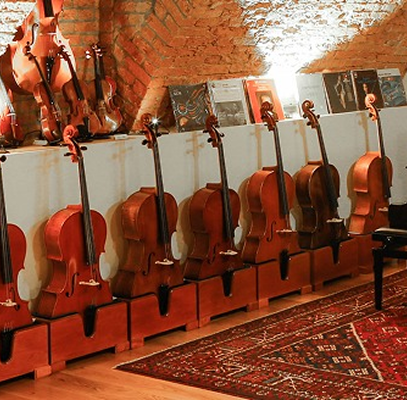
Want to get a feel for professional violins in person? Stop by the Amorim Fine Violins Cremona showroom, browse expert-curated options at global festivals, or schedule a personalized consultation online. From touring soloists to loving owners looking to upgrade their long-term instrument, our staff assists in finding the perfect match for you.